
Banana Leaf Travel contains affiliate links. If you book through them, I may earn a small commission at no extra cost to you. I only recommend services I personally use and trust. See my Privacy Policy for more information.
Best Time to Visit Krabi: Weather & Crowds by Month
Krabi is a province in Southern Thailand, not a single beach destination. On the mainland, Ao Nang is the main beach base and Krabi Town is the provincial capital.
The best time to visit Krabi is from December to March, with January and February usually offering the best chance of best weather and calmer seas.
I visited Krabi mainland for a week in February after almost a month spent island hopping in Southern Thailand.
This gave me firsthand experience of how different a Krabi trip can be depending on where you stay and how often you need to travel by boat.
Krabi stays hot throughout the year, so small temperature changes are rarely the deciding factor.
The main factor for your visit to Krabi will be rain, wind and sea condition, especially if you plan to take island tours and activities like kayaking or snorkelling.
Typical mainland sightseeing gives you more alternatives when conditions at sea are poor.
My Favourite Places to Stay in Krabi:
Thailand Travel Essentials:
Quick Answer: When Is the Best Time to Visit Krabi?
Krabi’s main drier and high-tourism period runs approximately from November to April, but December to March offers the most reliable overall conditions.
| Your priority | Best time | Main trade-off |
|---|---|---|
| Most reliable weather | January–February | Busier and usually more expensive |
| Good weather with fewer peak-season crowds | March | Hotter, particularly for hiking and sightseeing |
| Quieter alternative before peak season | Late November | Less reliable than December–March |
| Island hopping and snorkelling | December–March | Popular tours and accommodation can be busier |
| Hiking and climbing | December–February | Early starts are still advisable |
| Lower prices and fewer visitors | September–October | Highest risk of rain, rough seas and disrupted island plans |
| Flexible green-season trip | May–August | Boat trips and weather remain less predictable |
Choose February if weather reliability is your main priority.
Choose March for a better balance if you can tolerate the heat, or late November if you prefer fewer visitors and accept a greater chance of rain.
Krabi Province Map: Main Areas and Islands
The map below shows how Krabi’s main visitor areas relate to one another. Ao Nang and Krabi Town are road-accessible mainland bases, while Railay is part of the mainland but can only be reached by boat.
Koh Phi Phi and Koh Lanta are separate islands, so the effect of weather depends partly on where you stay and how much your itinerary relies on boats.
Open the full Krabi Province map in a new tab
Boundary data: geoBoundaries, based on OpenStreetMap contributors.
For help turning this map into a practical itinerary, use my Krabi travel guide to compare the main areas, transport options and things to do across the province.
Krabi Weather and Travel Seasons Explained
Krabi has a drier season from roughly November to April and a wetter monsoon season from May to October.
The change is gradual rather than fixed. November and May are transition months, and rain is possible throughout the year.
November to February
Conditions usually improve during November, although the beginning of the month can still be wet and unsettled.
December to February is the most reliable period for beaches, boat trips and outdoor activities.
But keep in mind, that this is also the busiest time to visit, particularly around Christmas and New Year.
Late November can also work if you are comfortable with slightly less predictable weather.
March to April
March and April are generally still suitable for beaches and boat trips. March offers a good balance of reliable weather and fewer holiday crowds.
April is much hotter, making exposed hikes and the Tiger Cave Temple climb more difficult during the middle of the day.
Songkran, Thailand’s traditional New Year festival, is celebrated from 13 to 15 April. It combines temple and family traditions with lively public water fights.
If you enjoy festivals, it can be one of the most memorable reasons to visit Krabi in April. Expect busy streets and greater demand for transport during the holiday. Showers also become more likely towards May.
March is the better all round choice, while April suits travellers who do not mind intense heat or want to experience Songkran.

May to October
This is Krabi’s wetter and less predictable period. Rain does not always last all day, but several unsettled days are possible.
Wind and waves can also disrupt swimming and boat trips, even when it is not raining.
Krabi remains open throughout the season, although some boat services, tours and island businesses operate less frequently.
The province is greener and generally quieter, but you will need flexible plans. This period can suit a longer trip with plenty of mainland activities.
September and early October are usually the least reliable choices for a short visit focused on beaches and boat trips.
Average Temperatures in Krabi
Krabi remains hot throughout the year. At the mainland Krabi weather station, average daytime highs range from approximately 31–35°C (88–95°F), while average lows remain around 22–24°C (71–74°F).
March and April are the hottest months, with average highs above 34°C (93°F).
Early starts are particularly important for Dragon Crest, Tiger Cave Temple and other exposed outdoor activities during this period.
Even from May to October, average highs remain around 31–33°C (88–91°F).
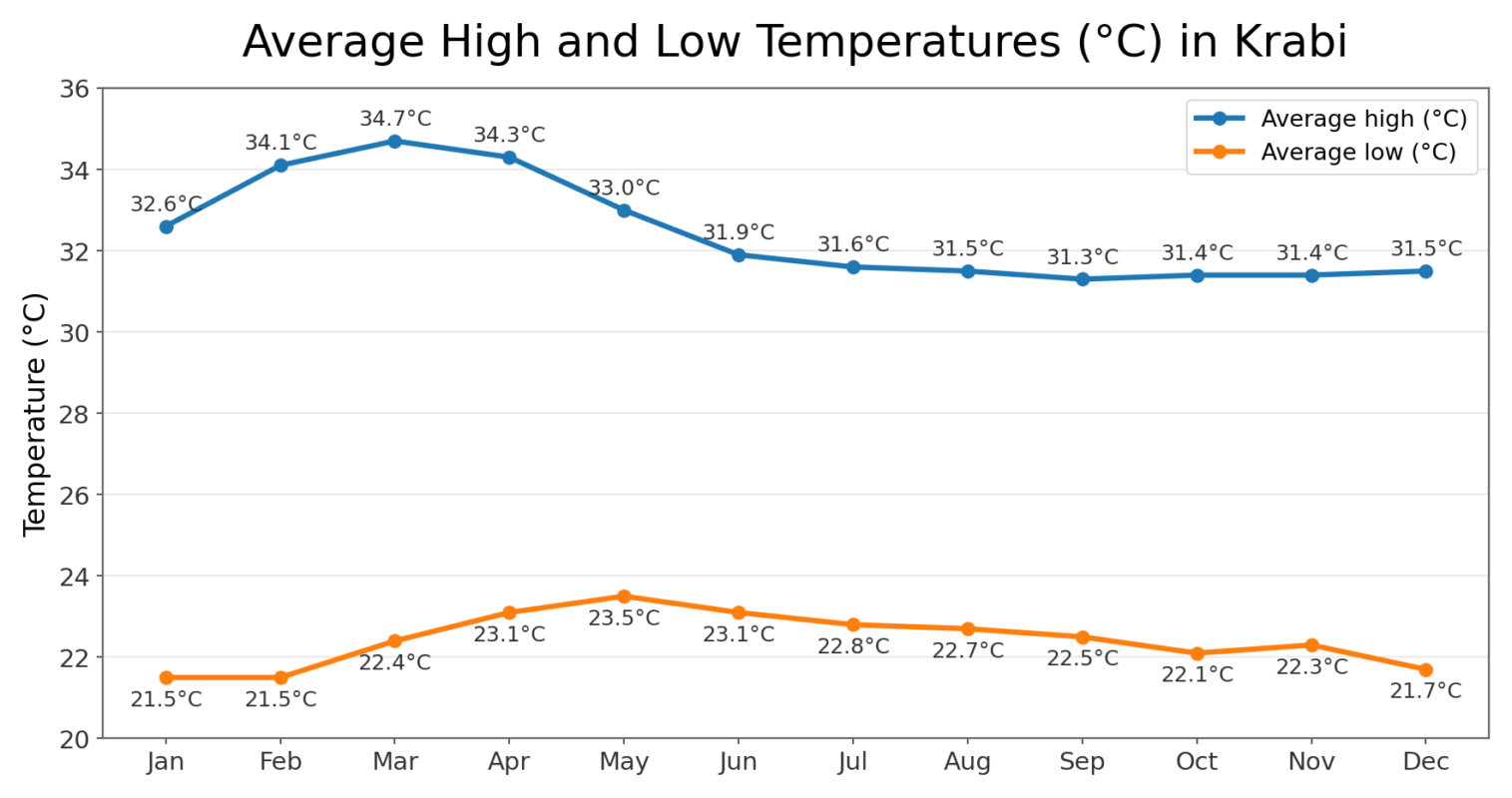
Average monthly maximum and minimum temperatures recorded at the mainland Krabi meteorological station, based on observations from 1994–2020.
At the same Krabi weather station, February averages 35.9 mm of rain, compared with approximately 210–293 mm per month from May to October.
These long-term totals show the broad seasonal pattern, but they do not indicate whether rain falls in short showers or continues for much of the day.
Conditions can differ on Koh Lanta, Koh Phi Phi and exposed offshore islands. Source: Thai Meteorological Department, Krabi station
Krabi Weather Month by Month
| Month | General conditions | Sea and boat trips | Crowds and prices | Overall verdict |
|---|---|---|---|---|
| January | Drier, sunny more often and slightly less humid | Among the most reliable months for island trips | Very busy; high accommodation demand | Excellent for a first visit, but book ahead |
| February | Driest overall pattern, with increasingly strong heat | Strongest odds of calmer crossings and clear-water activities | Busy and expensive, although the festive peak has passed | Best choice for weather reliability |
| March | Mostly favourable but hotter, especially inland | Generally reliable for island hopping and Railay | Crowds begin easing while most services remain available | Best balance if you tolerate the heat |
| April | Very hot and increasingly humid; thunderstorms become more likely later | Often still suitable, but conditions become less consistent toward May | Below peak levels; Songkran can increase demand locally | Good for beaches and boats, less comfortable for hiking |
| May | Transitional: earlier periods may be usable before wetter conditions build | Trips still operate, but disruption becomes increasingly possible | Quieter, with better-value accommodation appearing | Worth considering only with some flexibility |
| June | Green, humid and changeable, with a mixture of showers and usable periods | Tours may run, but current wind and waves matter | Quiet with lower prices; some island services are reduced | Reasonable for a flexible, mainland-based trip |
| July | Mixed green-season conditions rather than continuous rain | Possible boat days between unsettled spells | Generally quieter than high season, but not always empty | A calculated risk for longer stays |
| August | Wetter spells become more likely, with conditions varying between mainland and islands | Rougher water and short-notice changes are a greater concern | Lower than peak prices; availability varies on smaller islands | Better for flexible plans than a fixed island itinerary |
| September | One of the least reliable months for sustained beach weather | Highest need for backup days and current marine checks | Usually very quiet and among the cheapest periods | Avoid for a short, boat-focused trip |
| October | Early October can remain highly unsettled; improvement later is not guaranteed | Disruption remains possible until monsoon conditions ease | Quiet early; services and prices may begin increasing later | Early October needs maximum flexibility |
| November | Transitional, with late November generally more reliable than early November | Boat schedules and conditions usually improve through the month | Visitor numbers and prices build toward high season | Good late-month compromise, but less reliable than December |
| December | More reliable weather returns, although rain remains possible | Generally favourable for ferries, Railay and island tours | Moderate early; very busy and expensive around Christmas and New Year | Excellent overall, visit early for fewer festive crowds |
Best Time for Krabi’s Most Popular Activities
The best time depends on what you want to do. Beaches and boat trips rely on calm seas, while hiking and kayaking are affected by heat, rain and local conditions.
My guide to the best things to do in Krabi explains what each activity involves and how to visit.
Beaches, Railay and Island Trips
Best time: December to March. January and February are usually the most reliable months.
This period normally offers the best chance of calmer seas for swimming, visiting Railay and taking boat tours to the Hong or Four Islands.
If a particular trip is important, schedule it near the beginning of your stay so you can move it to another day if necessary.
Before setting out:
- Check the wind and sea conditions, not only the rain forecast.
- Follow beach warning flags and local swimming advice.
- Check the tide if your tour includes sandbars or shallow swimming areas.
- Ask about recent snorkelling visibility after rough weather.
The Hong Islands and Four Islands are usually covered by different tours. Check every stop in the itinerary before booking rather than choosing by price or photos alone.
Compare Krabi Island Hopping Tours (routes, prices & availability)
If you want to secure a spot (especially in high season), it’s worth checking availability in advance.
If you are staying on one of Krabi’s larger islands, use my separate guides to the best time to visit Koh Phi Phi and the best time to visit Koh Lanta.
Hiking and Climbing
December to February is usually the most comfortable time for Dragon Crest, Tiger Cave Temple and rock climbing in Railay.
Start early even during these months, as the heat builds quickly. March and April are especially tiring for exposed hikes and climbs.
After heavy rain, check trail conditions before setting out. Dragon Crest can become muddy, while the steps at Tiger Cave Temple and the limestone in Railay can be slippery.
If you plan to climb in Railay, book with an experienced local operator and follow their advice on the day.
Try climbing with an instructor: Compare rock climbing experiences
Kayaking and Inland Attractions
Best time: possible throughout the year, but check the conditions shortly before visiting.
At Ao Thalane, the tide and wind matter more than the season. Water levels affect which mangrove channels can be explored, so confirm the departure time with your guide or kayak operator.
Recent rain may reduce water clarity at Khlong Root. It can also leave paths around the Emerald Pool, hot springs and waterfalls slippery.
Waterfalls are often fuller during the wetter months, but avoid visiting after heavy rain if currents or access conditions are unsafe.
Krabi Town and attractions reached by road give you useful alternatives when the sea is unsettled.
Compare Khlong Root Kayaking Tours
A tour is a convenient option if you don’t have your own transport. Compare prices, reviews and hotel pickup options below.
Is Krabi Worth Visiting During the Rainy Season?
Yes, if you have several days and can keep your plans flexible. The rainy season often brings lower hotel prices and fewer visitors.
However, it is a poor choice if boat trips and beach days are the main reason you are visiting.
It can work well if you:
- Have several days and can rearrange activities.
- Are happy to plan around the latest forecast.
- Also want to explore Krabi Town and mainland attractions.
- See island tours as a bonus rather than essential.
Choose the drier season if you:
- Only have one or two full days.
- Would be disappointed to miss the Hong or Four Islands.
- Want calm water for swimming and snorkelling.
- Are prone to seasickness or have a tight ferry connection.
Travel Insurance for Thailand
Travelling during the monsoon season? Protect your trip against unexpected delays, cancellations, and medical emergencies.
During the rainy season, choose your base based on what you would do if boat trips were cancelled. Ao Nang is a good option if you still want to stay near the beach and take an island tour when conditions allow.
Krabi Town is a better fit if you prefer markets, the riverfront and road-accessible mainland attractions.
→ Related guide: Is Krabi Town Worth Visiting? Honest Review After a Week
Krabi Crowds, Prices and When to Book
Accommodation prices change most in Krabi’s beach areas. Krabi Town usually offers more consistent value throughout the year.
Late December to early January is the busiest period. Book early if you want to stay in Railay, Tubkaek or a particular beachfront hotel.
Some resorts also require minimum stays or festive dinners, so check the conditions before paying.
January and February remain busy, especially at popular beach hotels. March often offers a better balance between weather, price and availability.
Demand can rise again around Songkran from 13 to 15 April.
From May to October, rooms are generally easier to find and prices are often lower. However, a cheap hotel may not offer good value if it is isolated and the weather limits your options.
Check nearby restaurants, transport and flexible cancellation terms before booking.
→ Related guide: Where to Stay in Krabi: Which Area Is Right for You?
Ferries, Boat Tours and Seasonal Closures
Flights and road transfers operate throughout the year. Ferries, speedboats and tours are more affected by sea conditions and seasonal demand.
Railay can only be reached by boat. Rough weather may delay longtail boats or temporarily change the departure point.
Island ferries may run less frequently during the wetter months, while some smaller routes stop completely. Boat tours can also change their itinerary even when the trip still goes ahead.
Before travelling by boat remember to:
- Confirm the schedule and departure pier for your exact date.
- Check the Thai Meteorological Department’s shipping forecast and ask the operator for a same day update.
- Leave enough time between an island transfer and an important flight.
- Check that the advertised beaches and national park stops are currently accessible.
If a delayed ferry would put an important flight at risk, consider spending your final night on the mainland.
Some marine sites close temporarily for conservation or safety. If a tour includes Maya Bay or another protected area, check the current rules rather than relying on dates from an older article.
Mainland trails such as Dragon Crest and routes in Khao Phanom Bencha may also close after heavy rain or trail damage.
FAQs About the Best Time to Visit Krabi
What is the best month to visit Krabi?
February offers the best chance of drier weather and calmer seas. March is hotter but can provide a better balance between favourable conditions and lower demand.
When is the rainy season in Krabi?
Krabi’s rainy season generally runs from May to October, with May acting as a transition month. September and early October are usually the least reliable for boat-focused trips.
Does it rain all day during Krabi’s rainy season?
Not every day. Rain may arrive in short showers, but longer wet periods also occur, so do not assume it will only rain briefly in the afternoon.
Is Krabi worth visiting in July or August?
Yes, if you have several days and can adjust your plans. These months are less suitable for a short trip centred on specific island tours or calm seas.
Does Krabi close during the rainy season?
No. Flights, roads, hotels and most mainland services operate year-round, but some boat routes, tours, businesses and national-park areas may have reduced availability or temporary closures.
Does the weather differ between Ao Nang, Koh Lanta and Koh Phi Phi?
They share the same broad seasonal pattern, but local conditions can vary. Rough seas have the greatest effect on Phi Phi and other boat-dependent plans, while mainland Krabi offers more alternatives accessible by road.
Can you swim in Krabi during the rainy season?
Sometimes, but check the sea and warning flags each day. Do not swim when red flags are displayed or local advice indicates dangerous waves or currents.

Explore More of Krabi Province
If you want to continue beyond mainland Krabi, Koh Lanta and Koh Phi Phi offer very different experiences.
Choose Koh Lanta for a slower stay with long beaches, road trips, mangroves and Old Town.
Choose Koh Phi Phi for limestone scenery, viewpoints, snorkelling and boat trips.
Plan a Trip to Koh Lanta
- Explore the island: Start with my complete Koh Lanta travel guide.
- Plan the journey: Compare transfers from Krabi and nearby islands in my guide to travelling to Koh Lanta.
- Organise your days: Use my 5-day Koh Lanta itinerary to combine beaches, Old Town and island exploration.
Plan a Trip to Koh Phi Phi
- Explore the islands: Start with my complete Koh Phi Phi travel guide.
- Plan the journey: Compare ferry and speedboat routes in my guide to travelling to Koh Phi Phi.
- Organise your days: Use my 4-day Koh Phi Phi itinerary to plan beaches, hikes and boat trips without rushing.
