
Banana Leaf Travel contains affiliate links. If you book through them, I may earn a small commission at no extra cost to you. I only recommend services I personally use and trust. See my Privacy Policy for more information.
Best Time to Visit Koh Phi Phi (Weather, Seasons & Crowds)
he best time to visit Koh Phi Phi is from November to April, when the Andaman Sea is usually calmer and conditions are best for snorkelling, diving, beach days and island hopping.
I visited Koh Phi Phi in February during Chinese New Year, so I experienced the island at one of its busiest times.
The weather was fantastic, but I also saw the downsides of peak season: crowded tours, busy snorkelling spots and limited accommodation when booking at the last minute.
If you want the best balance of good weather, calmer seas and fewer crowds, I’d recommend November, early December, March or early April instead of the busiest weeks in January and February.
In this guide, I’ll break down Koh Phi Phi’s weather month by month, explain the best time for snorkelling, diving, hiking and visiting Maya Bay, and help you decide which season best matches your travel style.
Koh Phi Phi Weather Overview
Koh Phi Phi islands sit in the Andaman Sea between Phuket and Krabi. Like most of Thailand’s west coast, it has two main travel seasons rather than four.
The dry season usually runs from November to April. This is when you get the best mix of sunshine, calmer sea conditions and reliable boat trips.
The rainy season usually runs from May to October, when the southwest monsoon brings more frequent rain, rougher seas and a higher chance of boat cancellations.
| Travel Priority | Best Time |
|---|---|
| Best overall weather | December to February |
| Best balance of weather and crowds | November, early December, March |
| Best snorkelling and diving | December to April |
| Best for Maya Bay | When open, November to April is best for weather |
| Best for lower prices | May, June, September, October |
| Quietest months | June to September |
| Months to be most cautious | July to September |
Average Temperatures on Koh Phi Phi
Koh Phi Phi has a tropical climate, meaning it’s warm throughout the year with average daytime temperatures ranging from 30°C to 33°C (86°F to 91°F).
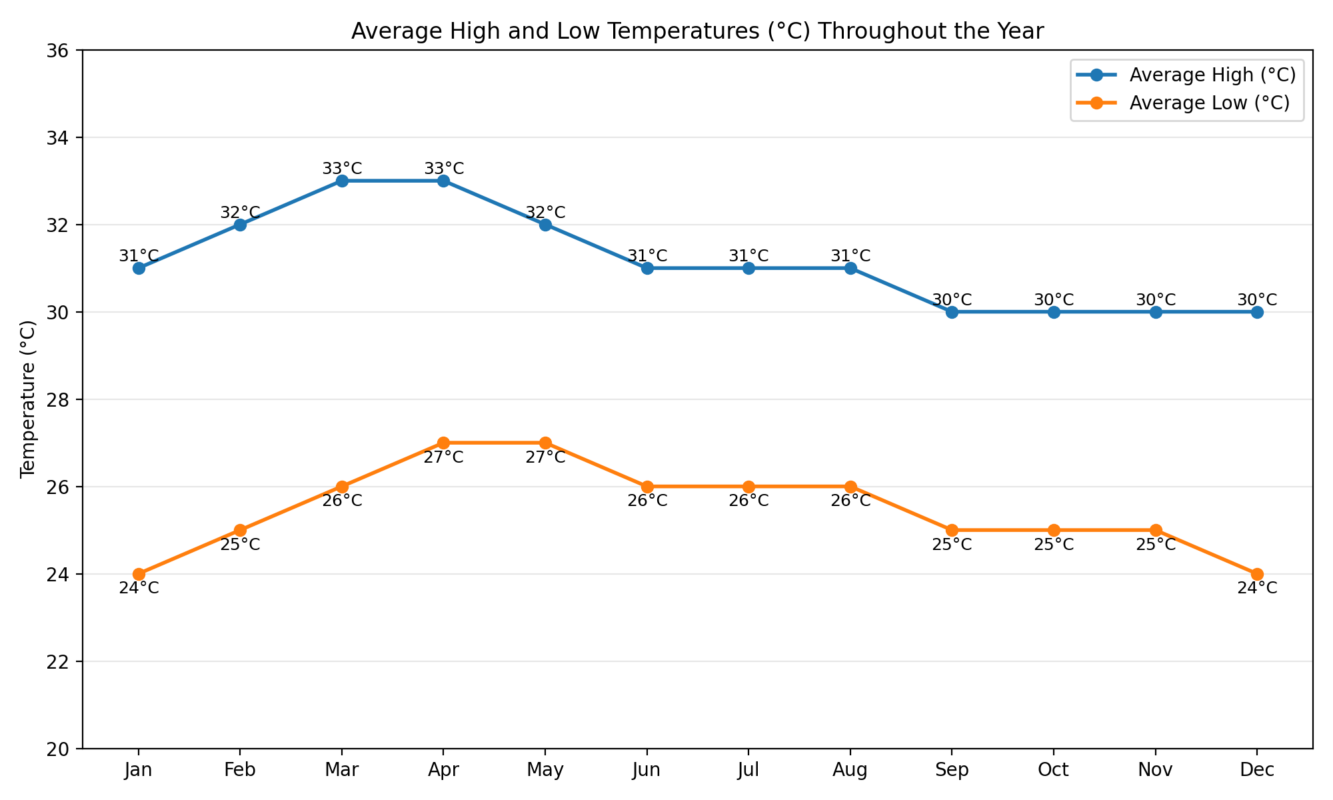
Although temperatures remain fairly consistent throughout the year, humidity is high year-round (typically between 75–90%), making it feel much hotter than the thermometer suggests.
Temperatures stay warm throughout the year, so the bigger difference is not temperature, but rainfall, sea conditions, visibility and crowd levels.
The Thai Meteorological Department is the best official source to check the latest forecast before boat travel, especially during monsoon months.
MY TRUSTED TRAVEL PICKS
My Favourite Places to Stay on Koh Phi Phi:
Thailand Travel Essentials:
Best Time to Visit Koh Phi Phi Overall
The best time to visit Koh Phi Phi overall is November to April.
This is the most practical recommendation for first-time visitors because it gives you the best chance of:
If this is your first time visiting Koh Phi Phi, I would avoid building your trip around the rainy season unless you are flexible and comfortable with last-minute changes.
Koh Phi Phi is still open outside the dry season, but many of the island’s best experiences depend on the sea.
A rainy afternoon is not the end of the world. Rough water cancelling your ferry trip or making snorkelling unpleasant is a bigger problem.
If you are still deciding whether the island fits your route, start with the full Koh Phi Phi travel guide and the honest guide to the best things to do in Koh Phi Phi.
Koh Phi Phi Seasons Explained
Dry Season: November to April
Dry season is the best time for most travellers.
The sea is usually calmer, visibility is better, and boat tours to Phi Phi Leh, Bamboo Island and other nearby spots operate very often.
This is also the main season for snorkelling, diving, kayaking and island hopping. If your trip is built around the water, this is the window to choose.
The trade-off is crowds.
Koh Phi Phi is one of the most popular islands in Thailand, and the central areas around Tonsai Village and Loh Dalum can feel very busy in peak season.
Shoulder Months: May and October
May and October are months around the edges of the rainy season.
They can be good months if you want lower prices and fewer people, but the weather is less predictable than in the core dry season.
May can still have plenty of sunny days, but humidity rises and rain becomes more common.
October often improves towards the end of the month, but sea conditions can still change quickly.
These months are best if you are flexible and will not be relying on one specific boat trip.
Rainy Season: June to September
Rainy season is the quietest and cheapest time to visit Koh Phi Phi, but it is also the least reliable.
Rain does not always fall all day. You can still get dry, bright periods.
The bigger issue is the sea. Wind, swell and storms can affect ferries, speedboats, snorkelling visibility and access to remote beaches.
If your main priorities are hiking, local food, downtime and cheaper accommodation, rainy season can still work.
But, if you are dreaming of calm water, Maya Bay, Bamboo Island and clear snorkelling, it is a risky choice.
Koh Phi Phi Weather by Month
| Month | Weather | Crowds | Best For | Verdict |
|---|---|---|---|---|
| January | Dry, sunny, comfortable by Thai island standards | Very high | Beaches, boat trips, diving | Excellent but busy |
| February | Dry and warm, often very good sea conditions | High | Snorkelling, diving, hiking early | One of the best months |
| March | Hotter, still mostly reliable | Medium to high | Water activities with fewer crowds than January | Great balance |
| April | Hot and humid, still usually good for the sea | Medium to high | Snorkelling, Songkran, beach stays | Good but very hot |
| May | Transition month with more showers | Lower | Budget trips, flexible plans | Possible, but mixed |
| June | Wetter, rougher seas possible | Low | Quiet stays, lower prices | Not ideal for boat-heavy trips |
| July | Rainy season, changeable sea conditions | Low | Flexible travellers | Risky for first-timers |
| August | Rainy season, possible park closures | Low | Cheap, quiet stays | Avoid if Maya Bay matters |
| September | Often one of the least reliable months | Low | Lowest crowds | Weakest month overall |
| October | Improving but still changeable | Low to medium | Shoulder-season value | Better late in the month |
| November | Start of dry season, improving seas | Medium | Best balance of conditions and crowds | Excellent choice |
| December | Dry, sunny, festive peak begins | Very high late month | Classic island weather | Excellent but expensive |
November to February
This is the safest window for most travellers. November is usually improving after the monsoon, while December, January and February bring the most dependable dry-season conditions.
Choose November if you want a better balance of weather and crowds.
Choose December to February if you want the strongest chance of sunny days and smoother boat trips, and are happy to pay peak-season prices.
The main caution is crowding. Around Christmas, New Year and Chinese New Year, book accommodation, ferries and key tours ahead of time.
Stay Connected in Koh Phi Phi. Skip SIM cards and get instant data access with an eSIM before you arrive.
My Experience Visiting Koh Phi Phi in February
I visited Koh Phi Phi in February during Chinese New Year, so I experienced the island at one of its busiest times.
The weather was excellent throughout my stay, and I had no trouble finding tours, although popular places like Maya Bay were very crowded with day-trippers.
I also didn’t book accommodation in advance and still found a room, but the choice was much more limited than I’d expected.
As for the sea journaeys larger ferries were comfortable, but the speedboats were extremely bumpy!
I’d definitely recommend taking seasickness tablets if you’re planning island-hopping trips.
One thing that surprised me was the number of jellyfish. I saw them on several beaches and even at some of the snorkelling spots.
Combined with the number of boats and people in the water, it made some of the popular snorkelling areas less enjoyable than I expected.
My favourite part of the trip was hiking. Even in peak season, the jungle trails and more secluded beaches felt surprisingly peaceful once I left the busy centre.
Just be prepared for the heat and mosquitoes by carrying plenty of water and insect repellent.
In the evenings, I loved the lively atmosphere with plenty of bars and restaurants, but because I stayed a short walk from the centre, I never had any issues with noise.
March and April
March and April are still good months for Koh Phi Phi, especially if snorkelling, diving and boat trips are priorities.
The difference is heat. By March, midday walks through Tonsai and climbs to the viewpoints feel more tiring.
April can be very hot, so plan hikes, beach walks and boat departures early.
March is the better all-round choice. April is still worthwhile, but you need to pace your days carefully.
May and October
May and October are transition months. They can offer lower prices and fewer people, but the weather is harder to predict.
May often still has usable beach days, although rain and humidity increase.
October tends to improve towards the end of the month, but the sea may still be changeable.
These months are best if you can stay flexible rather than building your trip around one fixed boat tour.
→ Related guide: How to Travel to Koh Phi Phi
June to September
June to September is the main low-season period on Koh Phi Phi.
The island is quieter and accommodation can be cheaper, but sea conditions are less reliable.
Ferry delays, changed tour routes and weaker snorkelling visibility are all more likely.
August and September need the most caution.
According to the official Ko Phi Phi National Park website, Maya Bay is closed to visitors every year from 1 August to 30 September to allow the marine ecosystem to recover.
Travel Insurance for Thailand
Travelling during the monsoon season? Protect your trip against unexpected delays, cancellations, and medical emergencies.
Best Time for Snorkelling and Diving on Koh Phi Phi
The best time for snorkelling and diving in Koh Phi Phi is December to April.
This is when sea conditions are usually calmest and underwater visibility is most reliable.
It is also the best period for snorkelling at Long Beach, joining boat trips to Phi Phi Leh, and diving around sites like Bida Nok and Bida Nai.
For shore snorkelling, go early in the morning. Long Beach and Shark Point are best before boat traffic increases and before the water gets disturbed.
→ Related guide: Shark Point Koh Phi Phi: How to See Blacktip Reef Sharks
Best Snorkelling Months
| Month | Snorkelling Conditions |
|---|---|
| November | Good and improving |
| December | Excellent |
| January | Excellent |
| February | Excellent |
| March | Very good to excellent |
| April | Very good, but hot |
| May | Mixed |
| June to September | Unreliable |
| October | Improving, especially late month |
→ Related guide: Best Snorkeling Spots on Koh Phi Phi
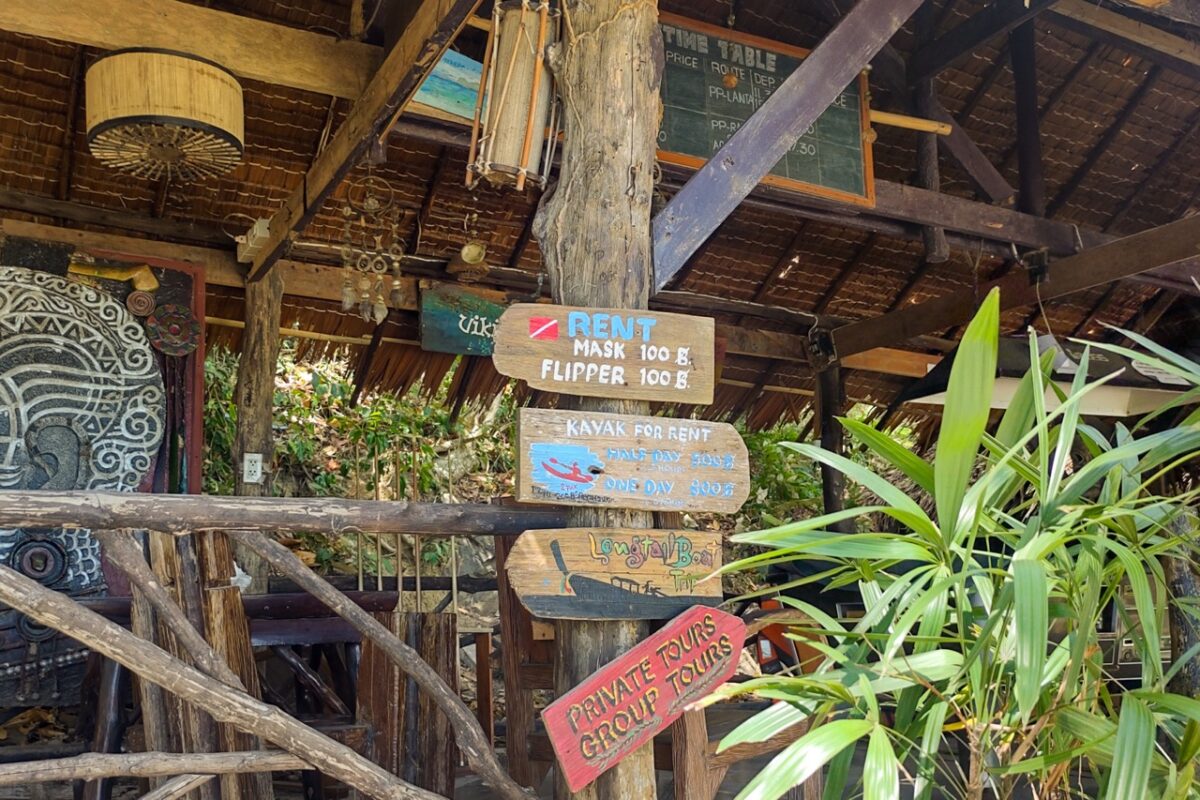
Best Time to Visit Maya Bay
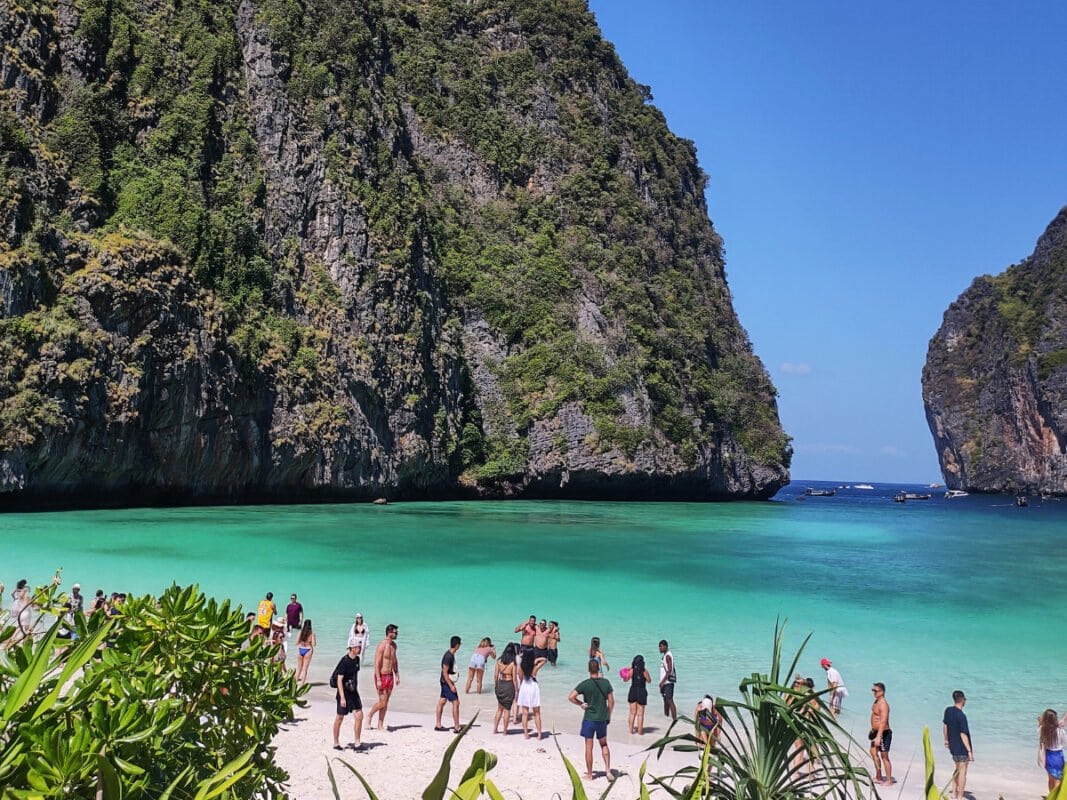
The best time to visit Maya Bay is during the dry season, especially November to April, and as early in the morning as possible.
Maya Bay is not a normal swimming beach. It is a protected national park site on Koh Phi Phi Leh, reached by boat from Koh Phi Phi Don, Phuket, Krabi or Koh Lanta.
Even in good weather, timing matters. The bay gets extremely busy once day trips arrive from the mainland and nearby islands.
Compare Maya Bay tours (routes, prices & availability)
If you want to secure a spot (especially in high season), it’s worth checking availability in advance – some of the best tours sell out quickly.
For the best experience:
Keep in mind that currently Maya Bay is closed to visitors every year from 1 August to 30 September.
→ Related guide: How to Visit Famous Maya Bay on Koh Phi Phi
Best Time for Beaches, Hikes and Boat Trips
Best Time for Beaches
The best beach months are December to April, when swimming conditions are usually clearest and most comfortable.
Long Beach, Loh Moo Dee, Viking Beach and Bamboo Island are all better when the sea is calm.
Central beaches near Tonsai are convenient year-round, but boat traffic and tides can affect the experience.
→ Related guide: Best Beaches on Koh Phi Phi
Best Time for Hiking
The best time for hiking on Koh Phi Phi is November to February, especially early in the morning.
The island is hot year-round, and even short climbs can feel demanding in humidity.
The viewpoints, coastal trail to Long Beach and jungle routes to quieter beaches are all more enjoyable before midday.
March and April can still be good for hiking, but the heat becomes more noticeable. During the rainy season, trails can be slippery, overgrown or harder to follow.
→ Related guide: Best Hikes on Koh Phi Phi
Best Time for Boat Trips
The best time for boat trips is November to April.
This is when crossings are usually smoother, routes are more reliable, and tours to Phi Phi Leh, Bamboo Island and nearby snorkelling spots are easiest to arrange.
During rainy season, tours may still operate, but routes can change with weather.
Small speedboats can also feel rough even when the sea looks manageable near shore.
If you are prone to seasickness, choose larger ferries where possible for transfers, and consider a longtail or private boat for shorter local trips in calm conditions.
Some routes are seasonal, and a route that looks simple in January may be slower or less reliable in August.
If Koh Phi Phi is part of a wider route, check the Southern Thailand island-hopping transport guide before locking in dates.
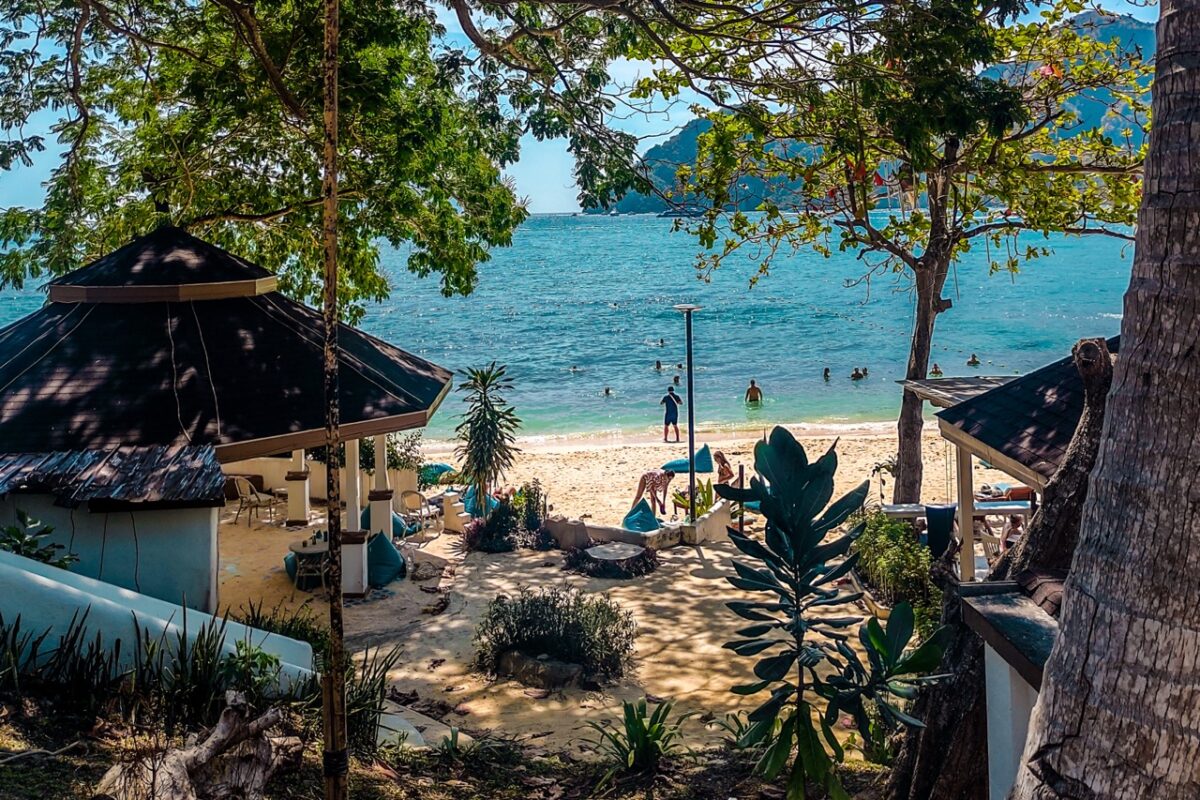
Cheapest Time to Visit Koh Phi Phi
The cheapest time to visit Koh Phi Phi is during the low season, especially June to September.
Accommodation prices are usually lower, the island is quieter, and you may find better last-minute availability than in peak season.
The trade-off is reliability. You may save money, but you also increase the chance of:
For a better balance, consider May, late October, November or March. These months can offer better value without fully sacrificing the experience.
If you are comparing the cost of Koh Phi Phi with other islands, the Koh Phi Phi vs Koh Lipe comparison explains how the islands differ for budget, transport and activities.
Where to Stay by Season
Where you stay matters more in peak season because the central area gets busier and noisier.
If you are visiting in December to February, book earlier than usual and choose your area carefully.
Tonsai Village is convenient for ferries, food and nightlife, while Long Beach is better if you want a quieter base that still has easy access to the main village.
If you are visiting in May, October or low season, you may find better value and more last-minute availability, but check whether remote hotels are still easy to reach by boat before booking.
Good starting points to compare:
→ Related guide: Where to stay on Koh Phi Phi
Should You Visit Koh Phi Phi in the Rainy Season?
You can visit Koh Phi Phi in the rainy season, but it depends on your expectations.
Rainy season can suit you if:
Rainy season is a weaker choice if:
The island does not shut down completely, but the experience is different.
Koh Phi Phi is at its best when you can use the sea freely, and that is much more likely from November to April.
For most first-time visitors, I would choose the dry season and use shoulder months to avoid the worst crowds
Travel Insurance for Thailand
Travelling during the monsoon season? Protect your trip against unexpected delays, cancellations, and medical emergencies.
.
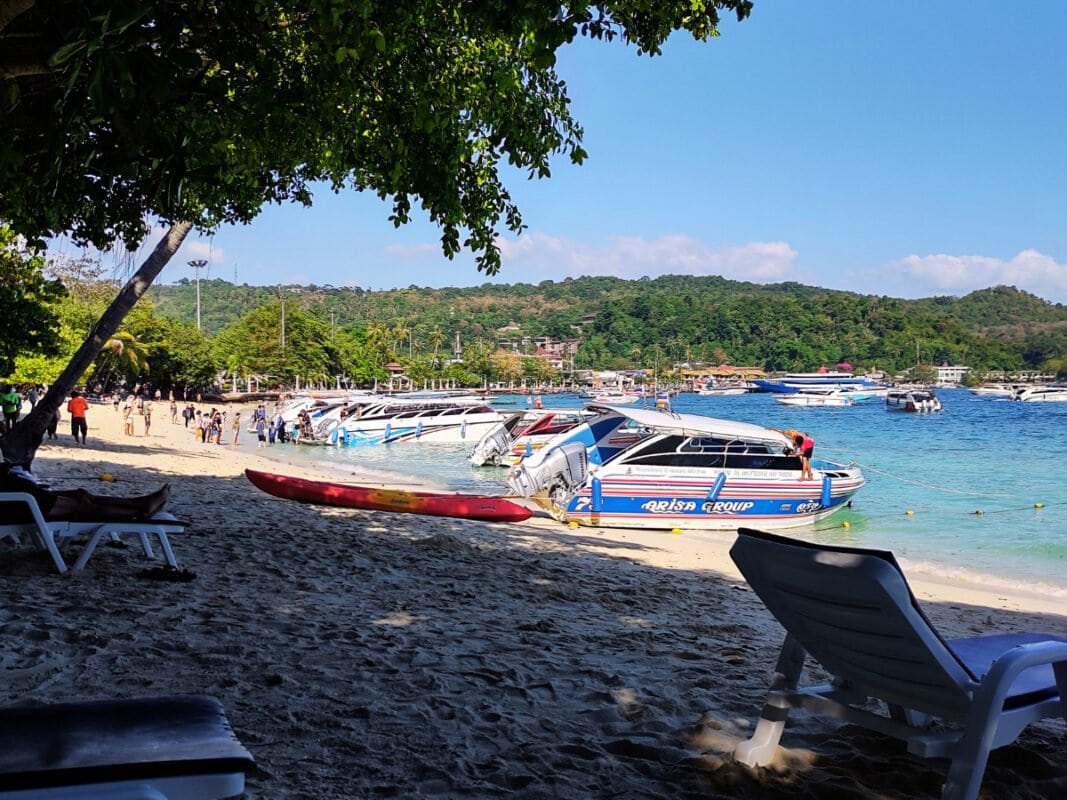
When to Avoid Visiting Koh Phi Phi
I would be most cautious about visiting Koh Phi Phi in August, July and September.
These months combine several disadvantages: less reliable weather, rougher sea conditions, possible park closures and lower visibility for snorkelling.
That does not mean every day is bad. You may still get sunshine and a quiet island experience.
But if you are travelling a long way and want the classic Phi Phi trip, these are the weakest months.
I would also avoid arriving during the Christmas and New Year peak, and Chinese New Year without booking accommodation in advance.
The weather is excellent, but prices and crowds can be intense.
Best Time to Visit Koh Phi Phi by Travel Style
| Travel Style | Best Months | Why |
|---|---|---|
| First-time visitors | November to April | Most reliable weather and transport |
| Snorkellers | December to April | Best visibility and calmer sea |
| Divers | December to April | Stronger visibility and reliable dive trips |
| Budget travellers | May, June, September, October | Lower hotel prices |
| Fewer crowds | November, March, late October | Good balance without peak pressure |
| Hikers | November to February | Slightly cooler mornings |
| Maya Bay visitors | November to April | Best weather, but check seasonal closures |
| Party travellers | December to March | Busiest nightlife |
| Quiet beach stays | May, October, November, March | Fewer people than peak season |
What to Pack for Each Season
Koh Phi Phi is hot and humid throughout the year, so pack light. The main difference is how much rain and boat exposure you need to prepare for.
Dry Season Packing
Stay Connected in Koh Phi Phi. Skip SIM cards and get instant data access with an eSIM before you arrive.
Rainy Season Packing
For a fuller checklist, use the packing list for island hopping in Southern Thailand.
Frequently Asked Questions About the Best Time to Visit Koh Phi Phi
What is the best month to visit Koh Phi Phi?
February is one of the best months for Koh Phi Phi because the weather is usually dry, the sea is calm, and snorkelling visibility is strong.
For a better balance of weather and fewer crowds, November and March are also excellent choices.
Is Koh Phi Phi better in November or December?
November is usually better for fewer crowds and slightly lower prices, while December is better for more reliable dry-season weather.
If you visit in late December, book accommodation and ferries early because Christmas and New Year are extremely busy.
Is April a good time to visit Koh Phi Phi?
April can be a good time to visit Koh Phi Phi, especially for snorkelling and boat trips, but it is one of the hottest months.
Plan hikes and boat departures early in the day, and avoid long walks in the midday heat.
Is Koh Phi Phi worth visiting in rainy season?
Koh Phi Phi can be worth visiting in rainy season if you want lower prices, fewer crowds and a flexible trip.
It is not the best choice if your main priorities are Maya Bay, snorkelling, diving or reliable island-hopping conditions.
Does Maya Bay close every year?
Maya Bay has seasonal closures for conservation, and closure dates can change. Currently (2026) is is still being closed from 1 August to 30 September.
Always check the latest national park status before booking a trip around Maya Bay.
When is the best time to snorkel in Koh Phi Phi?
The best time to snorkel in Koh Phi Phi is from December to April, especially early in the morning.
Long Beach is one of the most reliable shore snorkelling spots, while Phi Phi Leh and Bamboo Island are usually reached by boat.
What is the hottest month in Koh Phi Phi?
April is usually one of the hottest months around Koh Phi Phi and the wider Andaman coast.
The heat matters most for hiking and walking, so plan active routes early and rest in the shade during the middle of the day.
Are ferries to Koh Phi Phi cancelled in rainy season?
Ferries and speedboats can still operate in rainy season, but rough seas and storms can cause delays, route changes or cancellations.
Check your ferry operator and the Thai Meteorological Department forecast before travelling, especially from June to September.
If you’re planning your trip, it’s worth sorting the basics early
Final Verdict: When Should You Visit Koh Phi Phi
For most travellers, the best time to visit Koh Phi Phi is between November and April.
Choose December to February for the most reliable weather, but expect peak-season prices and crowds.
For a better balance of sunshine, calmer seas and fewer visitors, I would choose November or March.
May and October can offer better value, but you will need more flexibility.
From June to September, rougher seas and less predictable weather make Koh Phi Phi a weaker choice if snorkelling, Maya Bay or boat trips are your main priorities.
My personal choice would be November or March. You still have a strong chance of good weather, without quite as much pressure as the busiest weeks of January, February and the Christmas period.
Once you have chosen your dates, continue planning with the Koh Phi Phi travel guide, the 4-day Koh Phi Phi itinerary, and the guide to getting to Koh Phi Phi.
