
Banana Leaf Travel contains affiliate links. If you book through them, I may earn a small commission at no extra cost to you. I only recommend services I personally use and trust. See my Privacy Policy for more information.
Best Time to Visit Koh Lanta: Weather, Seasons & Crowds
The best time to visit Koh Lanta is from November to April, but if I were planning another trip, I’d aim for late November, early December or March.
You still have a good chance of sunny days and calm seas, but you can avoid some of the biggest Christmas and New Year crowds.
December to February has the most reliable weather, but it’s also the busiest and most expensive time to visit.
March is hotter, while May to October brings more rain and rougher seas. And on Koh Lanta, that can affect much more than your beach plans.
So there isn’t really one “perfect” month. The best time depends on whether you care most about weather, snorkelling, fewer crowds or saving money.
Below, I’ll break down Koh Lanta month by month so you can quickly work out which period makes the most sense for your trip.
QUICK GUIDE TO KOH LANTA
Best Things To Do
Travel Essentials
Quick Answer: When Is the Best Time to Visit Koh Lanta?
Best overall: December to March for the most reliable combination of sunshine, calmer seas and good conditions for beaches, snorkelling and boat trips.
Best balance of weather, crowds and prices: November or March. November is quieter as the dry season gets underway, while March usually offers reliable conditions after the busiest peak-season months.
Best weather: January and February are among the driest and most reliable months, but this is also high season.
I visited at the end of January and had great conditions for exploring the island, although accommodation choices were noticeably more limited when booking late.
Rainy season: May to October brings more rain and less predictable sea conditions. September and October are generally among the wettest months, making this a riskier period if beaches, snorkelling and island-hopping are priorities.
If I had to choose one month: March. You still get generally good dry-season conditions, but you’re past the Christmas and New Year peak and may find a better balance between weather, crowds and prices.

Koh Lanta Weather and Seasons
Koh Lanta is warm and humid throughout the year, so temperature isn’t the biggest factor when choosing when to visit.
The more important difference is rainfall and sea conditions, especially if you want to swim, snorkel, take boat trips or explore other islands.
Koh Lanta is located on Thailand’s Andaman coast in Krabi Province and has two main travel seasons: a drier season from roughly November to April and the southwest monsoon season from around May to October.
Dry Season: November to April
November to April is the easiest time to visit Koh Lanta, with more reliable sunshine, calmer seas and the widest choice of tours, restaurants and accommodation.
December to February generally brings the most comfortable conditions, which is also why this is Koh Lanta’s busiest period.
It has excellent weather for beaches, scooter trips and exploring the island, but high-season demand is also noticeable, especially when looking for accommodation without booking far in advance.
March and April are still good months for beaches and boat trips, but they get noticeably hotter.
Rainy Season: May to October
Around May, the southwest monsoon begins to affect the Andaman coast, bringing more frequent rain and less predictable sea conditions.
Rainy season doesn’t necessarily mean rain from morning to night. You can still get sunny periods and good days, but the weather becomes much harder to plan around.
On Koh Lanta, the sea can be a bigger issue than the rain itself. Stronger winds and waves can affect swimming, snorkelling and boat trips.
September and October are generally the months when I would be most cautious about planning a short, beach-focused trip.

When Do the Seasons Change?
There isn’t a date when Koh Lanta suddenly switches from rainy to dry season. May and November are transition months, and conditions can vary considerably from one year to another.
November is particularly interesting if you want to avoid peak season.
Conditions generally improve as the dry season begins, but travelling early in the month still carries more weather risk than visiting in December, January or February.
For planning several months ahead, use historical weather averages to compare the seasons.
Once your trip is close, check the current Thai Meteorological Department forecast for Krabi, especially if you have ferries or boat trips planned.
Average Temperatures on Koh Lanta
Koh Lanta stays hot throughout the year, with average daytime highs of around 30–33°C (86–91°F) and nighttime lows of roughly 24–27°C (75–81°F).
The hottest period is usually around March to May, when the combination of heat and humidity can make hiking, scooter trips and exploring in the middle of the day more tiring.
Even during the rainy season, temperatures remain around 30°C (86°F) during the day.
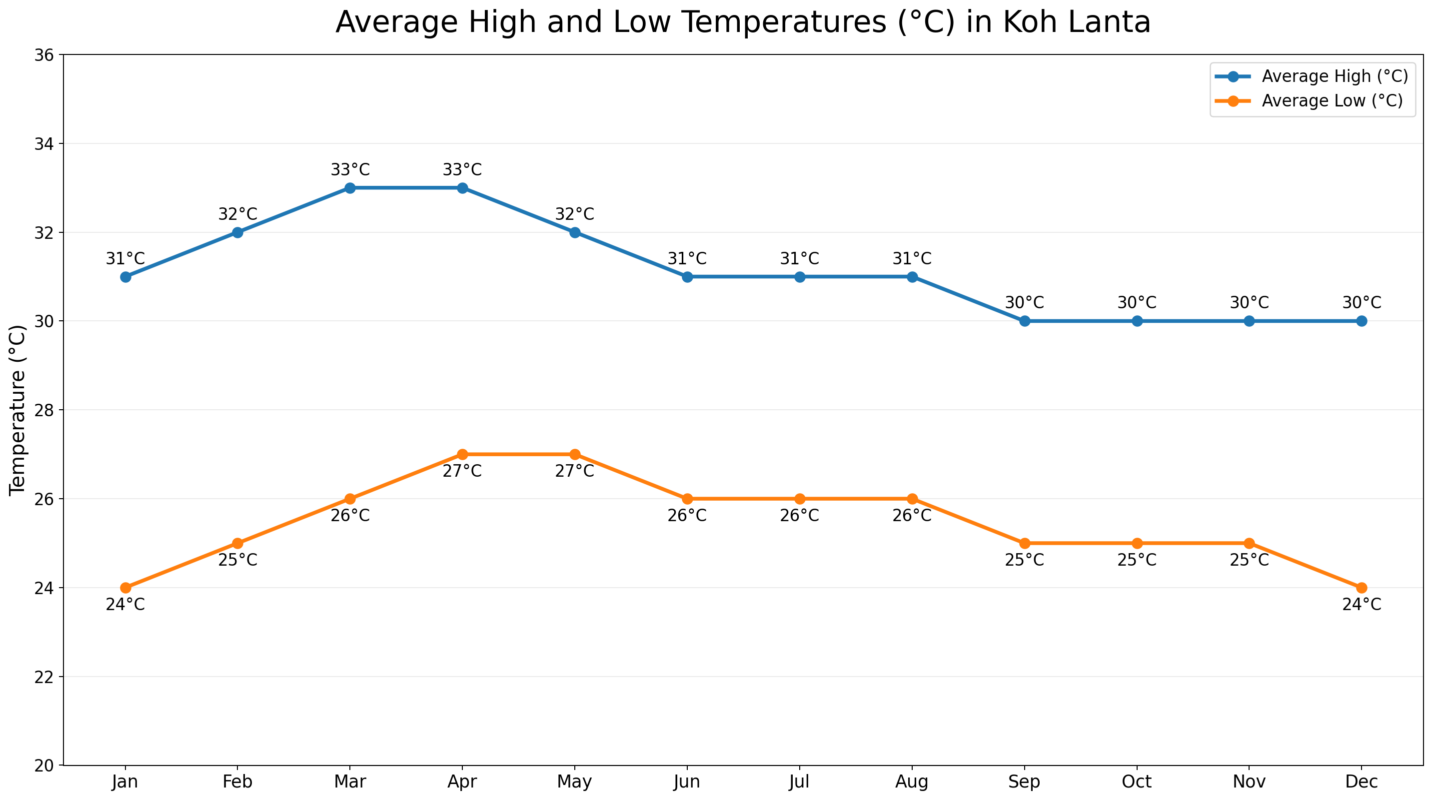
Average monthly high and low temperatures for the Krabi area, based on long-term climate averages. Koh Lanta temperatures can vary slightly. Source: Climate-Data.org.
Koh Lanta Weather by Month
Temperature changes relatively little throughout the year, but rainfall, sea conditions, crowds and prices vary much more.
This table gives you a quick comparison before I go into each month in more detail.
| Month | Rain | Sea & Boat Conditions | Crowds & Prices | My Verdict |
|---|---|---|---|---|
| January | Low | Generally calm; excellent for boat trips | High crowds and prices | Excellent, but busy |
| February | Low | Generally calm; excellent for snorkelling and boat trips | High crowds and prices | One of the best months |
| March | Low–moderate | Usually good for water activities | Crowds begin to ease; prices still fairly high | Best overall balance |
| April | Moderate | Usually good, but conditions become less predictable later in the month | Moderate; Songkran can increase travel demand | Good, but very hot |
| May | Moderate–high | Increasingly changeable as the monsoon develops | Lower crowds and prices | Possible if you’re flexible |
| June | High | Rougher seas and fewer reliable boat-trip days | Low crowds and lower prices | Better for slow, flexible trips |
| July | High | Variable; calm periods are still possible | Generally low crowds | Mixed and weather-dependent |
| August | High | Variable with greater risk of rough seas | Low crowds and prices | Not ideal for a water-focused trip |
| September | Very high | Often rough and unreliable for boat trips | Very quiet; some of the lowest prices | One of the riskiest months |
| October | Very high, usually improving later | Variable; conditions may improve as the month progresses | Low crowds and prices | Better late in the month, but still a gamble |
| November | Moderate, generally improving | Sea conditions become more reliable as the dry season develops | Moderate crowds and prices | Excellent shoulder-season choice |
| December | Low | Generally calm and excellent for water activities | High, especially Christmas and New Year | Excellent weather, higher prices |
Koh Lanta in January
January is one of the best months to visit Koh Lanta if reliable beach weather is your priority.
Rainfall is relatively low, the sea is generally calmer, and conditions are usually good for swimming, snorkelling and boat trips.
The trade-off is that January is firmly in high season. Hotels are more expensive and the best-value rooms can be harder to find, particularly around New Year and in popular areas such as Long Beach and Klong Dao.
I visited Koh Lanta at the end of January and had excellent weather for beaches and exploring the island by scooter.
I hadn’t booked accommodation far in advance, though, and I definitely noticed that the better-value options were more limited.
Verdict: January is an excellent choice for reliable weather and outdoor activities, but book earlier if accommodation choice and price matter to you.
Koh Lanta in February
February is another excellent month for Koh Lanta, with relatively little rain, plenty of sunshine and generally favourable sea conditions.
It’s particularly good if you want to combine beach days with snorkelling, diving and boat trips.
You’re still travelling in high season, so don’t expect low-season prices, but you avoid the Christmas and New Year rush.
Verdict: February is one of the safest choices if good weather and calm seas are more important than finding the lowest prices.
Compare Top Rated Kayaking Tours from Koh Lanta
If you want to secure a spot (especially in high season), it’s worth checking availability in advance – some of the best tours sell out quickly.
Koh Lanta in March
March is one of my favourite months to consider for Koh Lanta. Conditions are generally still dry and suitable for beaches and boat trips, while the busiest part of peak season is beginning to ease.
The main difference is the heat. Temperatures rise as March progresses, so long scooter rides, hiking and exploring in the middle of the day can become tiring.
Verdict: March offers one of the best balances of good weather, slightly fewer crowds and reliable sea conditions.
Koh Lanta in April
April is still a good time for a beach holiday, but it is hot. Humidity is high, and exploring Koh Lanta away from the beach can feel much more tiring during the middle of the day.
Conditions become more changeable as the month progresses and the rainy season approaches.
April also includes Songkran, the Thai New Year, which is celebrated around the country in the middle of the month.
Verdict: April can still be good for beaches, but I would choose an earlier dry-season month if hiking, road trips and lots of exploring are important to you.
Koh Lanta in May
May is when choosing Koh Lanta becomes more of a gamble.
The southwest monsoon begins to influence the Andaman coast, so you can still get beautiful sunny periods, but heavier showers and rougher sea conditions become more likely.
You’ll usually find fewer visitors and better accommodation prices, but the downside isn’t just the rain.
Boat trips become more weather-dependent and some tourism businesses begin reducing their operations for low season.
Verdict: May can work if lower prices matter and your plans are flexible, but I wouldn’t choose it for a short trip built around snorkelling, boat trips and perfect beach weather.
Koh Lanta in June
By June, Koh Lanta is firmly into its wetter season. Expect a mixture of showers, thunderstorms, cloud and sunny periods rather than assuming it will rain continuously every day.
The bigger problem for many tourists is the sea. Rougher conditions can affect swimming, visibility and boat trips, while some businesses operate reduced schedules during low season.
On the positive side, Koh Lanta is much quieter and accommodation can be considerably cheaper.
Verdict: June suits a slower, flexible trip better than a tightly planned beach or island-hopping holiday.
Travel Insurance for Thailand
Travelling during the monsoon season? Protect your trip against unexpected delays, cancellations, and medical emergencies.
Koh Lanta in July
July remains firmly within the rainy season. There can be sunny periods and calmer days, but you shouldn’t plan a trip assuming you’ll get consistently good beach weather.
Sea conditions are variable, so boat trips and water activities need more flexibility than during the dry season.
The island is also much quieter than from December to March, and some beach bars and nightlife spots may close for the low season, so don’t expect a lively evening atmosphere.
Verdict: July can work if you’re comfortable planning around the weather, but it’s not a month I would choose specifically for beaches and boat trips.
Koh Lanta in August
August is warm and humid, with frequent rain and plenty of cloudier periods mixed with occasional sunshine.
Boat trips can still operate when conditions allow, but rougher seas and changing weather make a water-focused itinerary harder to plan.
On the other hand, accommodation prices are lower and you’ll experience a much quieter version of Koh Lanta.
Verdict: August is better for budget-conscious, flexible travellers than anyone coming primarily for snorkelling, diving and reliable beach days.
Koh Lanta in September
September falls within the wettest part of Koh Lanta’s year, with a higher risk of heavy rain, storms and rough sea conditions.
This matters particularly if you only have a few days on the island. Bad weather can disrupt several days of a short trip, while snorkelling, diving and boat excursions are much less reliable than during the dry season.
The island is very quiet and prices can be low, but those savings come with a significant weather trade-off.
Verdict: September is one of the riskiest months for a short Koh Lanta holiday. I would avoid it if reliable beaches, boat trips or island hopping are important to your plans.
Koh Lanta in October
October is a transition month, which makes it difficult to predict far in advance.
The earlier part of the month can still be very wet, while conditions tend to improve as Koh Lanta moves towards the dry season.
That doesn’t mean late October is guaranteed to be sunny. Sea conditions and boat schedules can still be affected by the weather, so flexibility remains important.
The advantage is that you may find low-season prices shortly before the main tourist season gets underway.
Verdict: Late October can be worth considering for flexible travellers looking for value, but November is the safer choice if you can move your dates.
Stay Connected in Koh Lanta. Skip SIM cards and get instant data access with an eSIM before you arrive.
Koh Lanta in November
November is one of the most interesting months to visit Koh Lanta because the island is transitioning back into its dry season.
Early November can still bring rain and unsettled conditions, but the chance of better weather generally increases as the month progresses.
Tourism also starts picking up again as more seasonal businesses and activities return.
You can potentially get a better balance of weather, crowds and accommodation prices than during December, January and February.
Verdict: Mid-to-late November is one of my favourite periods to consider if you want to avoid peak season, although the weather is less reliable than in January or February.
Koh Lanta in December
December brings Koh Lanta firmly into its main dry season, with generally favourable conditions for beaches, swimming, snorkelling, diving and exploring the island.
The downside is demand. Visitor numbers increase considerably, particularly around Christmas and New Year, and accommodation prices rise with them.
If you’re travelling over the festive period, this isn’t a good time to rely on finding the best rooms at the last minute.
Verdict: December is excellent for weather, but visit earlier in the month if you want to avoid the biggest festive-season crowds and prices.
Best Time for Beaches and Swimming on Koh Lanta
December to March is the best time for beaches and swimming in Koh Lanta.
The west coast generally has calmer seas during these months, making it easier to plan full beach days and swim regularly.
You can still get good beach days outside the main dry season, but conditions become less predictable.
Best choice: If beaches are one of the main reasons you’re visiting, I would choose December to March rather than taking the chance on low-season weather.
→ Related guide: Best Beaches on Koh Lanta

Best Time for Snorkelling and Diving on Koh Lanta
December to April is generally the best period for snorkelling and diving around Koh Lanta, with calmer sea conditions and more reliable boat trips to offshore sites.
This matters because Koh Lanta’s best snorkelling isn’t really about walking off the beach with a mask.
Many of the best underwater experiences are boat trips to Koh Rok and Koh Haa, while divers can also reach sites such as Hin Daeng and Hin Muang.
During the monsoon, rougher seas can affect visibility and boat departures, so I wouldn’t plan a short low-season trip around snorkelling or diving.
Best choice: December to March if snorkelling is one of your main priorities.
→ Related guides:
Find the best Koh Rok and Koh Haa snorkelling tours from Koh Lanta
Best Time for Hiking, Road Trips and Exploring Koh Lanta
November to February is my favourite period for exploring Koh Lanta beyond the beaches. You have a better chance of dry roads and trails without the more intense heat of March and April.
This is especially useful on Koh Lanta because there is much more to explore than the main beach areas.
You can visit Old Town, mangroves, caves, viewpoints and the quieter south, or simply spend a day driving around the island.
March and April are still good for exploring, but the heat can make hiking and long scooter days much more tiring.
During the rainy season, heavy showers can make roads and trails slippery, so you’ll need more flexibility.
Best choice: November to February for the most comfortable combination of dry weather and manageable heat.

Cheapest and Quietest Time to Visit Koh Lanta
May to October is generally the cheapest and quietest time to visit Koh Lanta.
Accommodation prices can be lower and you’ll find far fewer tourists, but some hotels, restaurants and beach bars may close for the low season.
If saving money is important but you don’t want the full low-season experience, mid-to-late November is a better compromise.
The island is becoming livelier again and weather conditions are generally improving ahead of peak season.
Best choice: Mid-to-late November for a balance of better weather, fewer crowds and potentially better-value accommodation.
→ Related guides: Where to Stay in Koh Lanta

Is Koh Lanta Worth Visiting in the Rainy Season?
Yes, Koh Lanta can be worth visiting during the rainy season, but I would only choose it if you’re flexible about what you do each day.
The landscape is also at its greenest, and you can still get sunny periods between the rain.
But you’re accepting a very different type of Koh Lanta trip. Rougher seas can affect swimming, snorkelling and boat trips, while some hotels, restaurants, beach bars and nightlife spots close or reduce their services during low season.
Rainy season can work well if you:
I would avoid it if you:
I would be particularly cautious about September and October if you have a short or tightly planned trip.
A few days of poor weather matter much more when you only have three nights on the island than when you’re staying for two weeks.
Travel Insurance for Thailand
Travelling during the monsoon season? Protect your trip against unexpected delays, cancellations, and medical emergencies.
My recommendation: Rainy season can be great for a cheap, quiet and slow stay, but I wouldn’t choose it for a first short trip to Koh Lanta.
If beaches, snorkelling and exploring are the reason you’re coming, the dry season is worth paying more for.
→ Related guides: Is Koh Lanta Worth Visiting?
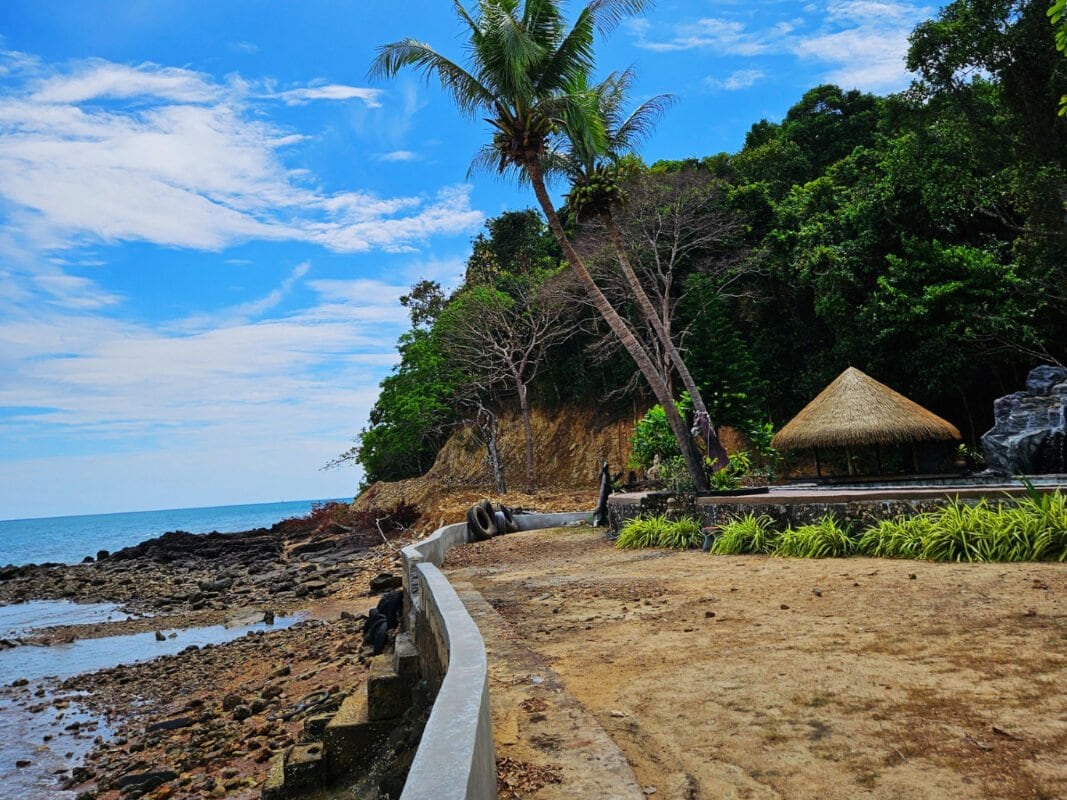
November vs May: Which Shoulder Season Is Better?
Personally, I would choose November over May.
Both months sit around the transition between Koh Lanta’s dry and rainy seasons, but they’re moving in opposite directions.
November is getting better: the southwest monsoon is retreating, the island is becoming busier again and more seasonal activities and businesses are returning.
Early November can still be unsettled, but conditions generally become more favourable as the month progresses.
May is getting less reliable: rain becomes more frequent as the southwest monsoon develops, sea conditions become less predictable and Koh Lanta starts moving into its quieter low season.
That makes mid-to-late November the better shoulder-season gamble if you want to save some money and avoid peak crowds without giving up too much weather reliability.
My recommendation: Choose November for the better balance of weather, prices and activities.
Choose May only if lower prices and a quieter island matter more to you than reliable beach and boat-trip conditions.

Ferries, Transport and Weather Safety
Koh Lanta remains accessible during the rainy season, but bad weather can make getting around and taking boat trips less predictable.
Rough seas are more likely to affect speedboats, island connections and day trips, so leave some flexibility in your plans if you’re travelling between May and October.
If you’re connecting Koh Lanta with other islands, avoid planning a tight ferry connection immediately before an important flight or international journey.
Check current schedules before travelling, as routes and frequencies can also change between high and low season.
Heavy rain can also make exploring Koh Lanta by scooter more difficult. Roads become slippery, visibility can drop quickly and smaller roads or tracks may be harder to navigate after heavy rain.
If conditions are poor, using a taxi or tuk-tuk is often the better option.
Before travelling or taking a boat trip during unsettled weather, check the latest forecast and warnings from the Thai Meteorological Department and follow advice from local operators.
Frequently Asked Questions About the Best Time to Visit Koh Lanta
What is the best month to visit Koh Lanta?
February and March are two of the best months to visit Koh Lanta for dry weather and generally calm seas. I would choose March for a good balance of weather and slightly fewer peak-season crowds.
When is the rainy season in Koh Lanta?
Koh Lanta’s rainy season generally runs from May to October. September and October are usually among the least reliable months, while conditions tend to improve during November.
Does it rain all day during rainy season in Koh Lanta?
Not necessarily. You can get sunshine between heavy showers, but several cloudy or rainy days are also possible. Rough seas can affect activities even when it isn’t raining.
Is Koh Lanta worth visiting in October?
October can work for a flexible trip, but I wouldn’t choose it for a short first visit. If you can change your dates, mid-to-late November is usually a better shoulder-season choice.
Does Koh Lanta close during the rainy season?
No, but the island becomes much quieter. Some hotels, restaurants, beach bars, nightlife spots and tour operators may close or reduce their services.
Can you swim in Koh Lanta during the rainy season?
Yes, when conditions are safe, but swimming is less reliable. Monsoon winds can create rougher seas along the west coast, so always follow local warnings and beach flags.
If you’re planning your trip, it’s worth sorting the basics early
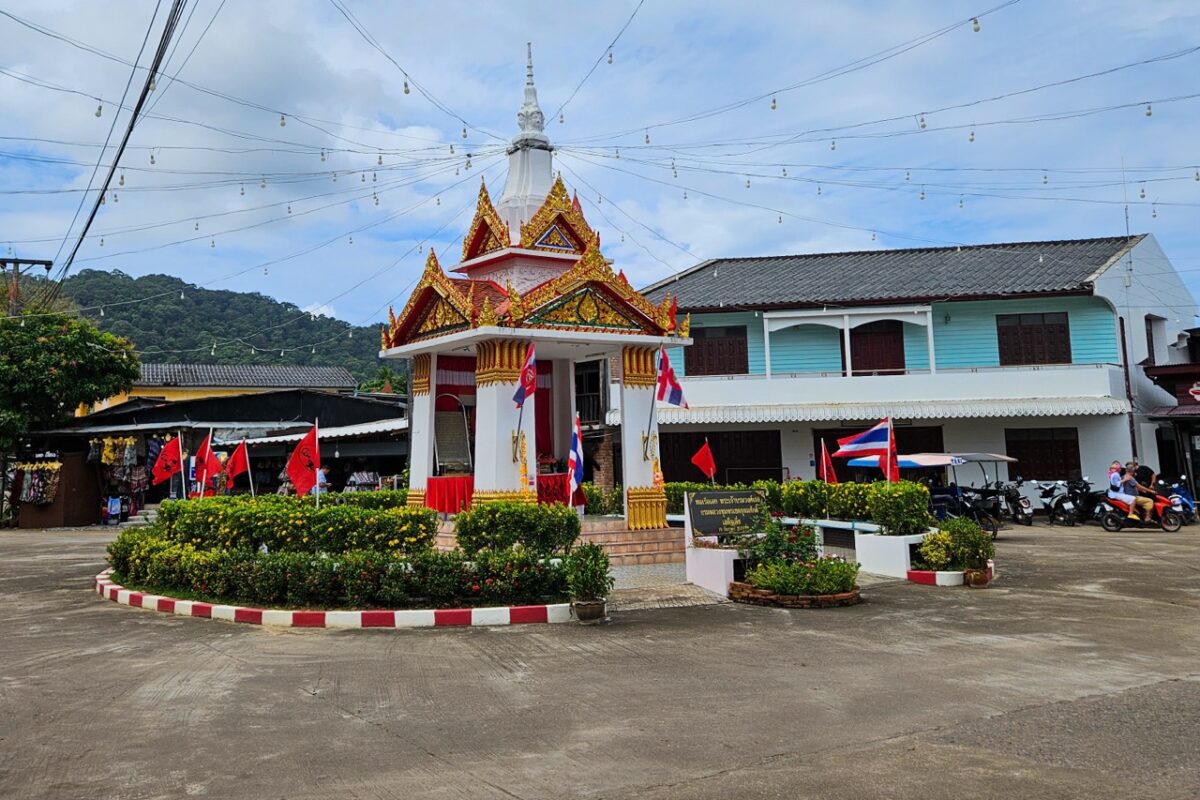
Continue Planning Your Koh Lanta Trip
Now that you know when you want to visit, the next decisions are where to stay, what you want to see and how many days you need. These guides will help you put the rest of your trip together.
Choose Where to Stay and What to Do
- Where to Stay in Koh Lanta – compare the main beach areas, Old Town and quieter inland stays to find the best base for your trip.
- Best Beaches in Koh Lanta – compare Koh Lanta’s beaches if swimming, sunsets or finding a quieter stretch of coast are priorities.
- Best Things to Do in Koh Lanta – plan your beaches, snorkelling trips, Old Town, mangroves, national park and other activities.
Decide How Long You Need
- 5 Days in Koh Lanta – a good choice if you want time for beaches, exploring the island and a day trip without rushing.
- 24 Hours in Koh Lanta – use this if Koh Lanta is a short stop and you want to make the most of one full day.
Continue Your Trip Through Southern Thailand
- Best Island Hopping Routes in Southern Thailand – see how to combine Koh Lanta with Krabi, Koh Phi Phi, the Trang Islands and Koh Lipe.
- Best Islands in Southern Thailand – compare the islands if you’re still deciding which destinations deserve a place on your route.
Not finished planning Koh Lanta? You can find all of my practical advice in the Koh Lanta Travel Guide.
