
Banana Leaf Travel contains affiliate links. If you book through them, I may earn a small commission at no extra cost to you. I only recommend services I personally use and trust. See my Privacy Policy for more information.
21 Best Things to Do in Krabi: Beaches, Hikes and Nature Adventures
Krabi is famous for Railay Beach and island tours, but the coast is only one part of the region.
I spent a week in Krabi Town at the end of a month-long trip along Thailand’s Andaman Coast. After visiting several islands, I deliberately chose a local town rather than another beach base.
What made Krabi worth a longer stay was the variety of experiences.
You can take a long-tail boat through mangroves, explore caves, climb to mountain viewpoints, kayak through clear freshwater and still finish the day at the beach.
This guide covers the best things to do across Krabi Province, not only Ao Nang.
It includes the famous places that are genuinely worth seeing and quieter experiences that show you a different side of the region.
My Favourite Places to Stay in Krabi:
Thailand Travel Essentials:
If you still need to decide where to stay or how Krabi fits into your wider trip, start with my complete Krabi travel guide.
Best Things to Do in Krabi by Area
| Area | Best things to do nearby | Time to allow |
|---|---|---|
| Ao Nang, Railay and nearby islands | Railay and Phra Nang, rock climbing, Monkey Trail, coastal kayaking and island tours | 2–3 days |
| Nong Thale and Tubkaek | Dragon Crest, Khlong Root, Nong Thale Lake and Following Giants | 1–2 days |
| Ao Thalane | Mangrove kayaking | Half day |
| East of Krabi Town | Tiger Cave Temple and Khao Phanom Bencha National Park | Half to full day each |
| Klong Thom | Emerald Pool, Blue Pool and Hot Spring Waterfall | Full day |
| Krabi Town | Urban Forest, Khao Khanab Nam, White Temple, riverfront and weekend market | Full day |
| Around Ao Nang and Krabi Town | Thai cooking classes, Muay Thai and ATV tours | 1–4 hours each |
Map of the Best Things to Do in Krabi
Krabi’s attractions are spread across the province, so it helps to see them on a map before choosing your base.
I grouped the places into four areas: Ao Nang and Railay, the north coast and Nong Thale, inland Krabi and Klong Thom, and Krabi Town.
This makes it easier to see which beaches, hikes and nature experiences you can combine.
Before You Choose What to Do in Krabi
Krabi is a province rather than one compact resort area. The beaches, mountains, caves and freshwater attractions are spread across the province.
Ao Nang is the easiest base for accessing the beach, Railay, island tours and plenty of restaurants.
Krabi Town has no sandy beach, but it is more local and works better for exploring the river and some mainland attractions.
Where you stay affects how easily you can reach these places, so compare the best areas to stay in Krabi before booking your hotel.
I stayed in Krabi Town and used it as a base for exploring the rest of the province.
Ao Nang and Krabi Town are roughly 20–30 minutes apart by road. Renting a scooter is the most convenient way to explore the area, but I only recommend it if you’re already a confident rider.
You can still see Krabi without a scooter. Grab app and taxis work well for nearby trips, while tours with hotel pickup can help you reach more distant attractions.
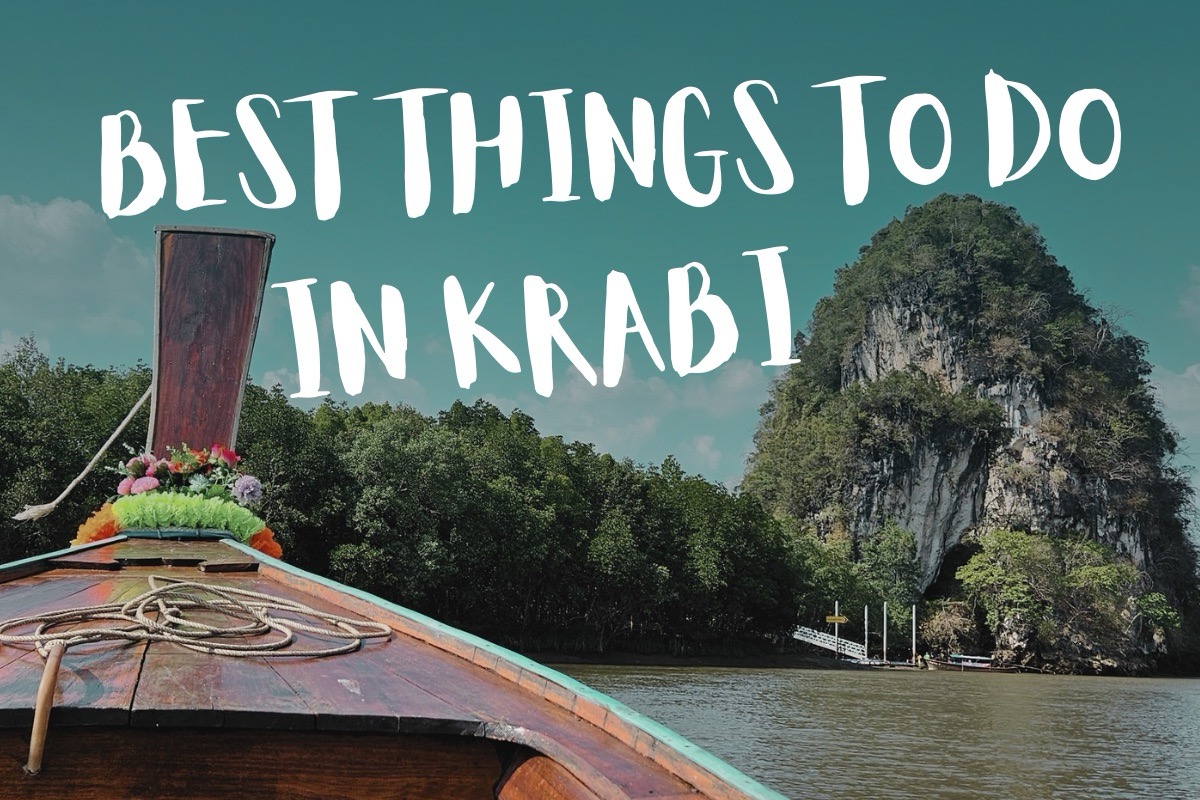
Best Things to Do in Krabi
1. Take a Long-Tail Boat to Railay Beach
If this is your first visit to Krabi, Railay is the coastal day I wouldn’t skip.
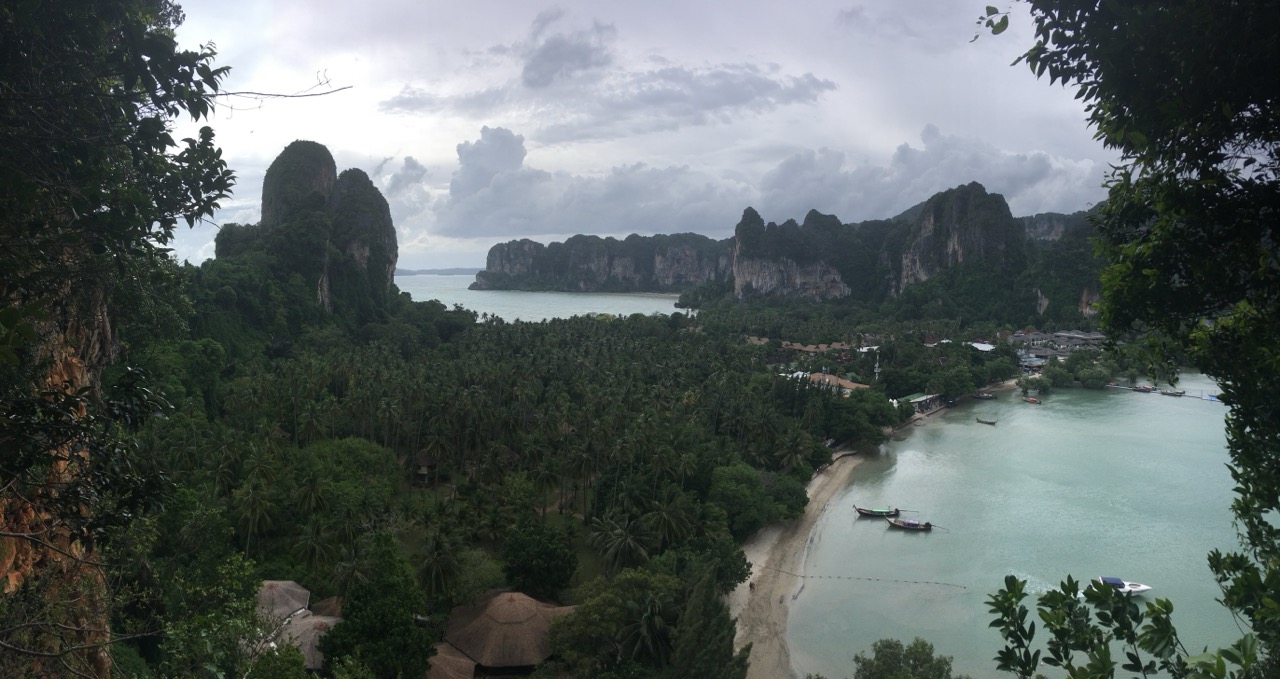
The peninsula is cut off from the road network by limestone cliffs, so arriving by long-tail boat is part of the experience.
Boats leave from Ao Nang and other nearby piers, depending on where you’re staying and the sea conditions.
Railay West is the main swimming beach. Railay East is more useful for boats, accommodation and walking across the peninsula than for a beach day.
Continue to Phra Nang Cave Beach rather than stopping at the first stretch of sand you see.
The cliffs curve around the beach, climbers scale the rock formations above it and small islands sit just offshore.
Phra Nang is also home to Princess Cave, an active local shrine filled with offerings.
It may look unusual if you don’t know its meaning, but it should be treated respectfully rather than as a novelty photo stop.
Railay is not secluded. Day tours and long-tail boats make the main beaches busy, especially around the middle of the day.
Arrive early, stay overnight or walk farther along Phra Nang Beach if you want a bit more space.
2. Try Rock Climbing on Railay or Tonsai
Krabi’s limestone cliffs are not only scenery. Railay and neighbouring Tonsai are two of Thailand’s best-known climbing areas.
You don’t need previous experience. Beginner sessions normally include an instructor, equipment and easier routes where you can learn the basic movements and safety system.
A half-day lesson is enough if you mainly want to try climbing. Choose a full day if it is one of the main reasons you’re visiting Krabi.
Book through a reputable operator and check what the session includes.
Climbing in the heat is tiring, so an early start is much more comfortable than spending the whole morning on the beach first.
Find the best rock climbing experiences at Railay Beach
3. Walk the Monkey Trail to Pai Plong Beach
The Monkey Trail starts at the southern end of Ao Nang Beach and crosses a wooded headland to Pai Plong.
It is a short walk, but much of the route uses wooden steps. They can feel steep when people are passing in both directions or when the boards are wet.
Macaques regularly gather around the trail. Keep food inside your bag, hold on to loose belongings and don’t feed or approach them.
They are used to people and may grab anything that looks interesting.
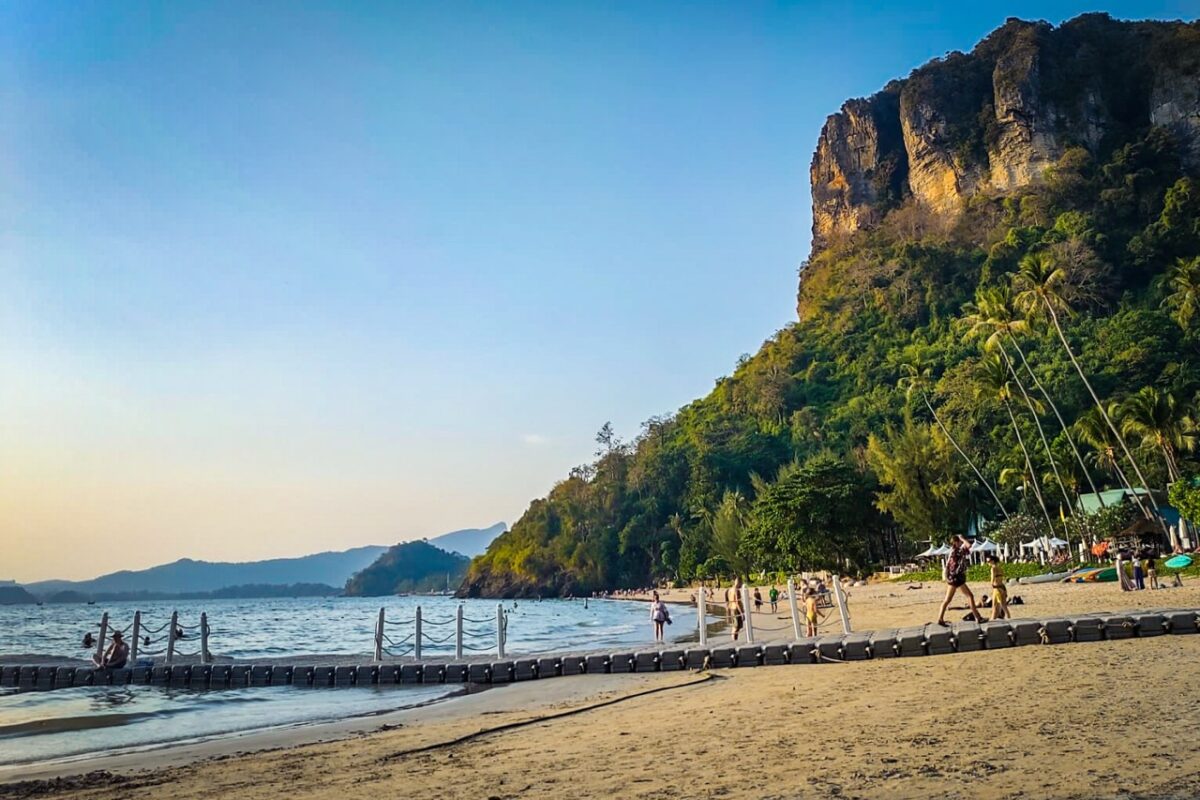
Pai Plong is smaller and more enclosed than Ao Nang, with high limestone cliffs behind the sand. It often feels calmer, but it is not a secret beach and can still get busy in high season.
4. Kayak Around Railay’s Limestone Coast
Kayaking gives you a closer view of the cliffs, rock overhangs and small beaches around the Railay peninsula.
You can usually rent a kayak on Railay and choose a short paddle or keep it for several hours.
Alternatively, rent a kayak from Pai Plong and reach Railay that way instead of taking a boat.
Stay close to the coast if you’re inexperienced. Wind, waves, tides and boat traffic can change the difficulty quickly, even when the water looked calm earlier in the day.
On a settled day, kayaking is a good way to escape the busiest part of the beaches without committing to another organised boat tour.
5. Choose the Right Krabi Island Hopping Tour
“Krabi island tour” can describe several very different itineraries. Check the route rather than booking from the prettiest photo.
The Four Islands route normally focuses on places close to Ao Nang, such as Koh Poda, Chicken Island and the sandbar around Koh Tup and Koh Mor.
Railay or Phra Nang may also be included, even though they are part of the mainland.
A Hong Islands tour heads north towards Hong Lagoon and the surrounding islands.
Hong also has a staircase leading to a high viewpoint over the bay and limestone formations.
Many standard tours do not combine Hong with Koh Poda and the Four Islands.
If one particular place matters to you, check every stop before paying.
You’ll also see Phi Phi day trips advertised from Krabi. They can work if Krabi is your only base on the Andaman Coast.
But the boat journey and multiple stops make it a long day. If time allows it, I’d stay on Koh Phi Phi instead and use your Krabi boat day for the closer islands.
→ Related guides: Complete Koh Phi Phi Travel Guide
Compare Krabi island hopping tours (routes, prices & availability)
If you want to secure a spot (especially in high season), it’s worth checking availability in advance.
6. Hike Dragon Crest Mountain
Dragon Crest Mountain, also called Khao Ngon Nak or the Ngon Nak Nature Trail, is my top choice if you want a proper hike in Krabi.
The route climbs through humid jungle before opening onto views over the Andaman Sea, forest-covered limestone hills and nearby islands.
Plan around four to five hours for the return hike, including time at the viewpoints.
The trail is straightforward enough for independent hikers in normal conditions, but roots, rocks and steep sections make it much harder than an ordinary viewpoint walk.
Start early and carry more water than you think you’ll need. Much of the trail is shaded, but the heat and humidity still build quickly.
You normally need to register at the trailhead. Entrance arrangements, last-start times and trail conditions can change, so check locally before setting out.
The trailhead is close to Tubkaek Beach, so if you still have energy after the descent, the quieter shoreline makes an easy final stop.
→ Related guides: Jungle Trekking in Southern Thailand
7. Kayak Through Khlong Root Clear Water Canal
Khlong Root (often written as Klong Root) is one of the best alternatives to a crowded beach or island day.
You paddle through clear freshwater, flooded forest and thick greenery rather than across the open sea. In the clearest sections, you can see straight to the bottom.
Kayaks are available near the canal, and the route leads towards a natural swimming area.
The water feels much cooler than the sea, which is nice after paddling in Krabi’s heat.
Visit early if you want the quietest experience. It becomes livelier once day tours arrive, although it is still very different from Ao Nang and Railay.
Compare Khlong Root Kayaking Tours
A tour is a convenient option if you don’t have your own transport. Compare prices, reviews and hotel pickup options below.
8. Watch Sunrise or Sunset at Nong Thale Lake
Nong Thale Lake is a peaceful place to enjoy views of the limestone cliffs reflected in the water. You don’t need long to visit, so it’s easy to add to another day trip.
Visit around sunrise if you don’t mind an early start, or stop before sunset after kayaking at Khlong Root.
You may be able to arrange a small boat or kayak, but the view from the shore is also enough if you simply want a quiet end to the day.
This is a good example of why Krabi rewards independent exploration. Some of the most memorable landscapes are not beaches or headline attractions.
9. Observe Elephants at Following Giants
If you want an elephant experience in Krabi, look for an observation-led programme rather than one built around close interaction.
Following Giants operates a no-touch sanctuary near Ao Nang. It does not offer riding, bathing, feeding or performances.
Visits focus on observing rescued elephants, learning about their behaviour and understanding why lower-contact tourism is better for their welfare.
That difference matters. A place can use the word “sanctuary” while still allowing activities designed mainly for tourist photos.
Following Giants combines easily with Khlong Root and Nong Thale Lake because all three are in the same broader area.
10. Kayak Through the Mangroves at Ao Thalane
Choose Ao Thalane if you want a more enclosed and dramatic mangrove route than Khlong Root.
The kayaking routes pass between limestone walls, narrow channels and mangrove forest.
You may see birds, macaques, monitor lizards and other wildlife living in the mangroves.
The tide affects which channels are accessible, so this is one place where a guided trip can add real value.
A local guide can choose the route for the conditions rather than following a fixed loop that may not work that day.
Khlong Root is better for clear freshwater and swimming. Ao Thalane makes more sense if you’d rather see the mangroves and narrow karst channels.
Compare Ao Thalane Kayaking Tours
A guided tour helps you explore the mangrove channels at the right tide. Compare prices, reviews and hotel pickup options below
11. Climb Tiger Cave Temple and Explore the Lower Complex
Tiger Cave Temple, or Wat Tham Suea, is both a religious site and one of Krabi’s toughest short climbs.
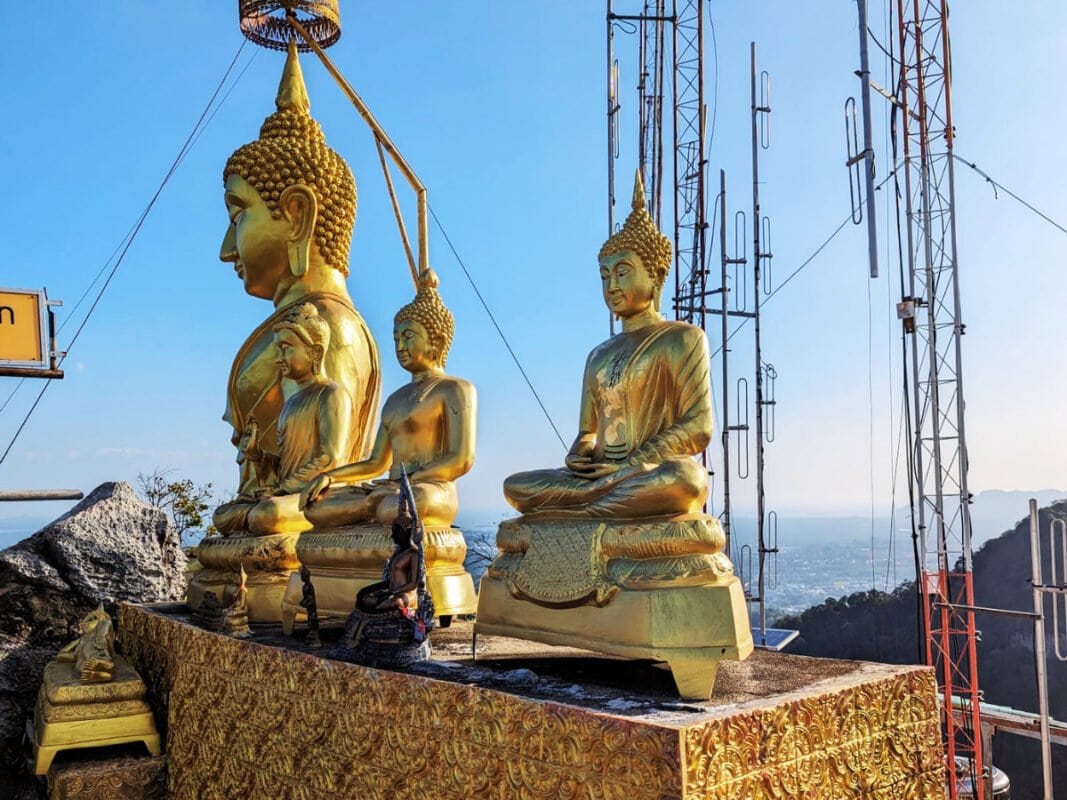
More than 1,200 steep, uneven steps lead to the mountaintop Buddha and wide views over Krabi’s limestone landscape.
The number sounds manageable until you add tropical heat, humidity and unusually high steps.
Go early, bring water and give yourself time to rest on the way up. The descent also needs concentration once your legs are tired.
Wear clothing that covers your shoulders and knees, and secure any food or loose belongings around the macaques.
But you don’t have to climb to the summit to make the visit worthwhile.
The lower temple grounds include shrines, caves, forest paths and areas used by monks. This is a much better option if the staircase is unsuitable for you.
→ Related guides: Authentic Cultural Experiences in Southern Thailand
12. Explore Khao Phanom Bencha National Park
Khao Phanom Bencha National Park shows a much wilder side of Krabi, with rainforest, streams, waterfalls and longer walking routes.
For a straightforward day trip, focus on Huai To Waterfall and the trails near the visitor area. Conditions depend heavily on recent rain, so ask which paths and waterfall levels are currently worthwhile.
The multi-hour routes become steeper and more remote. Carry enough water and don’t assume a line on a map means an easy tourist trail.
Reaching the mountain’s higher areas or attempting an overnight summit trek is a specialist trip.
The route is not clearly marked throughout and can involve scrambling, ropes, leeches and camping.
Arrange an experienced local guide rather than treating it as an independent extension of the waterfall walk.
→ Related guides: Top Adventurous Experiences in Southern Thailand
See Tours to Khao Phanom Bencha National Park
Compare guided day trips and combined itineraries below.
13. Swim in the Emerald Pool and Visit the Hot Spring Waterfall
The Emerald Pool and Klong Thom Hot Spring Waterfall are commonly combined because both sit south-east of Krabi’s main tourist bases.
The Emerald Pool is reached by a forest walk and is open for swimming. It is beautiful, but it is also one of Krabi’s busiest inland attractions.
Arrive near opening time if you want a calmer swim before tour groups fill the pool.
The nearby Blue Pool is for viewing only. Access can close seasonally to protect wildlife, so check whether the trail is open before planning your day around it.
The Hot Spring Waterfall has naturally warm water flowing through a series of rock pools. Space is limited, which is another reason to arrive early.
This is best treated as a full mainland excursion once driving and entrance walks are included. You can go there independently by car or scooter, join a tour or hire a driver.
Despite the “jungle tour” name used by many operators, this is not a remote trek. The main paths are established and the pools are popular.
Compare Krabi Emerald Pool and Hot Springs Tours
Many tours combine several attractions in one day. Compare prices, reviews and itineraries below.
14. Walk Through Krabi Urban Forest
Krabi Urban Forest is an easy way to explore the mangroves without leaving Krabi Town or booking a boat tour.
A raised walkway runs for roughly 500 metres through the trees. The landscape changes with the tide.
At low tide, you can see tangled mangrove roots stretching across the mud below.
Look carefully and you may spot colourful crabs and mudskippers. These unusual fish can move across the exposed mud.
Small fish, kingfishers, macaques and monitor lizards also live around the mangroves, although wildlife sightings vary.
Partway along the walkway, you can climb an observation tower.
From the top, you get a wide view across the forest and Krabi River towards the limestone peaks of Khao Khanab Nam.
The path ends near a small pier. Local people often come here to fish, while longtail boats travel along the river or wait to take visitors across to Khao Khanab Nam Cave.
Plan around 30–60 minutes for the walk. Early morning or late afternoon is usually cooler, and don’t forget mosquito repellent.
→ Related guides: 20 Reasons Why You Should Visit Krabi Town

15. Take a Krabi River Boat to Khao Khanab Nam
The twin limestone cliffs of Khao Khanab Nam rise beside the Krabi River and form one of the town’s most recognisable landscapes.
Long-tail boat drivers wait near the riverfront around Chao Fah Park. Before leaving, agree on the price, duration and route.
Some trips only cross to the cave, while longer tours continue through mangrove channels and towards fish farms or Ko Klang’s fishing communities.
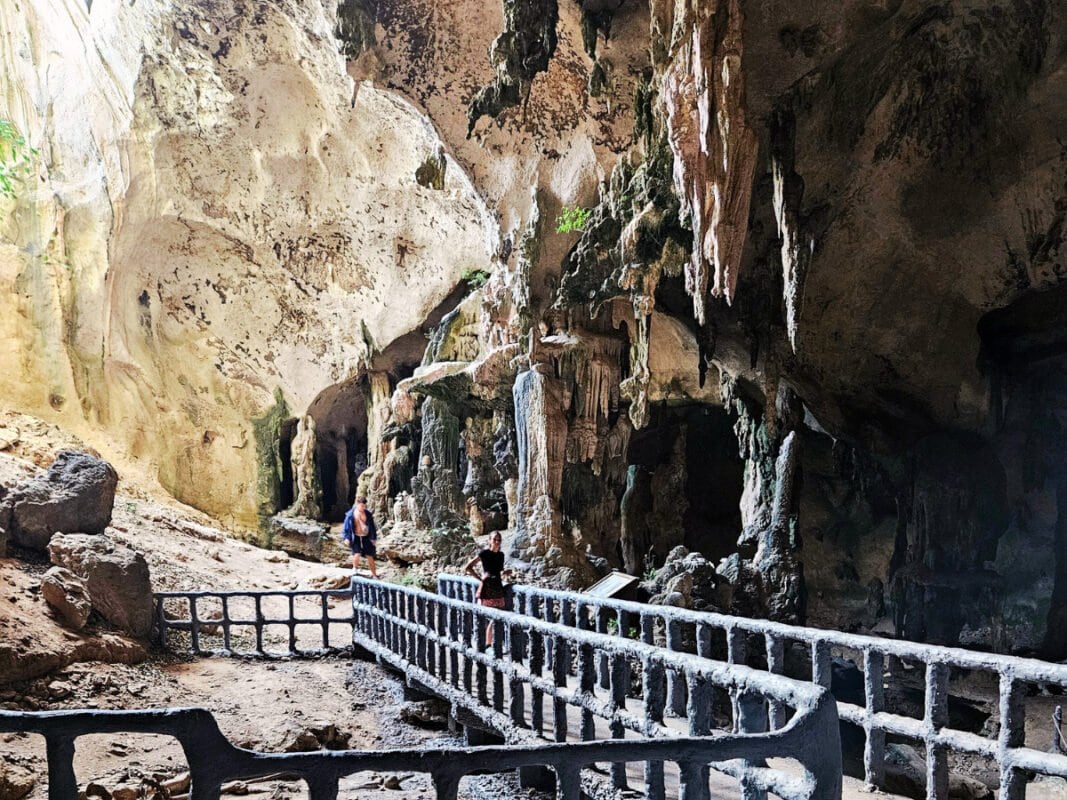
Inside Khao Khanab Nam, a short climb leads to limestone formations, openings overlooking the river and a dramatic giant skeleton display.
The skeleton is an exhibit rather than an archaeological discovery, but it gives the cave an unusual atmosphere.
Allow a couple of hours if you want the cave and mangroves rather than the shortest return crossing.
For me, the river and limestone scenery capture what makes Krabi Town different from the beach resorts.
It feels connected to the landscape without being built entirely around visitors.
Compare Krabi Khao Khanab Nam Caves Tour Packages
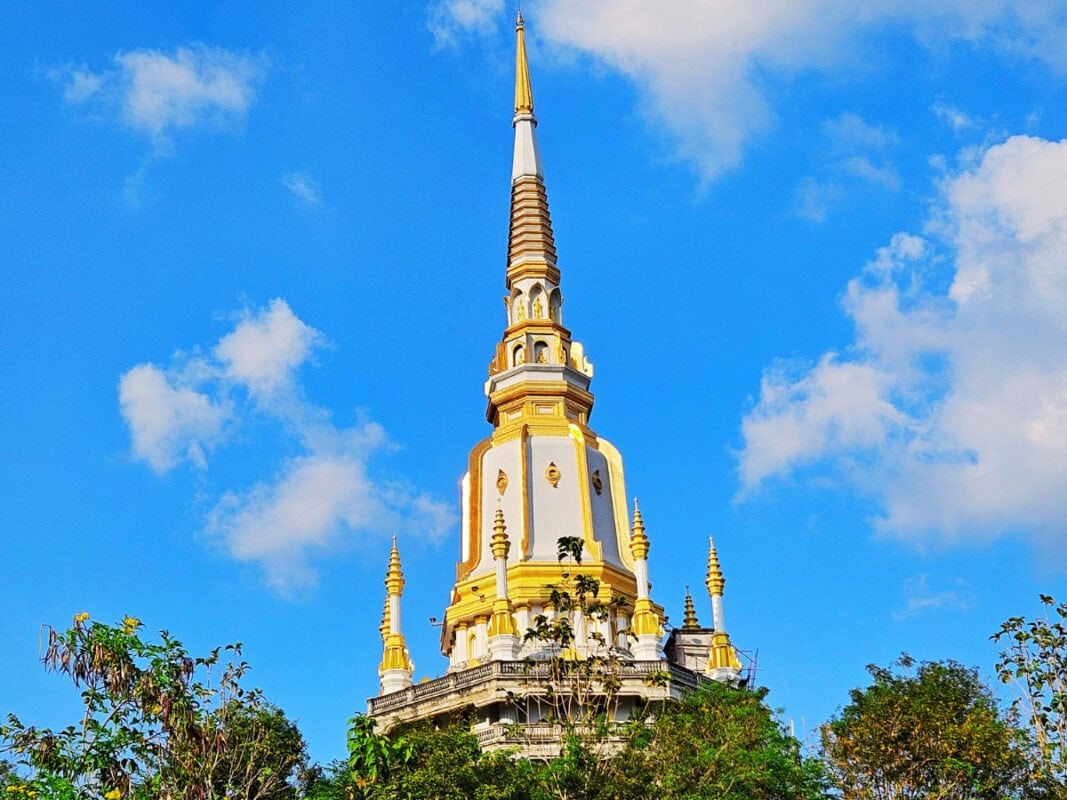
16. Visit Wat Kaew Korawaram – Krabi’s White Temple
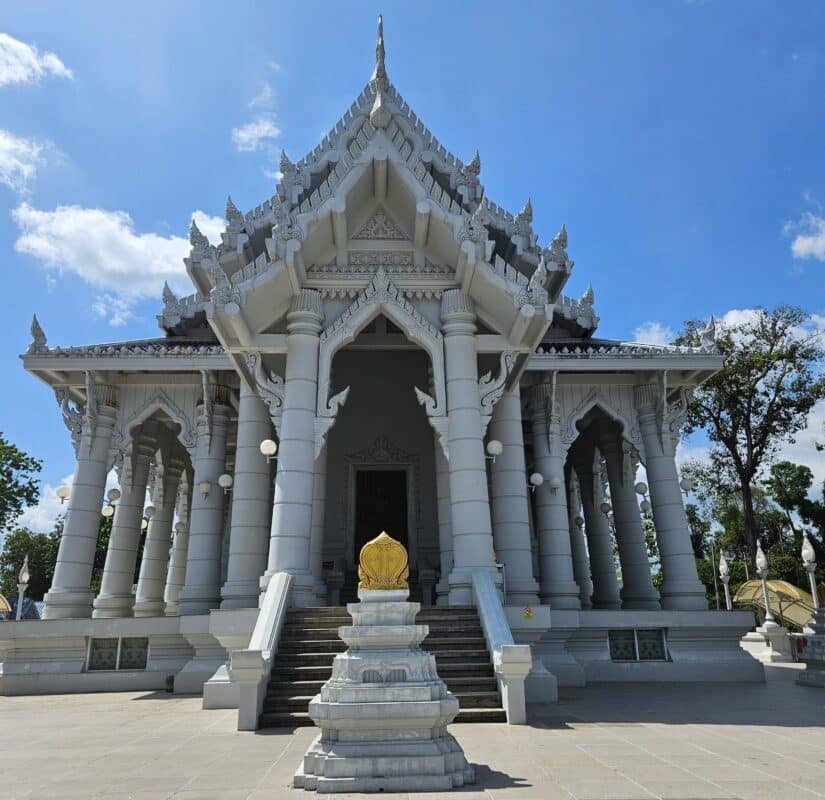
Wat Kaew Korawaram, often called Krabi’s White Temple, stands on a small hill in the centre of Krabi Town.
The temple’s history dates back to 1887, when the area was still known as Baan Pak Nam.
It began as a small place for monks and later grew into one of Krabi Town’s most important Buddhist temples.
A wide staircase guarded by naga sculptures leads to the bright white main building. Inside, you’ll find a large golden Buddha and colourful murals.
It is much easier to visit than Tiger Cave Temple and only takes around 30–45 minutes.
Before visiting cover your shoulders and knees, and remember that it is still an active place of worship.
17. Walk Along the Krabi Riverfront
The main riverside route from Chao Fah Park to Thara Park is around 1.6 km. It takes approximately 20–30 minutes to walk one way, although you may want longer for stops.
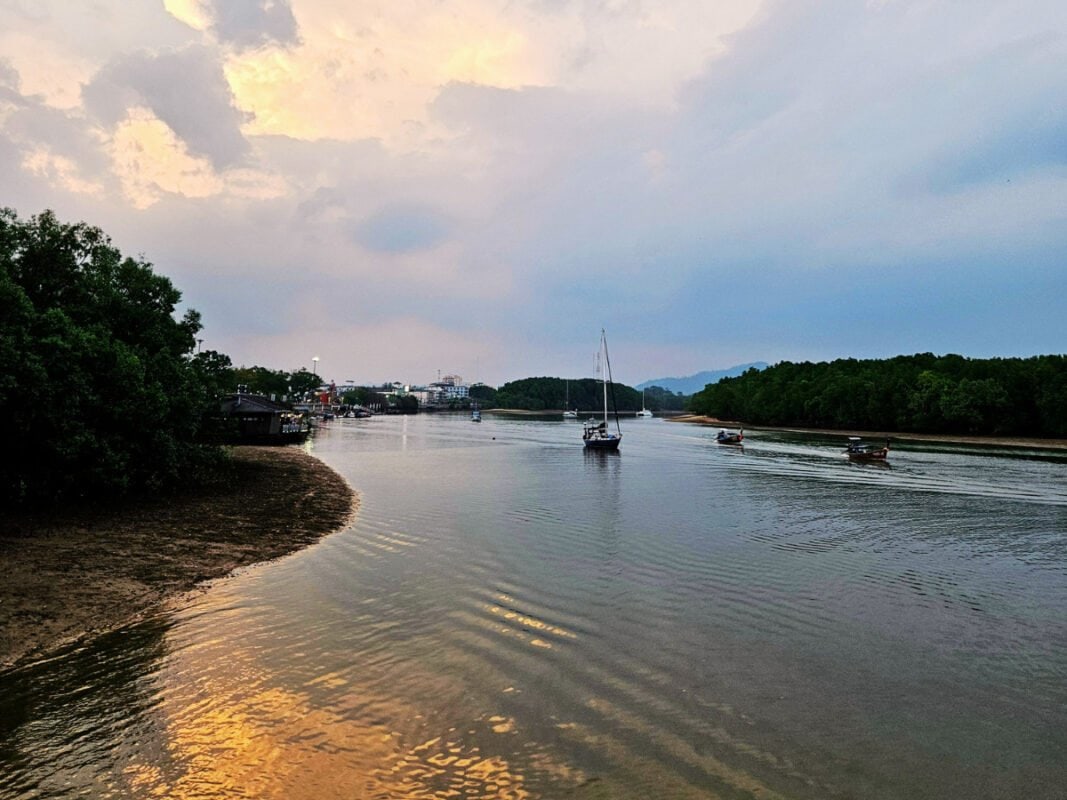
The riverfront is popular with locals, especially in the late afternoon. People come here to walk, exercise and relax by the water.
You can watch long-tail boats leave Chao Fah Pier, local ferries cross the river and fishing boats travel between the mangroves.
Fishermen also work around the piers, giving the area a more local feel than Krabi’s busy beach resorts.
Walk around sunset when it is cooler and the light softens over Khao Khanab Nam.
You can then have dinner at The River Restaurant & Bar, a floating restaurant overlooking the river.
18. Eat at Krabi Town Weekend Night Market
Krabi Town Walking Street usually runs on Friday, Saturday and Sunday evenings.
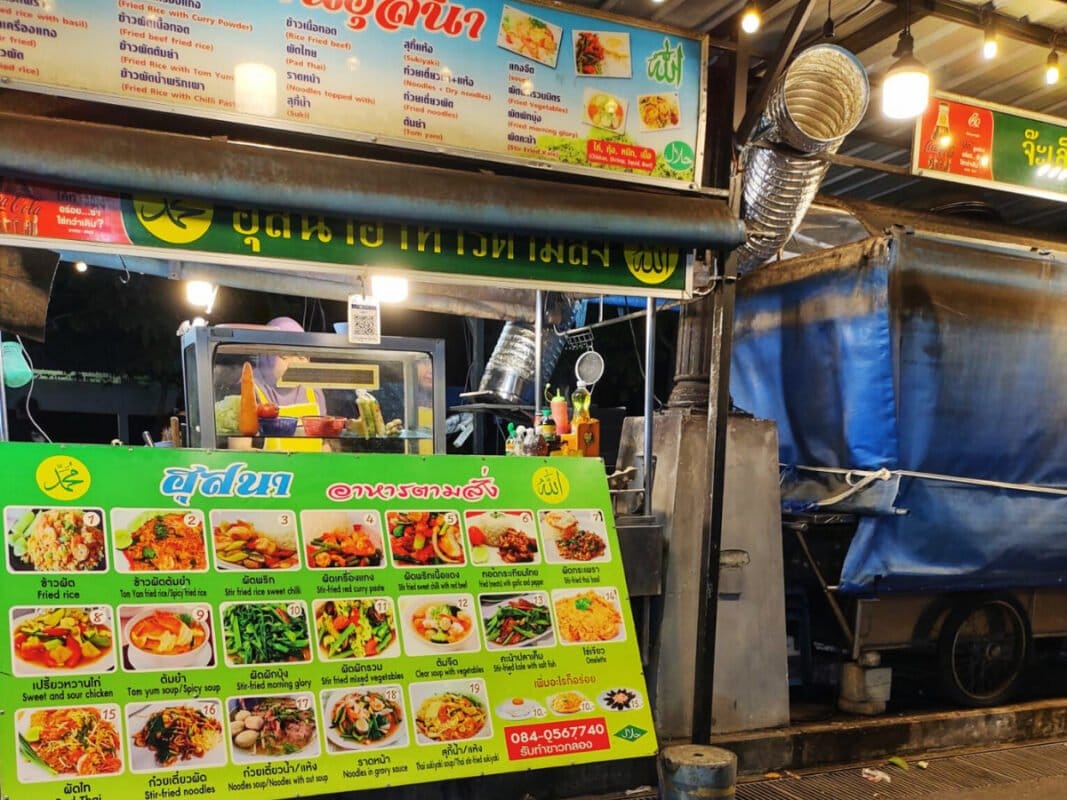
Food is the main reason to go. You can try grilled seafood, skewers, curries, roti, desserts and fresh drinks without committing to one restaurant.
There are also clothes, crafts, souvenirs and a central stage with live performances.
The market becomes much busier later in the evening. Arrive early if you want to walk around comfortably and see all the food before popular stalls begin selling out.
If you visit on a weekday, don’t worry. You’ll still find several street-food areas around town that are usually open until late.
Ao Nang also has a more tourist-focused night market operating on more evenings.
19. Take a Thai Cooking Class
If simply visiting a night market is not enough for you, a cooking class is a fun way to learn more about Thai food rather than only eating.
Classes are usually hands-on, with your own cooking station and help from a local instructor. You’ll prepare several dishes, eat everything you make and receive recipes to try again at home.
Many classes offer vegan, vegetarian and gluten-free options and some longer classes also include hotel transfers.
Come hungry, as you’ll have plenty of food to eat at the end.
Find a Thai Cooking Class in Krabi
Choose between a quick three-dish lesson and a longer six-course class.
20. Watch or Try Traditional Muay Thai
Muay Thai gives you an evening option that is not another bar, market or fire show.
Fight nights take place around the Ao Nang and Krabi Town area, but schedules change. Check the stadium’s current programme before building the rest of your day around it.
If watching from the stands is not enough, several gyms offer beginner sessions.
A class is a more active way to learn the sport’s technique and training culture without committing to a multi-day camp.
21. Ride an ATV Through Krabi’s Countryside
An ATV tour is a fun option if you want a short adventure away from Krabi’s beaches.
Routes pass through the countryside, with trails leading between rubber and palm plantations, hills and mountain scenery.
You don’t usually need previous ATV experience, as instructors provide a safety briefing before you start.
Most operators offer rides lasting between 30 minutes and one hour. Shorter routes usually stay on flatter ground, while longer options may include steeper slopes, muddy tracks and cave stops.
Check that helmets and rider insurance are included, and choose an operator that stays on established trails.
Find an ATV Tour in Krabi
Choose a short beginner route or a longer ride through plantations, hills and caves.
How Many Days Do You Need in Krabi?
Three full days is the minimum I’d recommend if you want to experience more than one side of Krabi.
With three days, choose:
- One Railay or coastal day
- One island tour
- One mainland day around Tiger Cave Temple, Dragon Crest, Khlong Root or the Emerald Pool
Five days gives you room to add Krabi Town, a proper hike and a quieter nature experience without stacking long excursions back to back.
I spent a week in the region and had no trouble filling it.
Seven days works particularly well if hiking, kayaking and mainland nature matter as much to you as the beaches.
What Should You Prioritise on Your First Krabi Trip?
You do not need to complete every activity on this list.
For a first visit, I’d prioritise Railay and Phra Nang Beach, one mainland nature experience and a day that shows you local Krabi rather than only its tour boats.
Choose Dragon Crest if you want a demanding hike. Pick Khlong Root if you prefer a quieter and easier outdoor day.
Visit Tiger Cave Temple if the combination of culture, challenge and a viewpoint appeals to you.
I would also make time for Krabi Town. Its river, mangroves and markets gave me a different experience from Krabi’s beaches and islands.
→ Related guides: Best Time to Visit Krabi: Weather & Crowds by Month
Start Planning Your Trip!
Plan the Rest of Your Southern Thailand Trip
Krabi is easy to combine with several islands, but travel times and seasonal ferry routes can affect the order of your stops.
Start with my Southern Thailand travel guide for an overview of the region. If you are still choosing your next island, my comparison of Koh Phi Phi, Koh Lanta, Koh Lipe and Koh Mook breaks down the beaches, hiking, atmosphere, prices and transport on each one.
Once you know where you want to go, use my guide to getting around Southern Thailand to plan ferries, minivans and transfers between each stop.
