Banana Leaf Travel contains affiliate links. If you book through them, I may earn a small commission at no extra cost to you. I only recommend services I personally use and trust.
What It Really Costs to Travel Southern Thailand for a Month? – Budget Breakdown
Southern Thailand, although popular with tourists, remains an incredibly affordable place to travel.
If you’re dreaming of an unforgettable and adventurous trip, you don’t need to worry about spending a fortune.
I’m basing this statement on my one-month stay there during the high season, from January to February.
It cost us around $1,500 per person to travel Southern Thailand for a month, excluding flights cost.
I shared most of the costs with my partner, which helped reducing some expenses, like accommodation or transportation.
We traveled from Koh Lipe to Krabi Town, stopping at four different islands along the way.
Read on to discover what it usually costs to travel Southern Thailand for a month and learn our proven tips on how to save money while making the most of your adventures.
Summary of Expenses for a Month in Southern Thailand
A estimated budget breakdown for a month-long trip to Southern Thailand will look like below:
Category
Estimated Cost
Flights (Round Trip)
$600–$1,000
Accommodation
$900 (based on $30/night for 2 people); or $450 per person
Food
$750 (around $25/day per person)
Transportation
$100–$200 (scooters, ferries, buses)
Activities
$300–$600 (tours, excursions, etc.)
Other Activities
$200+ (massage, cooking class, etc.)
Shopping
$50–$150 (souvenirs and goods)
Local SIM Card
$10–$30
Costs can vary depending on which islands you visit. See this Southern Thailand travel guide for an overview of destinations along the Andaman Coast.
Total Estimated Budget for One Month in Southern Thailand
Low Range: Approximately $2,900 with flights; $1,500-$2,000 without flights – cost per person
High Range: Approximately $4,500, depending on your activities and preferences.
Flights: How Much Does It Cost to Travel to Southern Thailand?
The biggest expense for your trip will likely be your flight to Thailand. The cost depends a lot on where you’re starting from.
For travellers from Europe, North America, or South America, flights are usually long and pricey.
In my experience, getting to Asia has become more expensive, especially if you prefer convenient, direct flights.
On the other hand, travellers from Australia have an advantage, as flights are often cheaper.
Of course, the most affordable options are usually found within Asia.
If you’re looking for the cheapest tickets, be prepared for long layovers.
Flights from Europe often have layovers in big hubs like Dubai, Doha, or Istanbul.
If you’re flying from the US West Coast, you’ll likely stop in Tokyo or Seoul.
When to Book Your Flight
To get the best deals, it’s a good idea to book your flights well in advance.
Prices tend to go up, especially if you’re planning to visit Southern Thailand during the peak travel season, like Christmas or New Year’s Eve.
It’s worth keeping an eye on airline promotions and sales, as you might find good deals on direct flights.
Use flight comparison websites to find the best prices.
From my experience, Skyscanner, KAYAK, and Momondo are the most reliable.
Make sure to check a few websites, as the options can vary.
Flights Cost
For your flights, plan to spend at least $600 for a round trip.
If you want more comfort or shorter connections, you should budget closer to $1,000.
Accommodation: How Much Does a Comfortable Stay Cost?
After your travel expenses, accommodation will likely be your biggest cost.
Although Thailand is an affordable destination, and you’ll find plenty of budget-friendly options.
Here is a breakdown of what to expect and how to find the best deals.
Budgeting for Your Stay
If you’re traveling as a pair, a decent private room usually starts around $20 per night.
For solo travelers, a dorm bed in a hostel averages about $12.
While sharing a private room is often the cheapest way to go per person, hostels remain the most economical choice if you’re traveling solo.
Flexibility vs. Booking Ahead
I’ve found that booking your first few nights in advance is the best way to start your trip stress-free.
After that, you can stay flexible and book as you go.
However, if you have a specific “dream hotel” in mind, definitely grab it early—the most popular spots fill up fast!
Don’t worry too much, though; there are always plenty of options available.
Location Matters
To save money, you might need to compromise a bit on location.
For instance, staying a few blocks back from the beach on Koh Lanta is much cheaper than being right on the water.
On smaller islands like Koh Lipe, everything is within walking distance, but because it’s so popular, you’ll pay a premium regardless of where you stay.
For better variety and lower prices, stick to larger islands like Koh Lanta or more developed like Koh Phi Phi.
Koh Mook, although not very popular is also a good place for an affordable stay.
You can find spots to hang a hammock or pitch a tent—sometimes for free—though you might have to pay a small entrance fee in National Parks.
Just keep in mind that full-service campsites are much more common on the mainland than on the smaller islands.
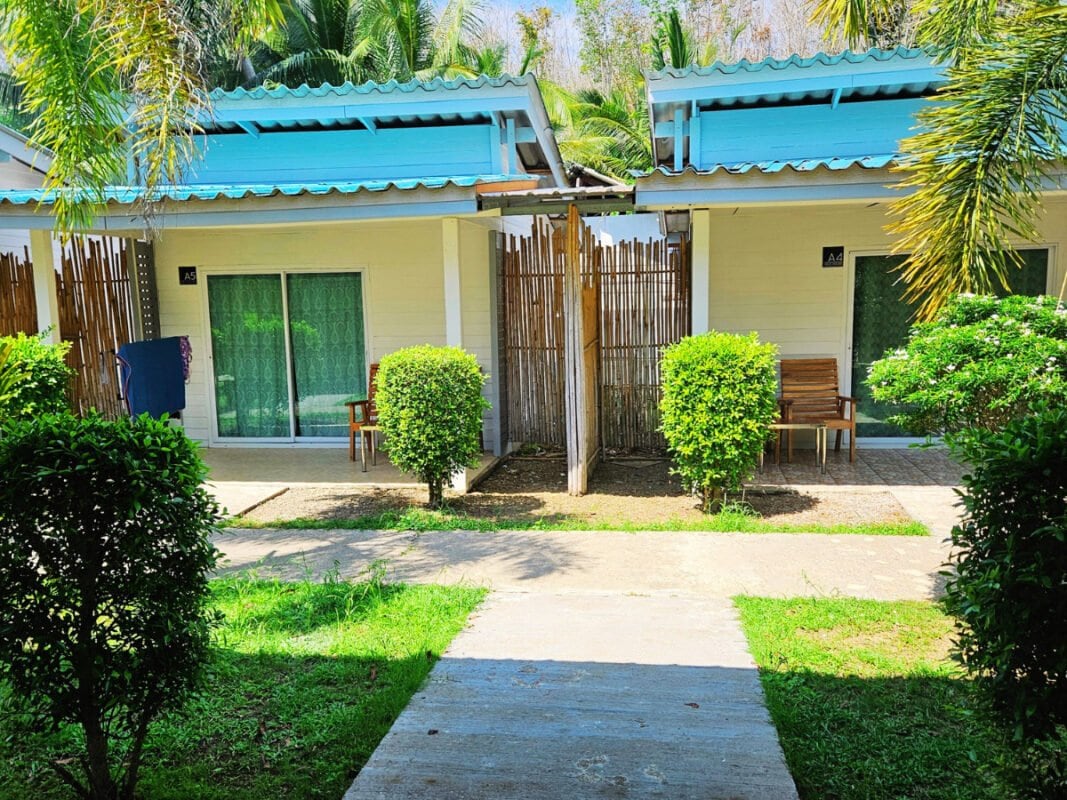
We usually found that double rooms landed between $20 and $40 per night.
Since we skipped both the hostels and the luxury resorts, budgeting around $30 per night for 2 people is a safe bet, if you’re looking for a similar middle-ground experience.
How to Book Accommodation
Websites like Booking.com and Agoda have the widest range of options.
Use Google Maps to compare hotel rates across different booking sites, and it’s also a great way to find direct booking links.
While Airbnb is more limited in Thailand, it’s still worth checking for options there.
For the hostels, Hostelworld app is also a great resource.
Total Accommodation Cost for a Month
If you budget $30 per night, your monthly accommodation will come out to roughly $900 – that is for two people sharing a double room.
If you’re traveling solo, you can easily find hostel dorms or tiny single rooms for closer to $15 or $20.
Food: What to Budget for Eating and Drinking
Food will be another significant part of your expenses, but enjoying the local cuisine in Thailand doesn’t have to break the bank.
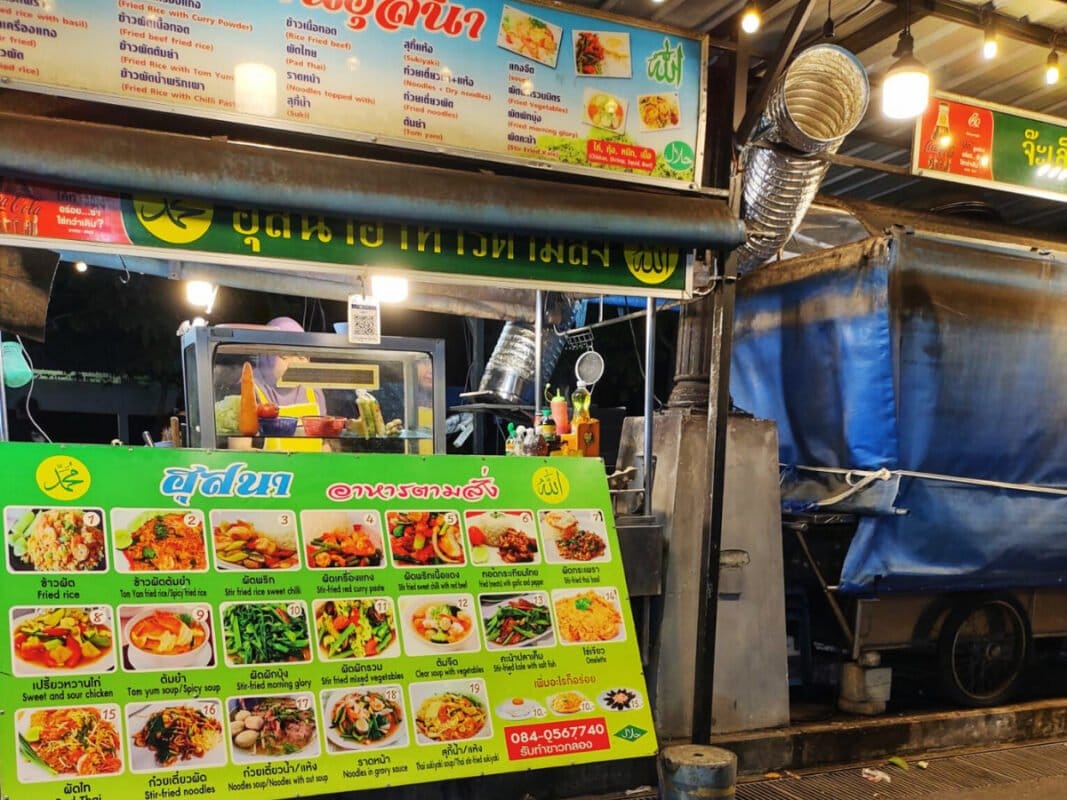
The cheapest options include small local eateries, street food stalls, and instant noodles or ready made meals from convenience stores.
However, you definitely shouldn’t limit yourself to just the cheapest choices.
You can easily find a big, delicious dish in Southern Thailand for less than $5.
When going to foreign restaurants or popular tourist destinations expect to pay more.
You might want to order several dishes to try different flavours and cuisines, or you can keep it simple with a Thai-style omelet for just $3.
For one person, a daily food budget of $20–$30 should be enough.
Keep in mind, though, that if you plan to drink alcohol, your expenses will go up.
Total Food Cost for a Month
If you budget an average of $25 per day, your monthly food cost will be around $750.
Transportation: Costs of Getting Around Southern Thailand
When visiting Southern Thailand for a month, transportation costs are something to consider.
First of all, you’ll need to budget for getting from the airport to your hotel.
Depending on how much you plan to explore, you will also pay for ferries, speedboats, tuk-tuks, and scooter rentals.
If you’re sharing costs with someone—for example, by splitting a taxi fare or sharing a scooter rental—your expenses will get lower.
Ferries and Boats
Ferry ticket prices vary depending on the distance.
A short trip to a nearby island might cost around $5, while longer journeys can be more than $20.
Taxis
Taxis are usually the most expensive option, but they’re sometimes your only choice.
If you need a safe, reliable ride early in the morning, like to the airport, taxi will be the best choice.
When you fly in, taxis will be available at all airports, but many drivers don’t use meters.
It’s important to agree on a price in advance or book at a prepaid taxi counter to avoid overcharging.
If you’re unsure of the taxi price, check online forums or groups to compare how much you should be paying.
If the price seems too high, don’t hesitate to negotiate.
The shortest journeys will cost around $5, while a taxi from the airport to a hotel in popular areas will typically cost $15 or more.
Grab and Bolt Apps
Apps like Grab and Bolt are often more affordable alternatives to regular taxis, but they’re not always available, especially in rural areas.
Try using them at the airport, where you should have access to free Wi-Fi to book a ride even if you don’t have a local SIM card.
Remember to download these apps before arriving in Thailand and save the address of your accommodation to make your journey stress-free.
You can also easily add your card as a payment method and not worry about having enough cash.
We used Grab frequently in Krabi Town and usually paid around $5 for a 2–3 km (1.5-2 miles) journey.
Shared Minivans
A shared minivan is one of the most budget-friendly options to get from the airport to your hotel or the closest pier.
It’s a popular choice among locals too.
Keep in mind, that the journey won’t be very quick as the minivan will stop at multiple locations and will only depart when it’s full.
You can expect to pay around $15 for a 15 km (9 miles) shared minivan ride from the airport to the pier or Town center.
Scooter Rentals
Scooters are a popular and affordable way to get around if you want to stay flexible and independent.
Not all places require renting a scooter, as there are many very walkable islands in Southern Thailand.
Tuk-tuks will also be available if you need a lift.
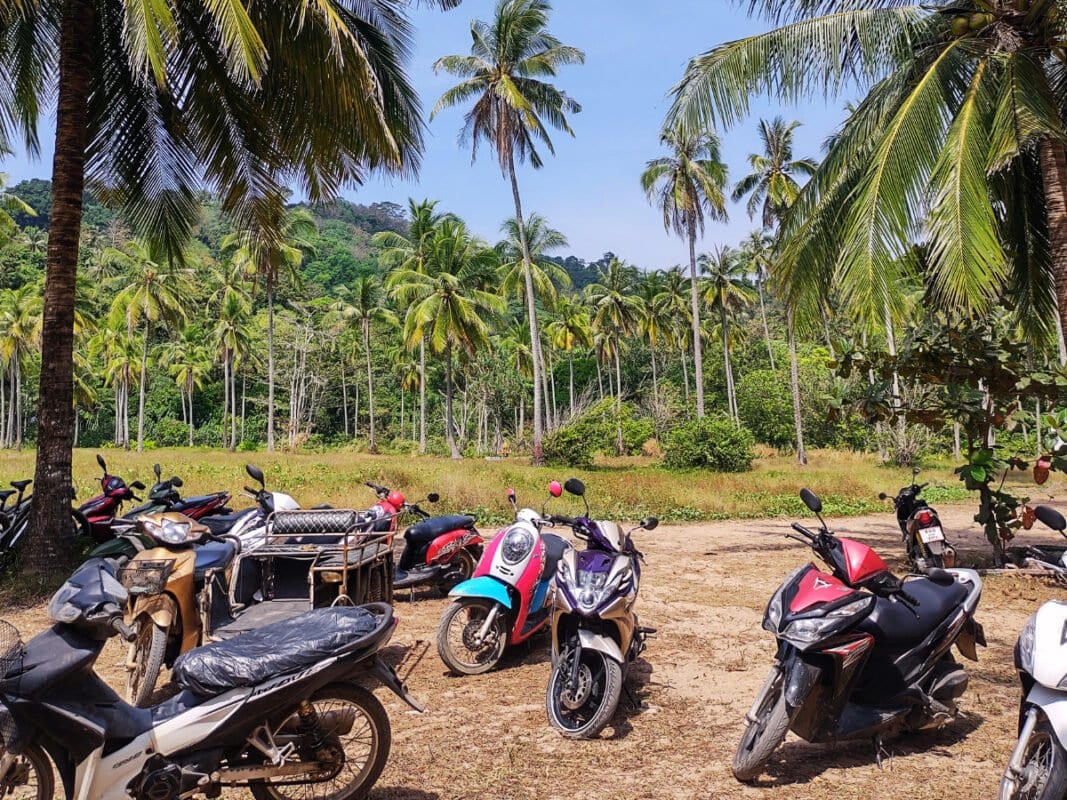
Rental prices range from $6 to $20 per day, depending on the type of scooter you choose.
Tuk-Tuks
Getting on a tuk-tuk is an affordable and fun experience you need to try.
Tuk-tuks are not only enjoyable but also very convenient.
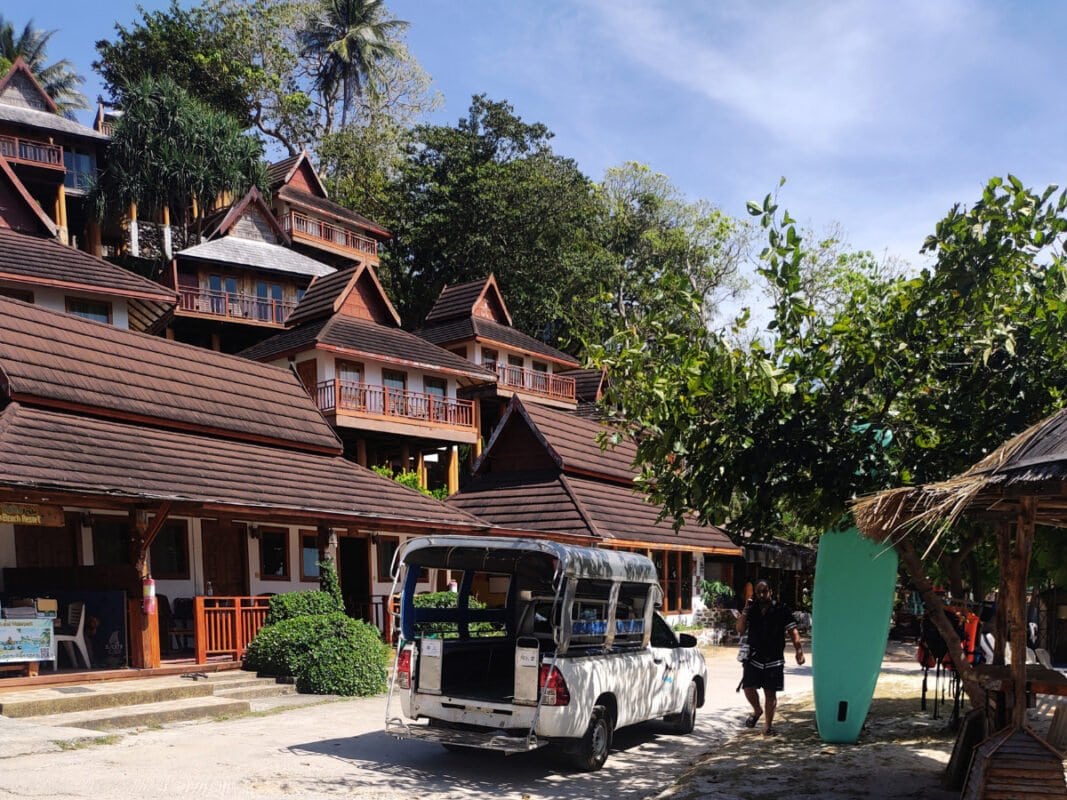
They are available almost everywhere, especially in tourist areas (apart from Tonsai Village on Koh Phi Phi, which is walk-only).
Tuk-tuk drivers are often found near piers, waiting for arriving tourists heading to popular destinations.
You can also find them near beaches or walking streets.
As the most affordable option, we paid less than $2 per person for a ride on Koh Mook, a compact island where transportation is still helpful.
Long Distance Journey – Trains, Buses, and Domestic Flights
If you’re starting your trip in Bangkok and traveling to southern Thailand, you’ll need to prepare for a long journey.
Here’s a breakdown of your options:
Domestic Flights
Flying is the fastest way to travel but is usually the most expensive.
Flying will be more costly, if you have large luggage and need to pay additional fees.
While it’s a great choice for saving time, it may not be the most budget-friendly option.
Prices start at around $20, typically including cabin luggage only.
During peak times, such as Christmas, prices can be significantly higher.
Sleeper Buses
Sleeper buses are one of the cheapest ways to travel long distances in Thailand.
While they take longer than flights, they can be comfortable, if you choose a VIP bus.
It will have reclining seats, snacks, and air conditioning at a reasonable price.
You might also find very cheap buses, but these can lead to a rough journey in an old vehicle with hard seats and a bumpy ride.
Prices start at $20 for basic options, VIP packages for sleeper buses cost around $30.
Trains
Trains are another budget-friendly option to travel from Bangkok to southern Thailand.
The 3rd class is the cheapest and easiest to book, but it doesn’t but beds, which will make a long journey less comfortable.
For a better experience, consider 2nd class sleeper trains that provide beds for overnight travel.
First-class coaches are the most expensive and sell out quickly, but they offer more privacy and comfort.
Bus prices:
3rd class: Around $9
2nd class sleeper: Around $30
1st class: Over $50
Total Cost of Transport
Activities: What You’ll Pay for Excursions and Experiences
Organized Trips and Excursions
Once you’ve covered the basics like accommodation, food, and transportation, it’s time to think about how much you want to spend on extra activities.
In southern Thailand, you could easily spend your vacation relaxing on the beach or hiking, which costs nothing.
But if you want to experience more, you’ll need to budget for it.
Island hopping and day trips will likely be your main activity costs.
Agencies are everywhere, offering everything from half-day group tours to full-day private charters.
Group tours are the most budget-friendly, while private long-tail boats are the priciest.
However, if you’re traveling with friends, splitting a private boat often makes it surprisingly affordable.
In my experience, group tours can be a bit underwhelming and crowded.
Spending the extra money on a private long-tail boat was 100% worth it for the freedom and better atmosphere.
Always ask about the group size and how flexible the itinerary is before you pay. It’s worth trying both styles early on to see which one you prefer.
Best Way to Booking Affordable Tours
Booking tours in southern Thailand is very easy.
Most islands with hotels will have agencies nearby where you can arrange tours.
If not, your hotel will likely work with local agencies and can book for you—just ask at check-in.
To get the best price, it’s usually cheaper to book directly at an agency’s stand.
Hotels might charge extra for commission, and online prices are often the highest, though not always.
Websites like GetYourGuide or Viator are good for browsing options, but it’s worth comparing prices and negotiating directly with vendors.
Organized Trips Costs
Tour packages start at around 500 baht (about $15) per person and can go up to $100 or more, depending on the experience you’re looking for.
Scuba Diving License
One of the most exciting and adventurous activities you can try in Southern Thailand is scuba diving.
If you’ve ever dreamed of getting your PADI Open Water certification, Southern Thailand is one of the most affordable places to do it.
Andaman Sea offers excellent dive sites, abundant marine life, and great water visibility.
It’s an ideal spot for both beginners and experienced divers.
You’ll find diving centers on almost every island, but for more options, head to divers hot spots like Koh Lipe or Koh Phi Phi.
Scuba Diving Costs
PADI Open Water Certification (3-day course): Around $500
Single Dive or Fun Discovery Dive: Around $75
If diving is on your bucket list, southern Thailand is a fantastic and budget-friendly destination to make it happen!
Snorkeling Gear
Many trips in southern Thailand will include snorkeling and the gear is usually provided as part of the package.
However, if you want to explore on your own—whether off the beach or while kayaking—you’ll need to bring your own equipment or rent it locally.
Rental costs are quite affordable.
You can rent a mask and flippers for less than $5 each per day, though prices may vary depending on the location.
Kayak Rental
If you want to enjoy a bit of adventure and explore Thailand’s coastline on your own, renting a kayak is a popular and affordable option.
Many beach bars and local vendors offer kayak rentals, so finding one won’t be a problem.
A full day of kayaking typically costs around $20, but you can rent one for a half-day at a lower price.
Other Popular Activities
Massage: Prices range from $8 to $30, depending on the type and location.
Ethical Elephant Sanctuary: A full-day trip costs around $100.
Cooking Classes: Learn to cook Thai dishes for about $35.
Local SIM card
Another expense to consider is getting a local SIM card.
You’ll need it for ordering taxis through apps, using maps, and, of course, for communication.
The most reliable place to buy a SIM card is at an official telecom shops, but it can be hard to find them on the small southern islands.
Fortunately, 7/11 stores also sell SIM cards.
Pay attention to the price, and if it seems too expensive, shop around, as some places claim to sell “tourist SIM cards” at inflated prices.
Be cautious when buying SIM cards at the airport, as prices there tend to be higher as well.
If you want to have data as soon as you arrive in Thailand, the most convenient is buying an eSIM package.
But and install your eSiM before you arrive to Thailand and don’t rely on getting WiFi at the airport.
The cheapest option costs less than $10 (around 300 baht) per month for a SIM card with data and calls.
Unfortunately, eSIM packages for a month in Thailand cost around $30.
Shopping: Souvenirs and Local Finds
Shopping is one of the hardest expenses to estimate since it depends entirely on your prefrences.
Personally, I’m not a big shopper and would rather spend money on experiences than things.
That said, Thailand is a great place to find handmade crafts.
If you want keep your packing list short, you will be able to buy essentials after arriving in Thailand.
You can spend as little or as much as you like on shopping—it’s entirely up to you.
If you’re being moderate, $50 should be enough to pick up a few nice souvenirs.
Money and Payment: Cash is King
When it comes to payment methods, cash is king in Thailand and many places won’t accept cards.
Getting used to a different currency can be confusing at first.
It’s a good idea to familiarize yourself with Thai bills and denominations to avoid confusion and potential scams.
Exchanging Money in Thailand
The most budget-friendly way to get cash in Thailand is to bring a widely accepted currency like USD or GBP and exchange it after you arrive.
Pay close attention to exchange rates, to find the most beneficial.
One of the best places to exchange money is Superrich Exchange, which usually offers best rates.
However, it’s only available in major areas like Phuket, Krabi Town and Ao Nang, and some airports.
Ensure the bills you bring are crisp and undamaged, as exchange counters in Thailand often won’t accept torn or marked bills.
If you’d rather arrive with some Thai baht, exchange a small amount in your home country before traveling.
Using Debit and Credit Cards in Thailand
Carrying large sums of cash might not feel safe or comfortable, so an international debit card is a great alternative.
Cards like Revolut, Monzo, or Wise are the best options for getting better exchange rates and avoiding unnecessary fees.
You can use these cards to pay at some hotels and restaurants. We personally never encountered issues with them.
Keep in mind that convenience stores like 7/11 often have a minimum spend to use a card.
ATMs in Thailand
ATMs are widely available, and you can use them to withdraw Thai baht.
When withdrawing money in Thailand you need to know that:
Every ATM in Thailand charges a 220 baht fee per transaction – no matter what type of card you are using.
Additional fees and exchange rates will depend on your bank or card provider.
How to Travel Cheap in Southern Thailand
Traveling on a budget in southern Thailand is very doable if you make smart choices.
Here are some tips to help you save money:
Accommodation
For couples, a small double room will be cheaper than booking two beds in a hostel.
For solo travellers, hostels will be the cheapest
Most affordable hotels will be located further from the beach and in less popular areas.
Transportation
For short rides use tuk-tuks and apps like Grab or Bolt instead of taxis
Avoid renting a scooter unless you plan to use it daily.
For longer distances, sleeper buses and 2nd or 3rd class on a train are more affordable than flights.
Food
Eat at small local restaurants and street food stalls.
Snacks, drinks, and ready meals like noodle soup from 7/11 are quick and cheap option.
Activities
Choose group tours instead of private ones, or share the cost of a private long-tail boat with other travelers to minimize the cost.
Enjoy free or low-cost alternatives like hiking, kayaking or visiting local temples.
Money and Payment
Bring your home currency (like USD or GBP) and exchange it in Thailand.
The best rates can be usually found in Super Rich exchange.
Ensure bills you want to exchange are crisp and undamaged.
Avoid using ATMs frequently, as each transaction comes with a 220 baht fee.
Withdraw large amounts at once to reduce the number of transactions.
Use an international card like Revolut, Wise, or Monzo to save on fees and get better exchange rates.
Final Thoughts on Cost of Travel to Southern Thailand
A great advantage of Thailand’s Andaman Coast is that it offers many budget options and is incredibly safe to explore.
The biggest expense to consider will likely be your flights, especially if you’re looking for a fast and comfortable journey.
Once in Thailand, your spending will largely depend on how luxurious you want your stay to be.
You can easily enjoy breathtaking sights and free or low-cost activities like hiking, snorkeling, visiting temples, and exploring old towns.
However, if you want to try and experience everything Southern Thailand has to offer, remember to plan your budget accordingly to make the most of your trip.