Banana Leaf Travel contains affiliate links. If you book through them, I may earn a small commission at no extra cost to you. I only recommend services I personally use and trust.
Pulau Tuba Island Langkawi: The Hidden Island Most Travelers Miss
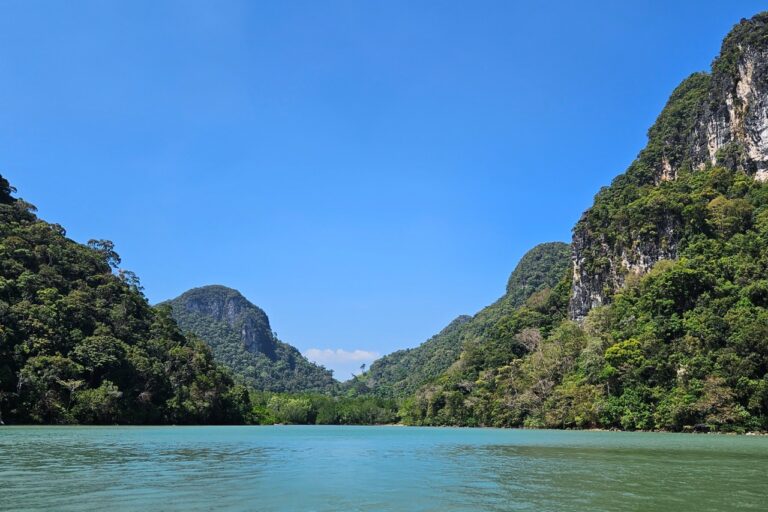
Pulau Tuba Island in Langkawi, Malaysia is one of the most authentic islands you can visit — and almost no one goes there.
If you’re the kind of traveler who prefers quiet villages, jungle hikes, and places that still feel local, Pulau Tuba Island is exactly the kind of hidden Langkawi’s destination worth exploring.
There are no big tour buses, no busy beach clubs, and barely any tourists.
Getting there takes a little effort. Instead of booking a typical island-hopping tour, you’ll need to catch a small local boat from Kuah and explore the island on your own.
But that’s exactly what makes the experience special.
During our visit, we rented a scooter, crossed a narrow rainbow bridge between islands, hiked to limestone caves, and drove past buffalo fields and sleepy fishing villages.
It felt like discovering a completely different side of Langkawi.
If you’re looking for an easy half-day adventure and a glimpse of traditional island life, Pulau Tuba might be the most underrated place in Langkawi.
Despite being just 15 minutes from Langkawi, Pulau Tuba still feels almost completely untouched by tourism.
TL;DR: Visiting Pulau Tuba Island
If you’re planning a longer trip, check out my Langkawi Travel Guide, where I cover the best beaches, hikes, and hidden islands in the archipelago.
It’s worth checking hotel prices early since accommodation can fill up quickly during peak season. → Compare Langkawi hotel prices
Quick Travel Info – Pulau Tuba
- 📍 Location: Small island just south of Langkawi
- 🚤 Boat departure: Pekan Rabu Jetty or Jeti Dato Syed Omar (Kuah)
- ⏱ Travel time: 15–20 minutes by local boat
- 💰 Boat price: from RM5 one way (1.2 USD)
- 🛵 Best way to explore: Rent a scooter
- ⏳ Recommended time: Half-day trip
- 🌤 Best season: November–March (dry season)
- 👥 Crowds: Very low, even in high season
What Makes Pulau Tuba Different From Other Langkawi Islands?
Unlike most islands in Langkawi, Pulau Tuba remains one of the least visited islands in the Langkawi archipelago.
While most travelers head to popular attractions like the Langkawi SkyBridge or the Kilim Geoforest Park mangrove tour, this quiet island offers a completely different experience.
During our visit, we didn’t see any other travelers exploring the island. Even on the boat from Kuah, locals looked surprised to see us — Pulau Tuba is mostly used by residents traveling between the islands rather than by tourists.
This makes the experience feel incredibly authentic. Instead of souvenir shops and tour groups, you’ll find quiet fishing villages, small roadside fruit stalls, and locals going about their daily lives.
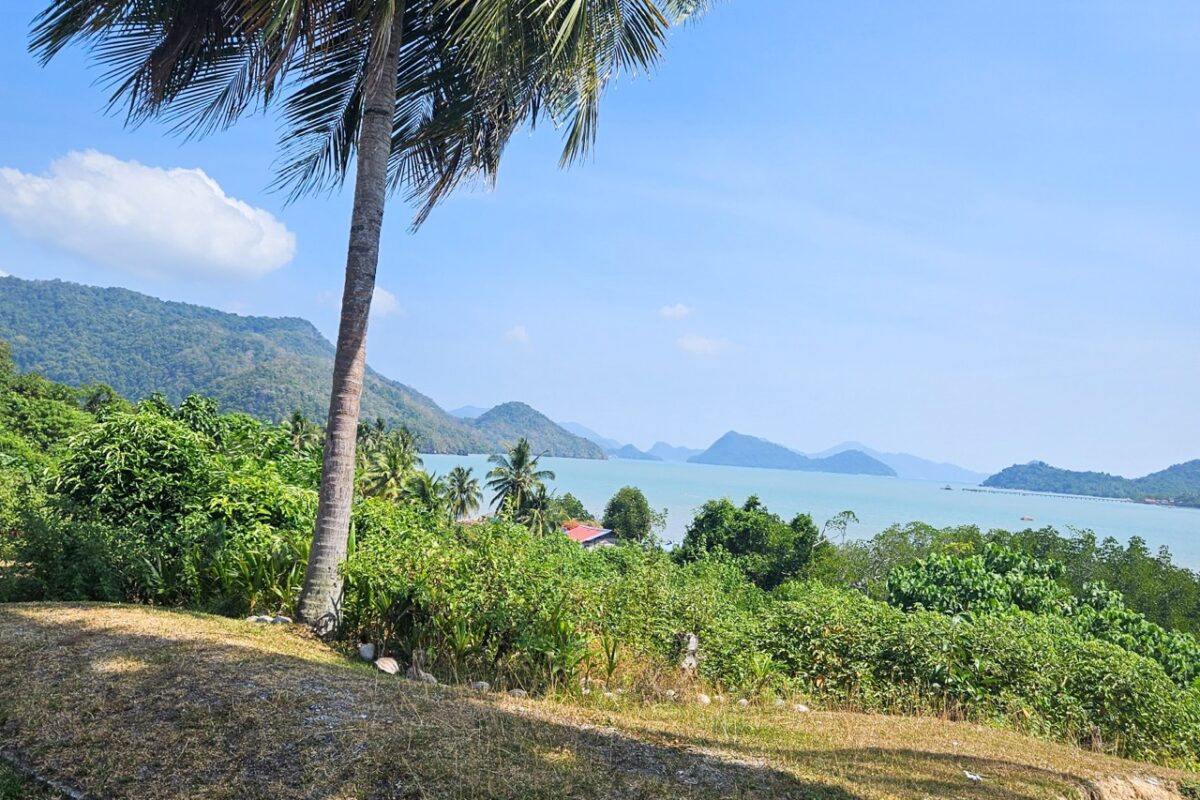
If you’re looking for a truly off-the-beaten-path destination in Langkawi, Pulau Tuba is one of the best places to visit.
Where is Pulau Tuba Island Located?
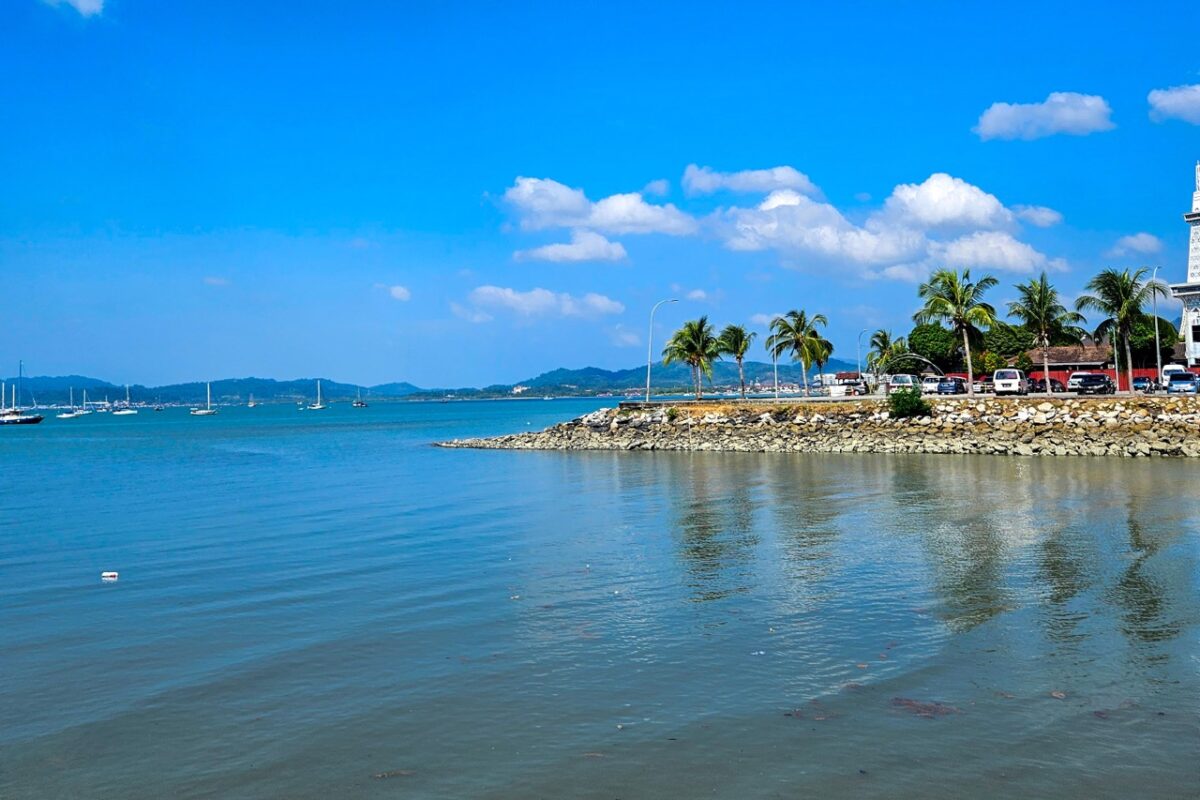
Pulau Tuba Island is located about 5 km south of Langkawi Island in Malaysia and can be reached by a 15–20 minute local boat ride from Kuah, making it one of the closest islands in the Langkawi archipelago.
It sits right next to Pulau Dayang Bunting, the famous neighboring island that is home to the Lake of the Pregnant Maiden, a popular stop on Langkawi island-hopping tours.
Despite being so close to one of Langkawi’s most visited attractions, Pulau Tuba remains largely untouched by mass tourism.
However, Pulau Tuba isn’t a typical tourist destination. You won’t find dozens of tour operators offering trips there every hour, so visiting the island requires a bit more planning and local knowledge.
How to Get to Pulau Tuba Island?
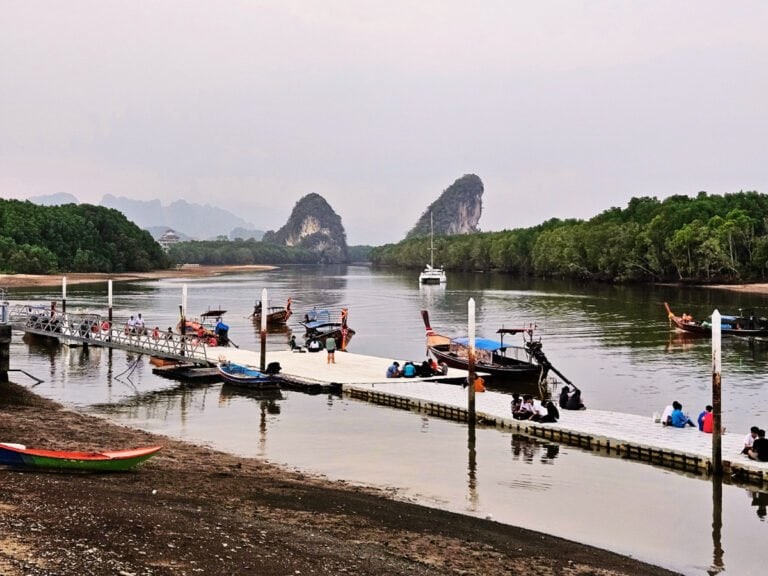
The easiest way to get to Pulau Tuba from Langkawi is by taking a small local boat from Pekan Rabu Jetty in Kuah, which takes about 15–20 minutes and costs around RM5-10.
There are two small jetties in Kuah (the main town on Langkawi) where local boats depart for Pulau Tuba:
- Pekan Rabu Jetty – located closer to the center of Kuah.
- Jeti Dato Syed Omar – formerly known as Marble Jetty, about 2 km (1.2 miles) further north.
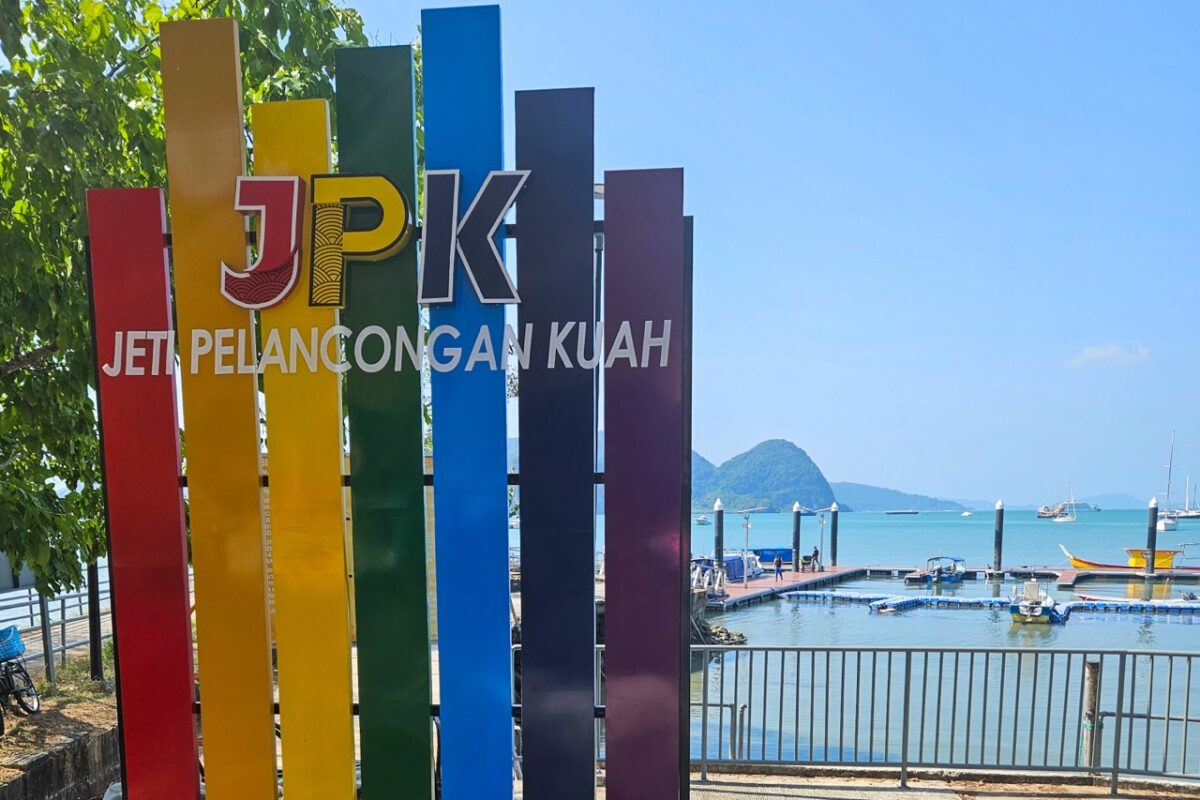
When we visited, we hadn’t fully figured out the local logistics. After seeing conflicting information online, we simply ordered a Grab (the local equivalent of Uber) to the main Kuah ferry terminal, assuming we would find a boat to Pulau Tuba there.
Luckily, our driver asked where we were heading. When we said “Tuba,” he immediately redirected us away from the main terminal and drove us to the correct spot at Pekan Rabu Jetty.
This is actually a common mistake. The large ferry terminal in Kuah is used for ferries traveling to mainland Malaysia, while boats to Pulau Tuba depart from the smaller local jetties nearby.
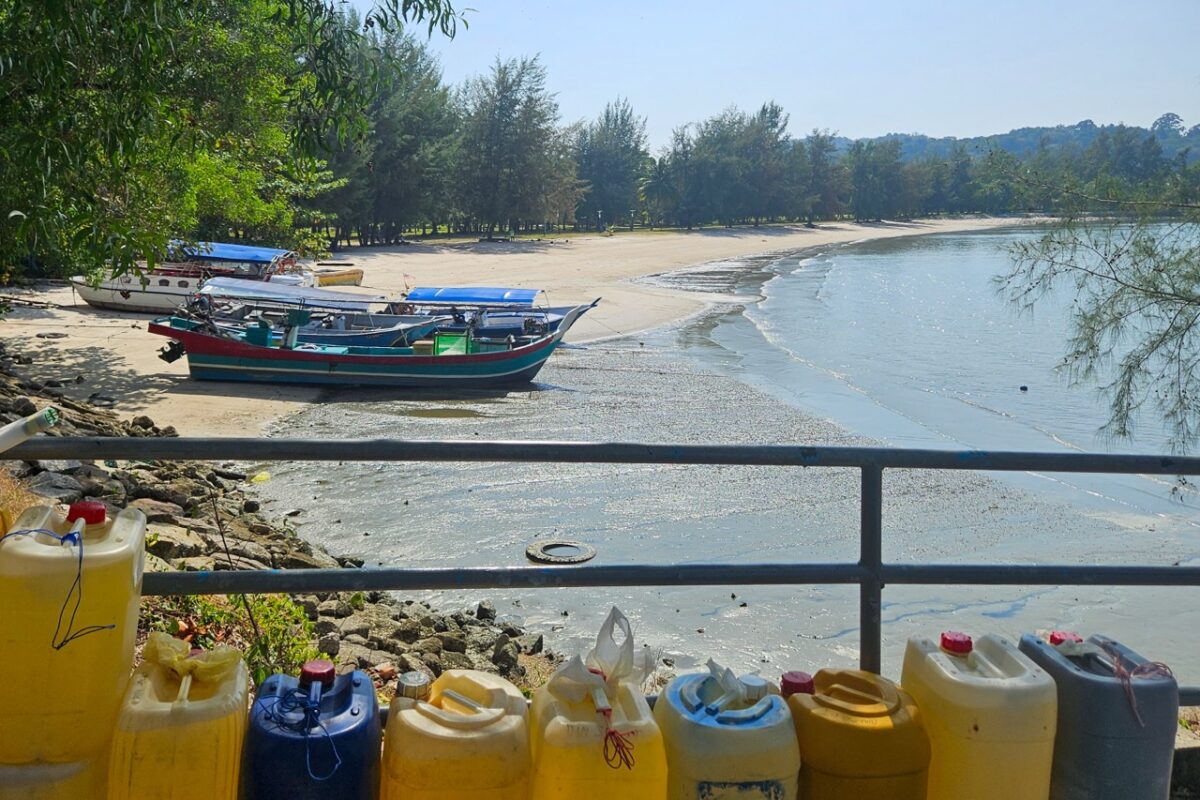
The Local Boat Experience
If you’re expecting a large, air-conditioned ferry with ticket counters and boarding gates, you’ll be waiting forever.
There is no large ferry service to Pulau Tuba. Instead, small motorboats used by locals and fishermen connect the islands.
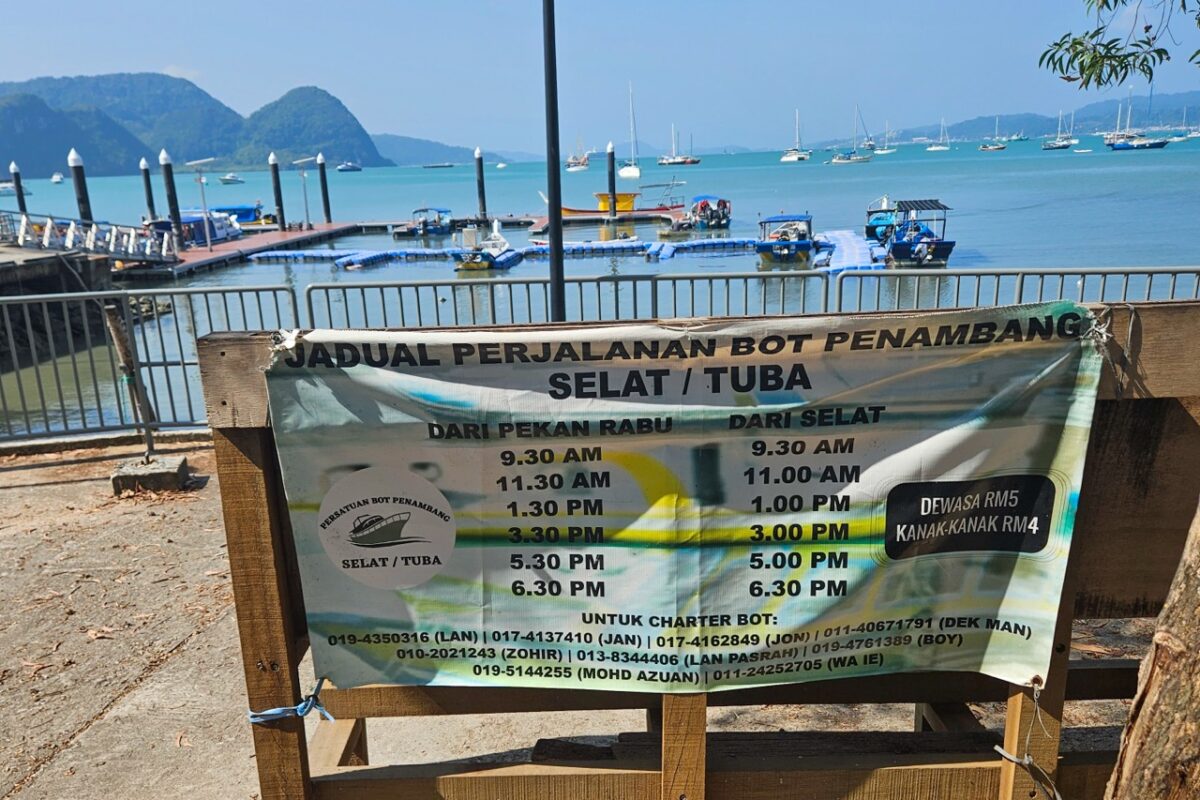
At the jetty, don’t expect a ticket office or digital displays. Tickets cannot be purchased in advance — you simply pay the captain in cash during the ride.
Eventually, we found a simple timetable showing a boat departing at 11:30. After confirming with a few people working at the pier, they pointed us toward our captain, who was already waiting in the shade.
Since most nearby restaurants weren’t open yet, we grabbed a quick breakfast at a nearby 7-Eleven. It’s a good idea to bring snacks and drinks with you, as the small village shops on Pulau Tuba have limited supplies.
The Pulau Tuba Langkawi boat from Pekan Rabu Jetty in Kuah usually costs around RM5 ($1.20 USD) per person and takes about 15–20 minutes.
When the boat stopped for the first time, we saw most of the passengers getting off and instinctively followed them onto the pier.
As we watched the boat continue across the water with the remaining passengers, we quickly realized we had made a classic rookie mistake — we hadn’t reached Pulau Tuba yet.
Instead, we had landed on the southern tip of Pulau Dayang Bunting, on the opposite side of the island from the famous Lake of the Pregnant Maiden.
We were suddenly standing in a tiny, quiet village with no way to call the boat back.
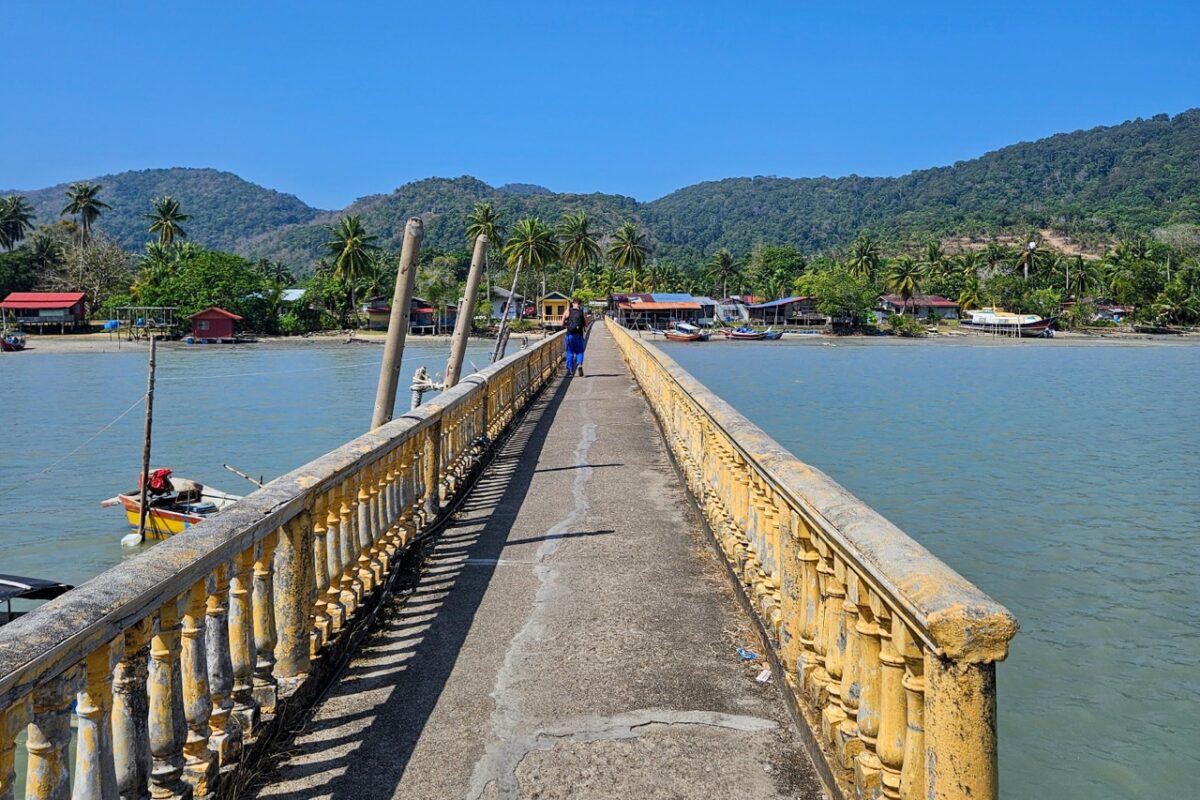
Fortunately, we weren’t completely stranded. Looking at the map, we noticed a bridge connecting the two islands, so we decided to explore the village on foot and make our way toward Pulau Tuba from there.
In the end, getting off at the “wrong” pier turned out to be a lucky accident. It gave us a rare glimpse of traditional island life and a part of Langkawi that most visitors never see.
Getting Around Pulau Tuba Island
The best way to explore Pulau Tuba is by renting a scooter, which allows you to easily reach the island’s villages, caves, and coastal geosites.
Pulau Tuba covers about 20 square kilometers. While the village areas are easy to explore on foot, you’ll need some kind of transport if you want to reach the more remote caves and geosites around the island.
Renting a Scooter
Since we hadn’t landed at the main jetty, there were no obvious rental shops or signs in sight. But as two tourists, we clearly stood out, and someone quickly approached us to ask if we wanted to rent a motorbike.
When we said we were looking for a scooter, they pointed us toward a man mowing the grass nearby. He stopped what he was doing, went home, and returned a few minutes later with a scooter for us.
The rental cost was just RM20 for the whole day (about $4.50 USD). There was no paperwork, no deposit, and unfortunately no helmets either.
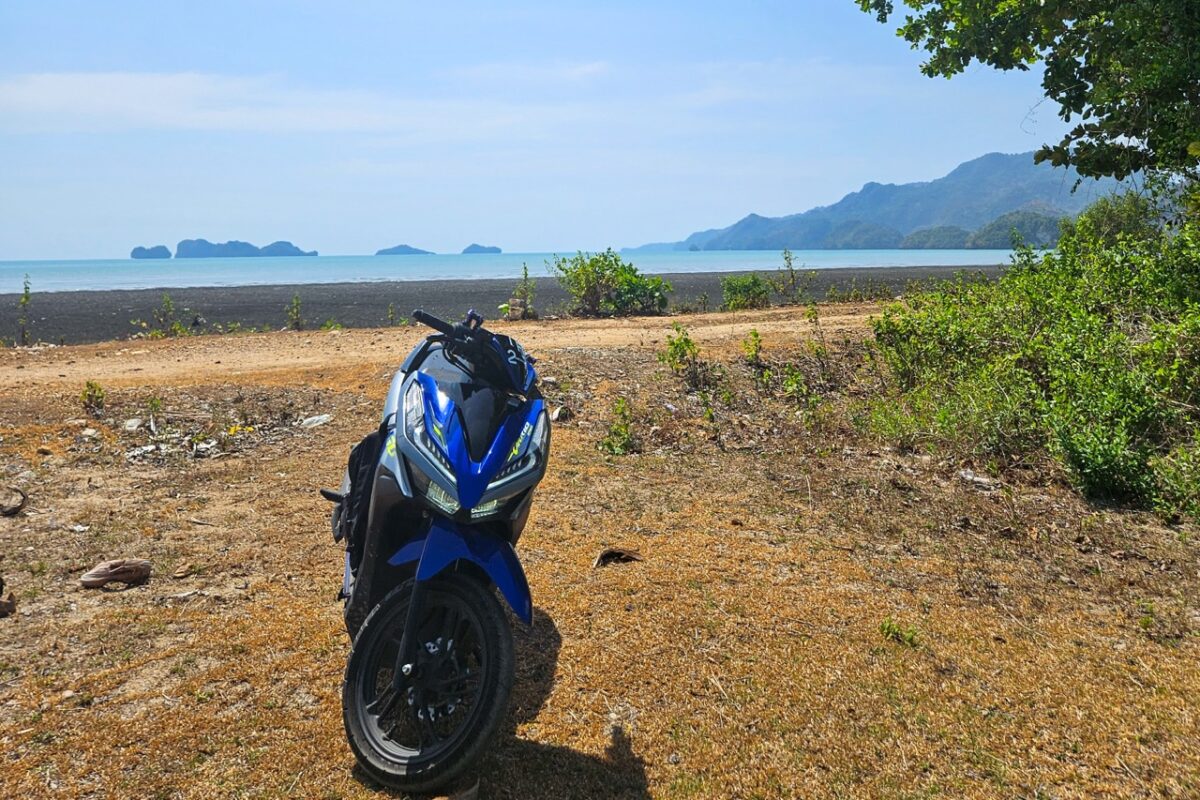
Exploring Pulau Tuba Langkawi by scooter is the best way to reach hidden geosites and quiet beaches.
Driving around Pulau Tuba is easy, as the island has one main road that loops through the villages, rice fields, and coastal areas.
Although we didn’t try it ourselves, it’s likely that you could also rent a bicycle from locals if you prefer exploring the island more slowly.
Getting Fuel on the Island
Once we had the scooter, we realized we should probably top up the fuel before exploring the island. We headed to the island’s only official gas station, but unfortunately they were completely out of fuel.
Luckily, from our previous travels in India, we knew that fuel is often sold in plastic bottles at small roadside stalls.
Sure enough, we quickly found a small shop selling bottles of petrol. The bigger challenge turned out to be figuring out how to open the scooter’s fuel tank!
The people at the stall were incredibly kind and helpful. At one point, they even made a video call to a friend to ask how to open the fuel cap on our specific scooter model.

While we sorted out the mechanics, we also grabbed some fresh fruit from the shop for a quick snack before continuing our road trip around Pulau Tuba.
Why Pulau Tuba Is Unique (Langkawi UNESCO Geopark)
Now that you have your transport sorted, it’s worth understanding what makes Pulau Tuba’s landscape so special.
The island isn’t just a quiet and sleepy destination — it is an important part of the Langkawi UNESCO Global Geopark, specifically the Dayang Bunting Marble Geoforest Park.
Because of this designation, the entire island is recognized globally for its rare geological heritage and unique natural landscapes.
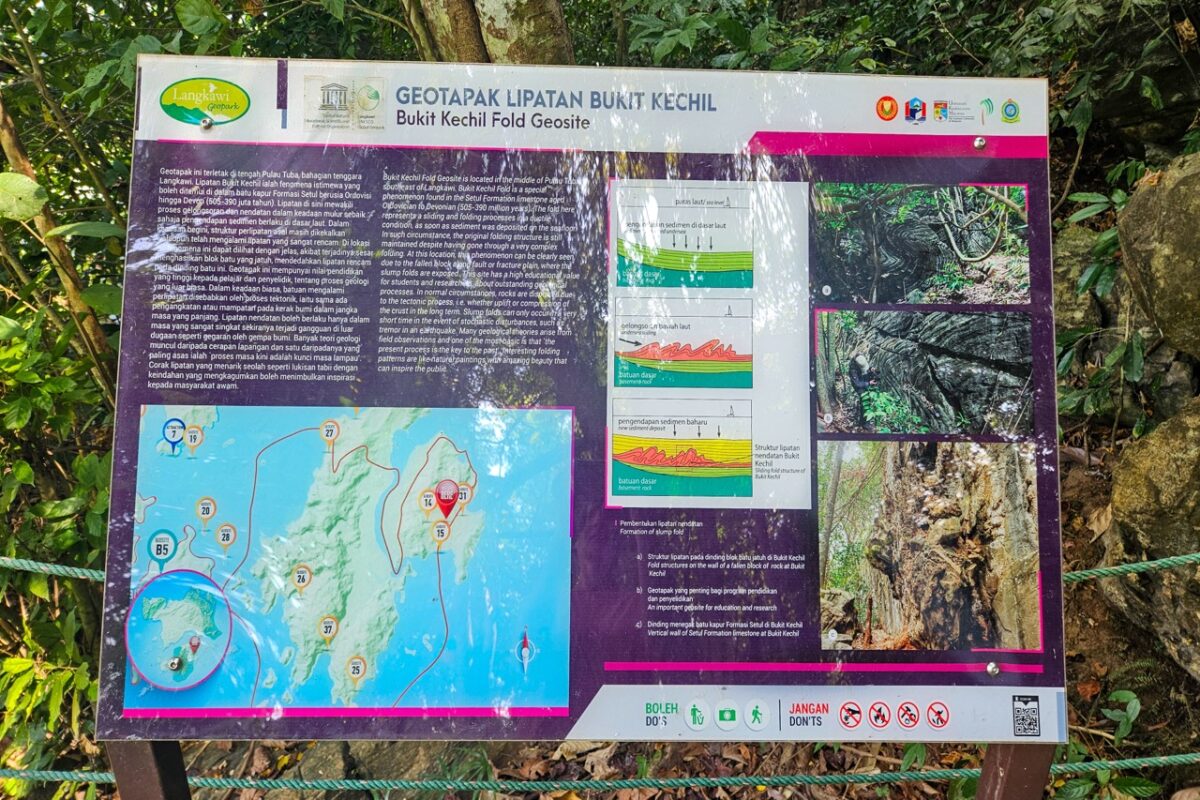
According to information boards found around the island, Pulau Tuba was originally made up of two separate landmasses. The eastern side consisted of granite hills, while the western side was formed from much older limestone.
Over millions of years, ocean currents gradually deposited sand between these two landmasses, forming a natural “bridge” known as a tombolo.
This relatively young lowland — estimated to be around 2.5 million years old — is where today’s villages, rice fields, and roads are located.
What Does “Tuba” Mean?
The island’s name also has deep roots in nature. According to local heritage signs, Pulau Tuba is named after the Tuba plant (Derris elliptica).
Tuba plant (Derris elliptica).
In the past, villagers would crush its roots to release a natural toxin into the water to stun fish, making them easy to catch by hand.
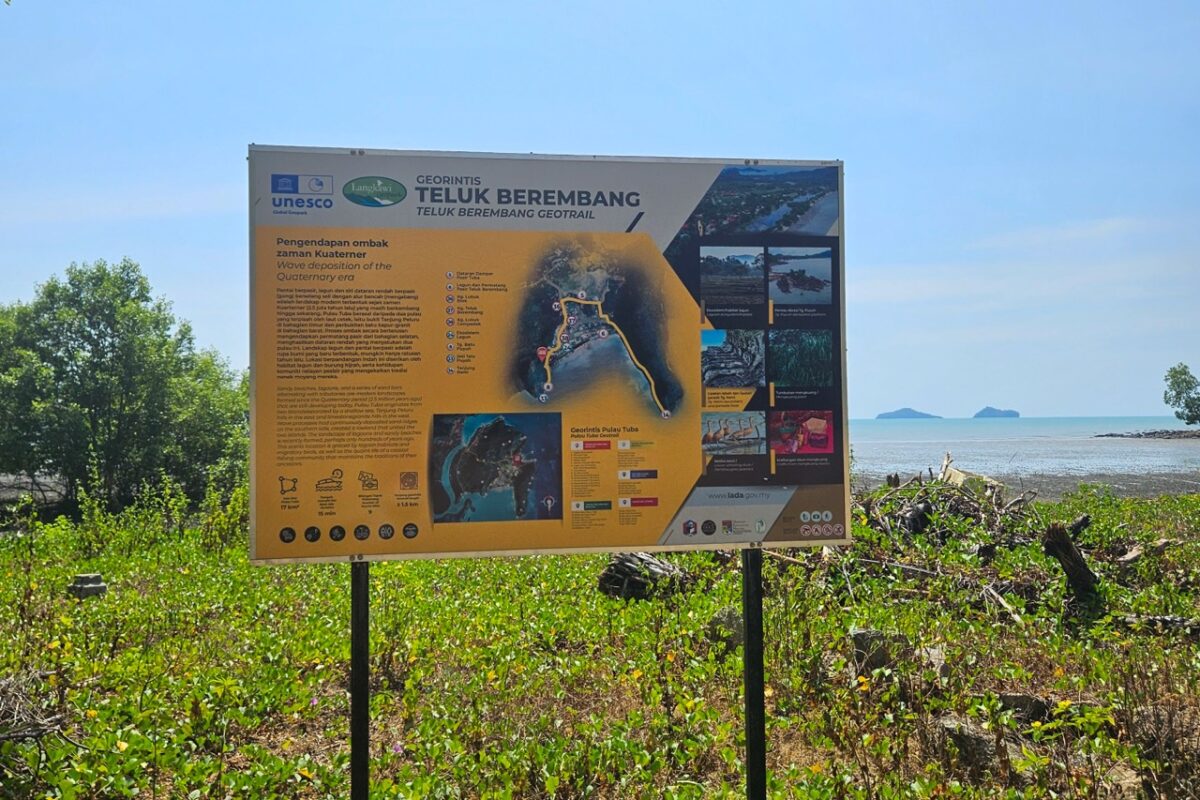
To explore more of the island’s geology and history, you can follow the Teluk Berembang Geotrail — a 1.5 km route that highlights several important geosites around Pulau Tuba.
Why Pulau Tuba Is Worth Visiting
Pulau Tuba is one of the quietest islands in the Langkawi archipelago — and that’s exactly what makes it special.
Unlike the busy tourist beaches of Pantai Cenang, the island feels quiet, traditional, and largely untouched by mass tourism. Many locals still rely on fishing, rubber plantations, and small-scale farming as their main sources of income.
Visitors come to Pulau Tuba to:
- explore part of the Langkawi UNESCO Global Geopark
- drive scenic roads through buffalo and rice fields
- hike to limestone caves and geological sites
- experience authentic island village life
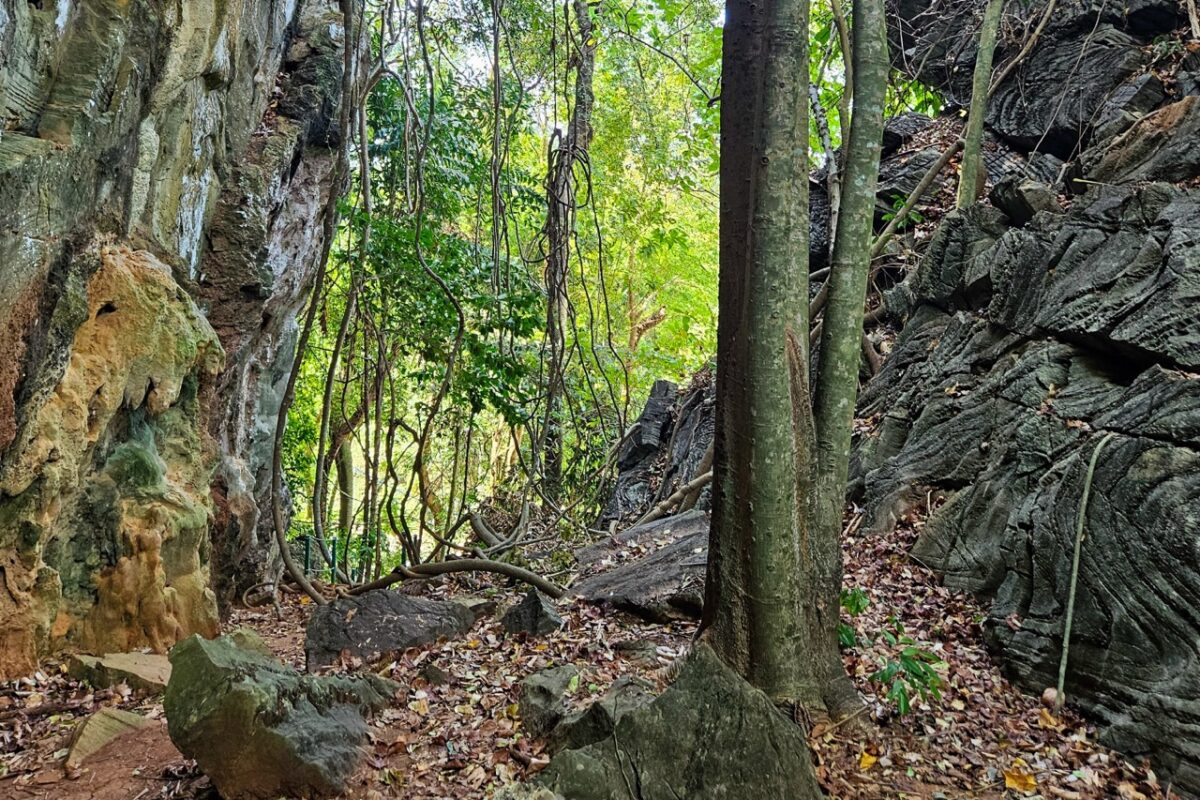
For adventurous travelers looking to explore beyond the typical tourist spots, Pulau Tuba is easily one of the most unique day trips from Langkawi.
If you enjoy hiking and nature, you might also like climbing Gunung Raya, the highest mountain in Langkawi, for panoramic views across the archipelago.
Pulau Tuba Self-Drive Map & Route
Use this interactive map to follow the same scooter route we took while exploring Pulau Tuba.
Tip: Save this map to your Google account so you can open it easily while exploring Pulau Tuba.
Map showing the main stops on a self-guided Pulau Tuba scooter route from the jetty to the Teluk Berembang Geotrail and Gua Wang Buluh cave.
You can also open the map directly in Google Maps on your phone while exploring Pulau Tuba:
Open the Pulau Tuba travel map on your phone.
If you’re planning a longer trip, check my Langkawi Travel Guide for more places to explore in the archipelago.
Pulau Tuba Langkawi Half-Day Itinerary
Pulau Tuba is small enough to explore in just a few hours, making it an ideal Langkawi day trip for travelers who want to see a quieter side of the archipelago.
This self-guided route lets you see the island’s main geosites, villages, and coastal landscapes in just a few hours.
It’s one of the easiest ways to experience Pulau Tuba Langkawi as a half-day trip from Langkawi.
- A simple route is to start near the Rainbow Bridge from Pulau Dayang Bunting, then drive along the Teluk Berembang Lagoon and Black Beach.
- From there, continue inland to visit the Bukit Kecil Recumbent Folds and hike up to Gua Wang Buluh Cave.
- Finish the trip by heading toward Tanjung Pandang Beach near the jetty, where you can relax by the sea and grab lunch at one of the small local restaurants.

Visiting Pulau Tuba makes a perfect day trip from Langkawi if you want to explore traditional villages, quiet beaches, and unique geological formations.
Best Things to Do on Pulau Tuba Island, Langkawi (Self-Guided Route)
Despite its small size, Pulau Tuba offers several interesting places to explore, including lagoons, geotrails, caves, and traditional fishing villages.
The best way to explore Pulau Tuba is by scooter, following the island’s main road through villages, lagoons, and geopark sites.
Because we accidentally started our journey on the neighboring island, our route ended up being a bit unconventional.
However, it actually turned out to be a great way to explore the quieter and more untouched side of the area.
1. Explore Selat Bagan Nyior Village
Before crossing over to Pulau Tuba, we explored the small village of Selat Bagan Nyior on Pulau Dayang Bunting.
It’s not the most impressive stop on the itinerary and mainly just a quiet local settlement, but there are still a few interesting sights worth mentioning.
- The Mosque & Rubber Plantations
We drove past the local mosque and through shaded rubber plantations. It’s a very traditional scene — you can easily spot the small cups attached to the trees that collect the rubber sap. - The Secret Waterfall
Reached via a narrow path near local homes, this tiny waterfall (Air Terjun Selat Bagan Nyior) feels like a hidden sanctuary in the middle of the village.
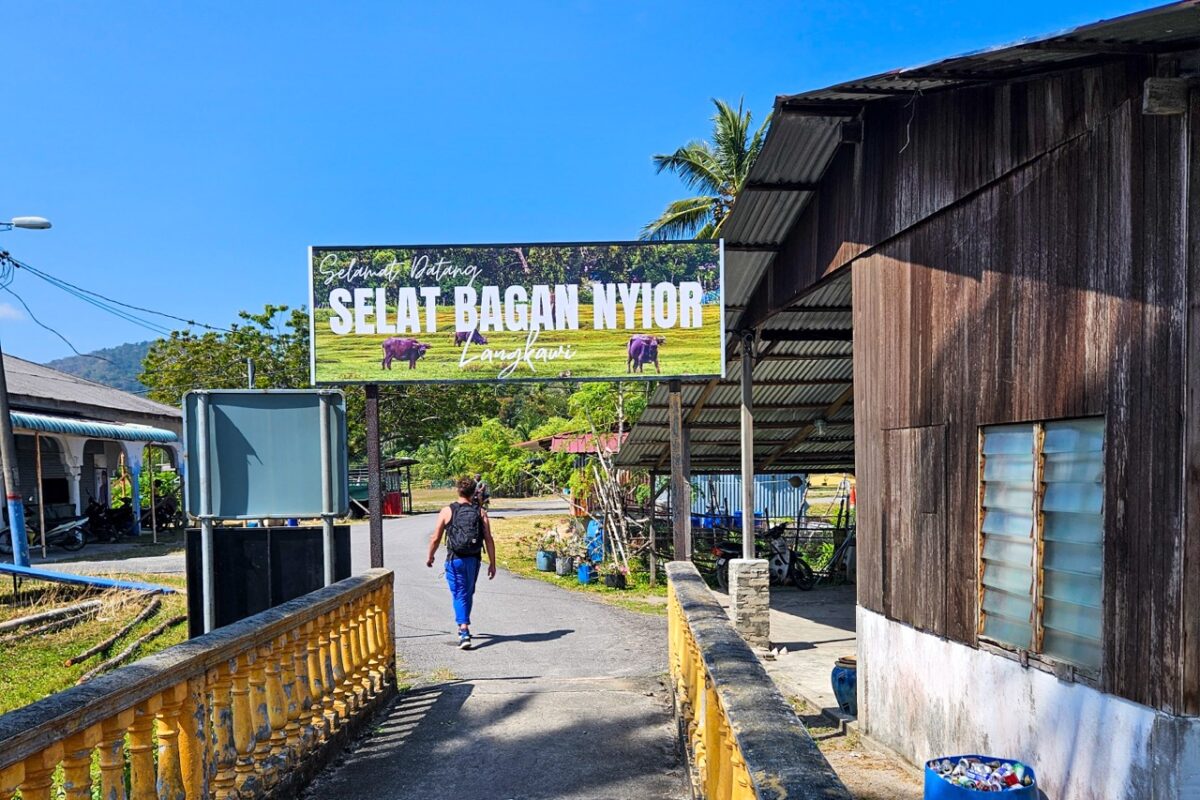
The small jetty at Selat Bagan Nyior village is where we accidentally got off the boat before realizing we had not reached Pulau Tuba yet.
If you are short on time, you can easily skip this part of Pulau Dayang Bunting, as the more interesting sights are located on Pulau Tuba itself.
Selat Bagan Nyior Village
📍 6.25594, 99.82356
Air Terjun Selat Bagan Nyior
📍 6.25668, 99.8159
2. Cross the Rainbow Bridge (Jambatan Selat Tuba)
This bright, multi-colored bridge connects Pulau Dayang Bunting with Pulau Tuba and is the only way to cross between the two islands by road.
Driving across the bridge offers beautiful views of the narrow channel separating the islands, with fishing boats, mangroves, and the wider Langkawi archipelago visible in the distance.
The bridge itself is quite narrow, and larger vehicles might struggle to pass, but scooters and small cars can cross without any problems.
Jambatan Selat Tuba (Rainbow Bridge)
📍 6.24841, 99.82481
3. Visit Jeti Teluk Puyoh Fisherman’s Pier
Once you arrive on Pulau Tuba, you’ll notice a surprisingly wide road running across the island. Simply follow it through the countryside and you’ll eventually reach the main village area.
Our first major stop was Jeti Teluk Puyoh, a small fisherman’s pier located along the coast.
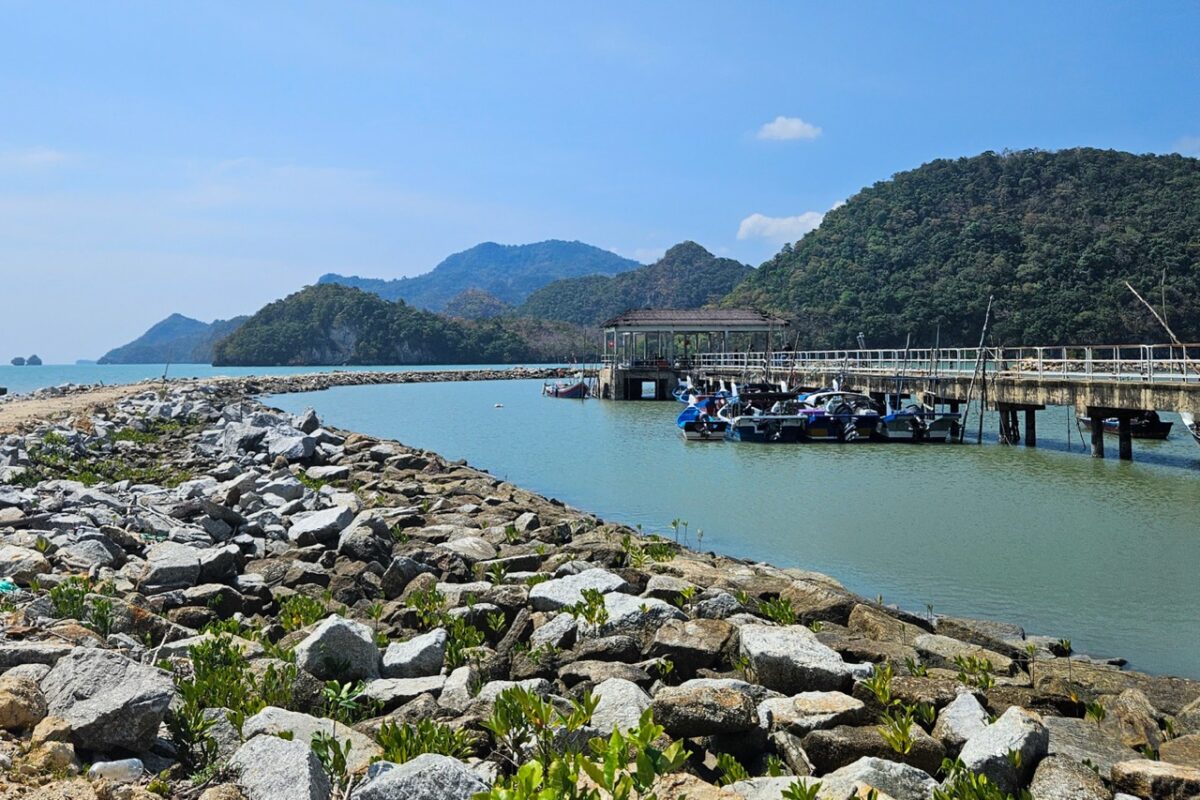
It’s a quiet and slightly abandoned-looking place, with an old building nearby, but it feels incredibly authentic. From here you can see the local fishing boats, the deep blue sea, and limestone cliffs rising dramatically from the surrounding jungle.
This area is also a great starting point for exploring parts of the Teluk Berembang Geotrail.
Jeti Teluk Puyoh Fisherman’s Pier
📍 6.24867, 99.82447
4. Stroll Along the Teluk Berembang Lagoon & Black Beach
Right next to the fisherman’s pier, you’ll find a small road leading between a black sand beach and a lush green lagoon ecosystem.
This stretch of road is easily one of the most scenic parts of Pulau Tuba.
The Black Beach is a rugged section of coastline with dark, volcanic-looking sand and rocky formations, giving it a much wilder atmosphere than the beaches on Langkawi’s main island.
- On one side, you’ll see the black sand beach and small mangroves.
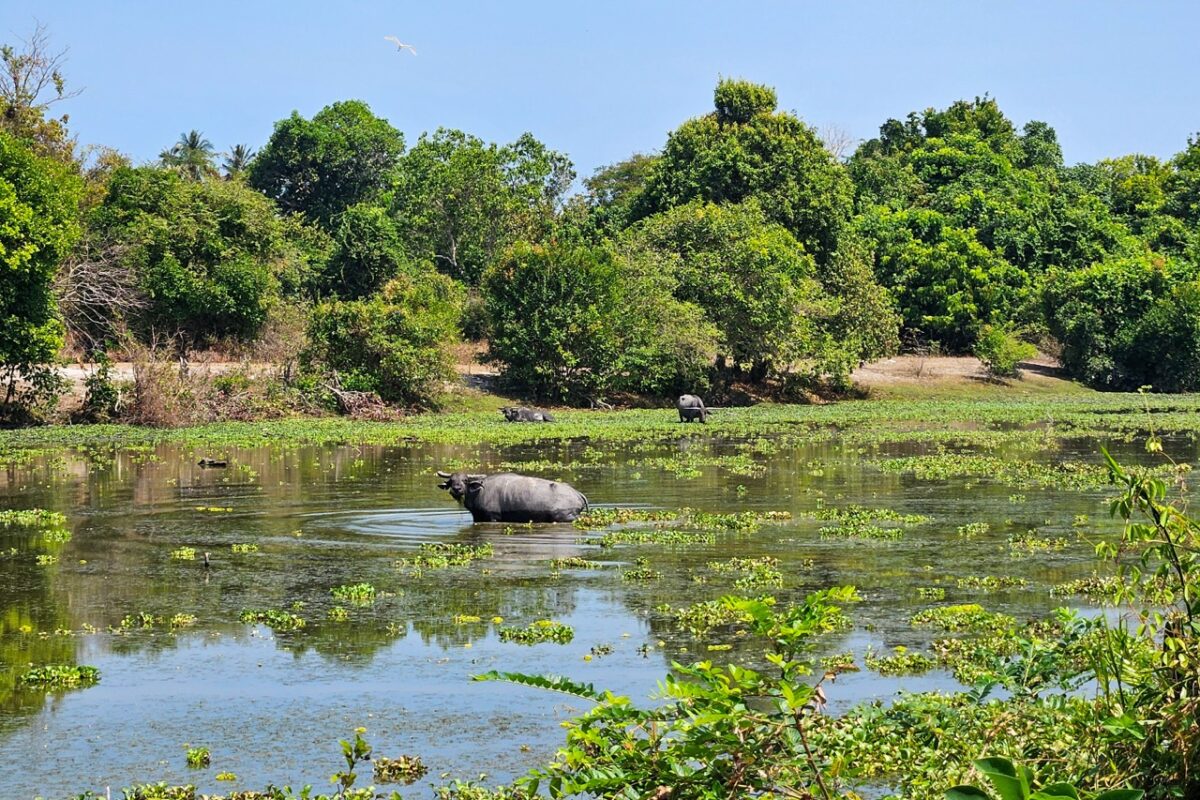
- On the other side, wide rice fields and shallow lagoons filled with lotus plants attract water buffalo that often bathe in the water.
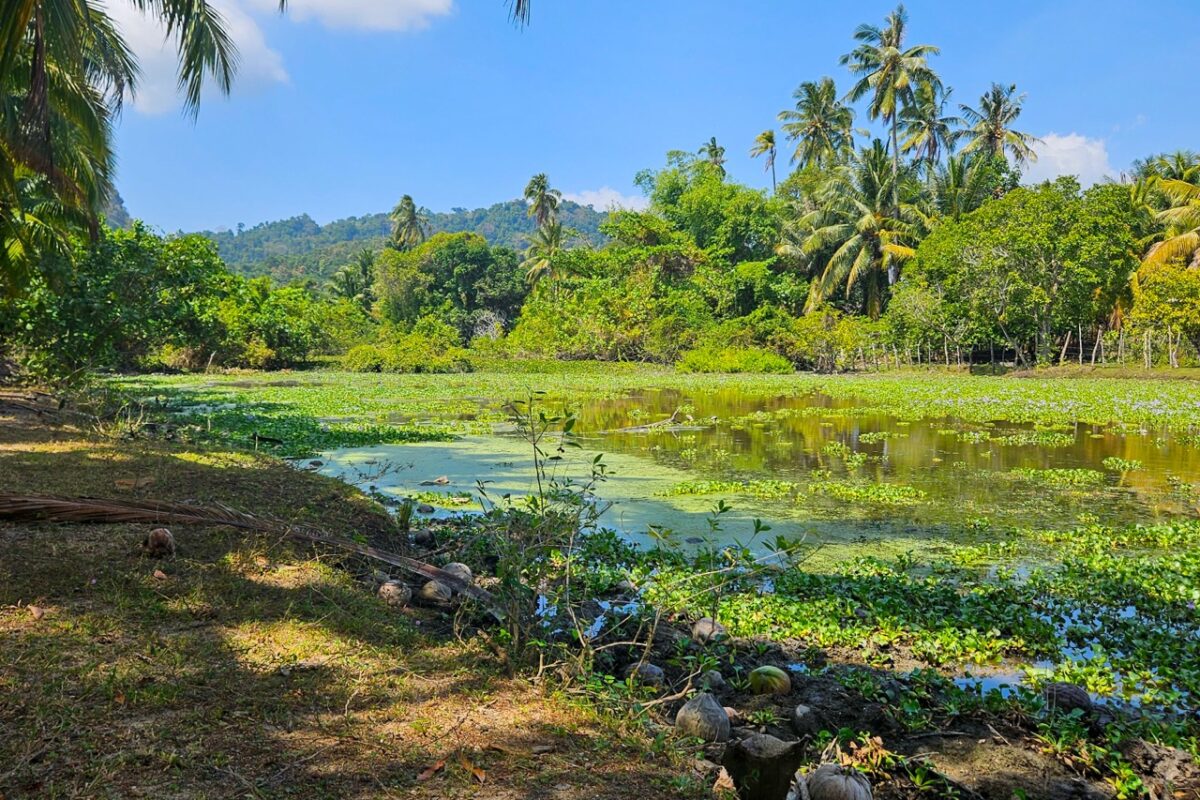
Don’t just drive through this area — stop your scooter, walk along the beach, and take in the scenery. It’s also a great place to photograph the buffalo grazing in the fields.
Keep your eyes open too — we actually spotted a snake here!
There are also a few small village homestays tucked away nearby.
Teluk Berembang Lagoon
📍 6.23883, 99.86377
5. Explore the Teluk Berembang Coastal Geotrail
This coastal section of Pulau Tuba is part of the Teluk Berembang Geotrail, a short geological trail highlighting several unique landscapes within the Langkawi UNESCO Global Geopark.
Instead of a traditional hiking trail, this area feels more like a natural coastal walk. Parts of the route follow rocky shoreline, quiet village paths, and open coastal plains.
One of the most interesting features here is the series of abrasion platforms — wide, flat rock surfaces that have been slowly carved out by thousands of years of waves and tidal movement.
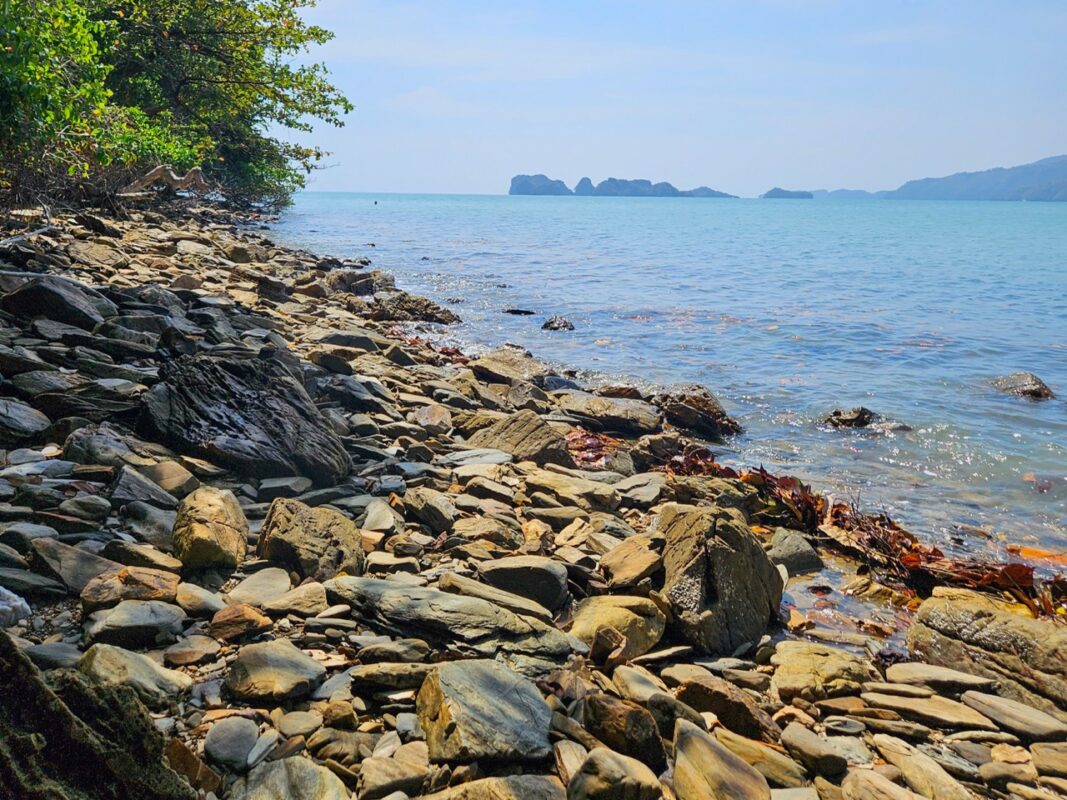
Walking through this area gives you a close look at how the sea has shaped the island’s limestone coastline over time.
The surrounding landscape is also surprisingly diverse. Within a short distance you’ll pass mangroves, lagoons, sandy stretches of coastline, and rural village scenery, all part of the protected Dayang Bunting Marble Geoforest Park.
Teluk Berembang Coastal Trail
📍 6.23556, 99.8404
6. See the Bukit Kecil Recumbent Folds
Heading back toward the center of the island, we stopped to visit the Bukit Kecil Recumbent Folds.
To reach them, follow the location on Google Maps and park your scooter along the roadside — there is no designated parking area. From there, look for the information boards and concrete stairs leading up the hill.
Fortunately, the hike is short and not particularly difficult. Within a few minutes, you’ll find yourself surrounded by unusual rock formations.
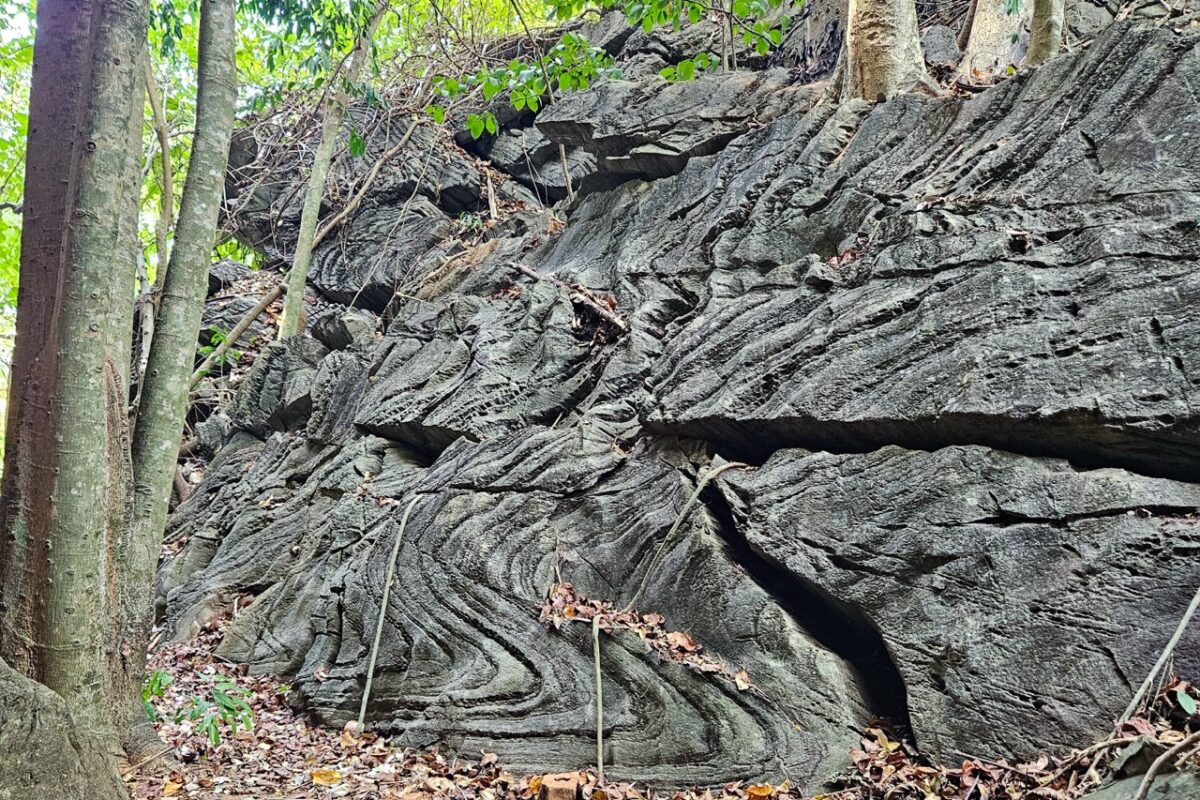
These formations are around 450 million years old. At some point in the distant past, powerful tectonic forces — possibly earthquakes — caused the rock layers to fold and flip upside down.
Today, the exposed rocks clearly show the dramatic wave-like “S” shapes created by this geological movement.
Bukit Kecil Recumbent Fold Geosite
📍 6.23199, 99.85336
7. Visit the “I Love Tuba” Sign & Buffalo Fields
Nearby, you’ll find a fun photo stop — the colorful “I Love Tuba” sign located right beside the island’s main buffalo fields.
The sign sits in the middle of wide open plains where water buffalo graze peacefully. Surrounded by lush greenery and rural scenery, this spot perfectly captures the quiet and rustic atmosphere that Pulau Tuba is known for.
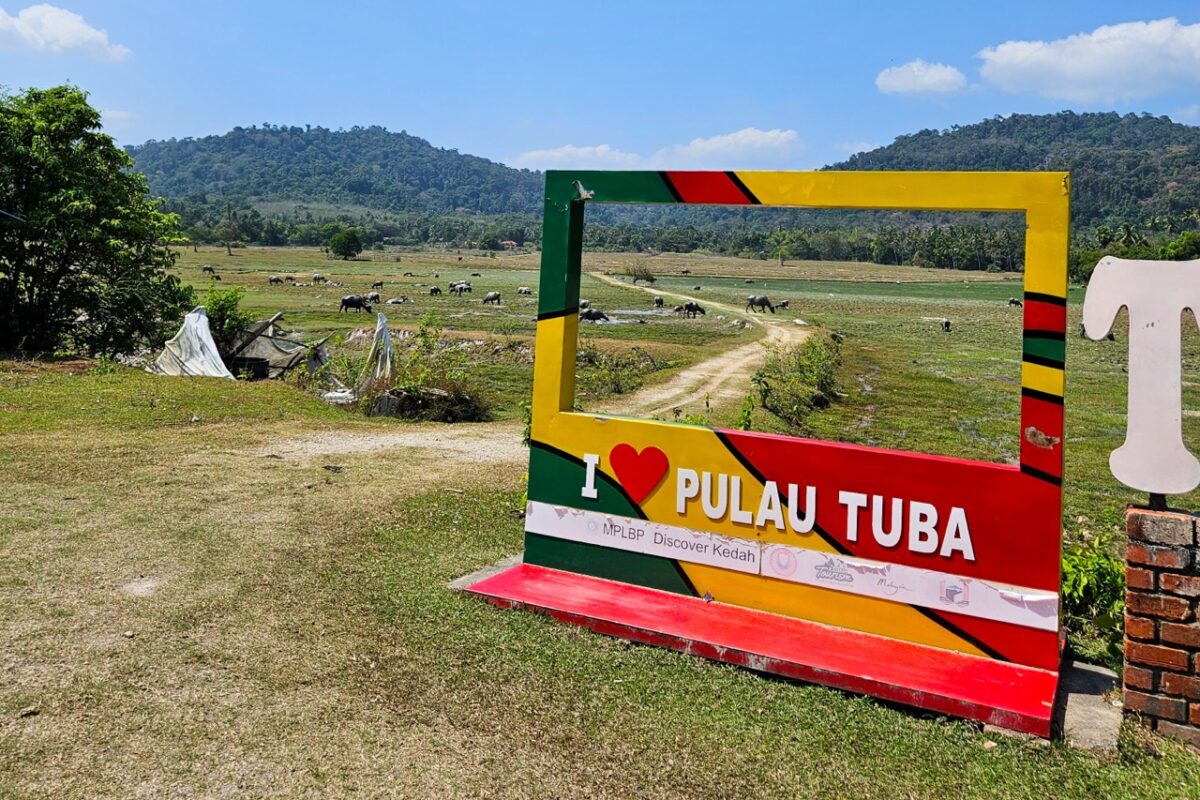
Pulau Tuba Buffalo Fields
📍 6.23556, 99.8404
8. Hike to Gua Wang Buluh Cave
The final adventure of our trip was the hike to Gua Wang Buluh Cave.
Follow the location on Google Maps to find the trailhead. You’ll leave the main asphalt road and continue along a smaller jungle path. You can ride your scooter part of the way through the forest before reaching the information board marking the start of the trail.
From there, it’s a steep and humid hike that takes about 45 minutes. The trail is shaded by dense jungle, but it’s still a good idea to bring plenty of water.
The cave sits roughly 150 meters above sea level and is estimated to be more than 300 million years old.
Inside, you’ll find several large chambers spread across two levels, filled with well-preserved formations such as stalactites, stalagmites, flowstones, and curtain formations.
One of the highlights is the famous “Praying Man” stalagmite, which stands in a chamber illuminated by natural sunlight from above.
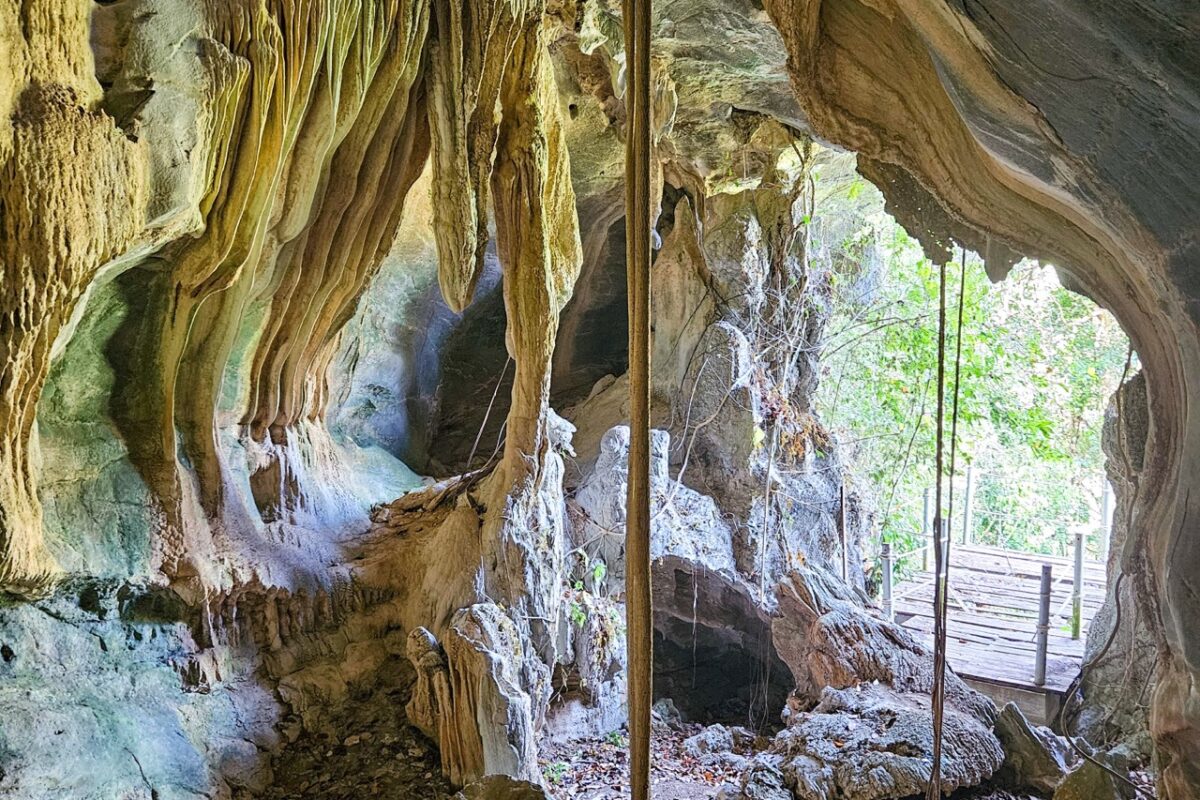
Visiting Gua Wang Buluh is one of the most interesting geological experiences on Pulau Tuba Langkawi.
There are also viewing platforms inside the cave, although during our visit they were not well maintained and did not feel completely safe to use.
The cave has historical significance as well — local villagers reportedly used it as a hiding place during World War II.
The surrounding cliffs are also home to honeybees that local communities harvest for honey. If you’re lucky, you might also spot wildlife such as the Whistling Magpie bird.
Gua Wang Buluh Cave
📍 6.35, 99.8
9. Relax at Tanjung Pandang Beach
After exploring the island, we finished the day relaxing at Tanjung Pandang Beach near the jetty.
The beach is wide, sandy, and surprisingly uncrowded. There’s also a small restaurant right by the shore — and seeing locals eating there is usually a good sign.
You can simply pick a quiet spot on the sand, enjoy the sea breeze, and soak in the peaceful atmosphere of Pulau Tuba.
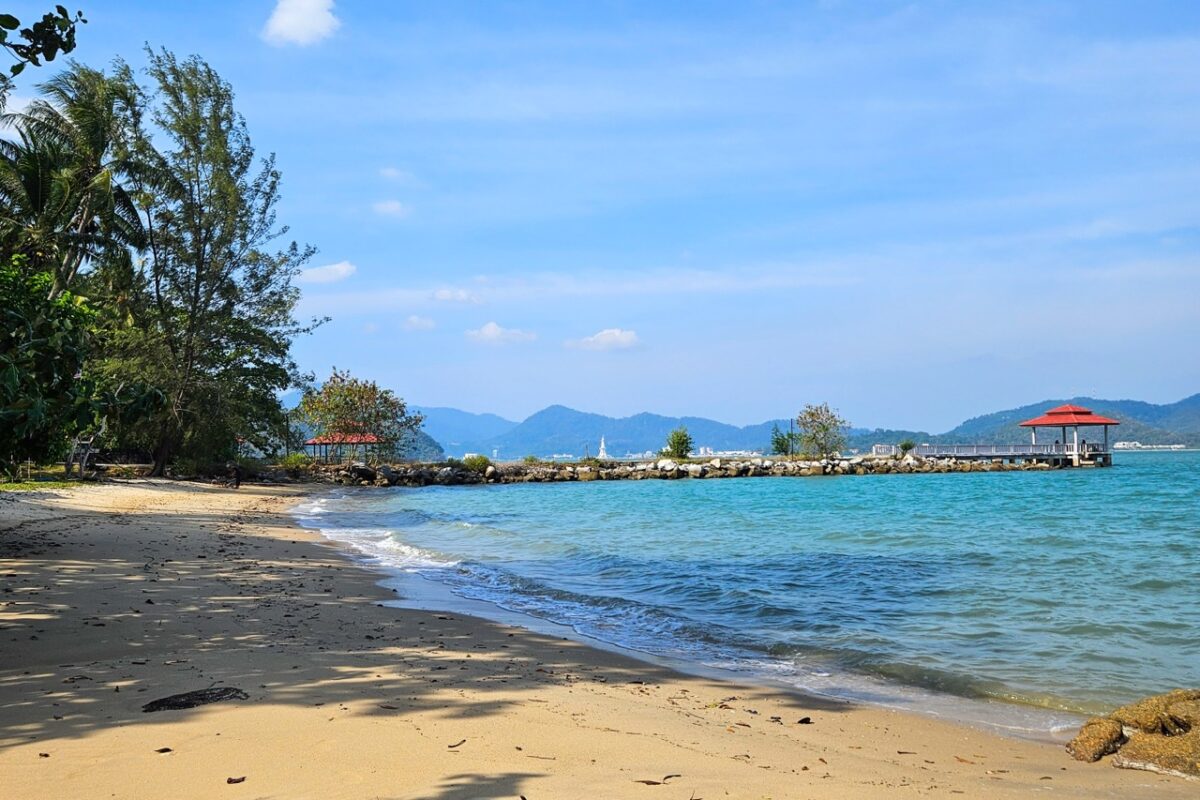
This was one of our favorite places on the island thanks to the relaxing beach, delicious local food, and plenty of shade to escape the tropical sun.
Tanjung Pandang Jetty
📍 6.26723, 99.84631
Where to Eat on Pulau Tuba Island (Best Local Food)
Food options on Pulau Tuba are simple but authentic. Most places to eat are small local restaurants or roadside stalls serving traditional Malaysian dishes.
You’ll often see small stands selling fried snacks (usually meat-based) and fresh tropical fruit. Most restaurants are located near the main village, the bridge area, or close to the jetties.
Pulau Tuba is particularly known for shrimp dishes, especially Mee Udang (prawn noodles), which is one of the local specialties.
During our visit, we stopped at a small restaurant near Tanjung Pandang Beach and the jetty.
We ordered Mee Udang, fried shrimp, coconut water, and milk tea — everything was fresh and delicious.
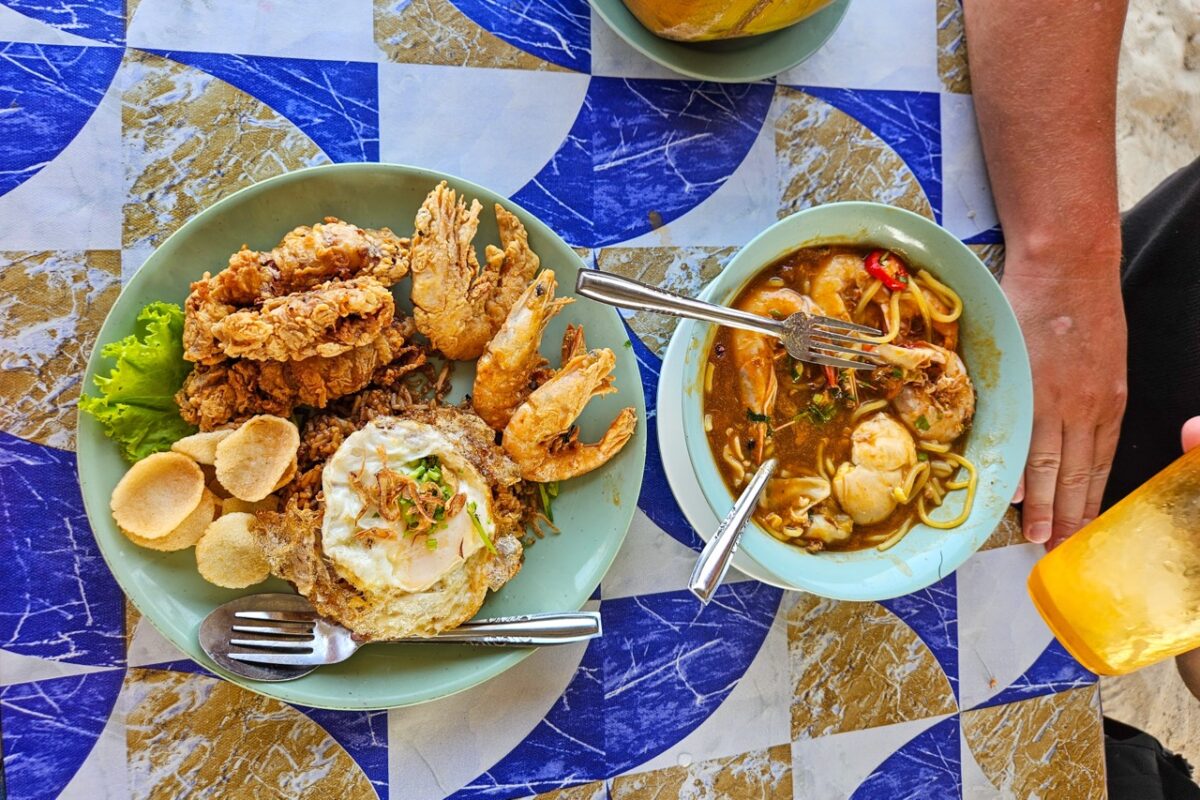
Another well-known local restaurant on the island is Lekoshow Pulau Tuba.
Because Pulau Tuba is a traditional Muslim community, alcohol is generally not served on the island.
Popular Malaysian dishes you may find on Pulau Tuba include:
- Nasi goreng kampung (village-style fried rice)
- Mee goreng (fried noodles)
- Mee udang (prawn noodles)
- Fresh grilled fish and seafood
Is Pulau Tuba Island Safe?
Yes — Pulau Tuba is very safe to explore. The island is quiet, and the local community is friendly and helpful.
If you’re planning outdoor activities like hiking caves or renting scooters, travel insurance can be useful for extra peace of mind.
However, there are a few things to keep in mind while exploring:
- Drive carefully when riding a scooter. Traffic is minimal, but some roads are narrow.
- Keep an eye out for wildlife. We even spotted a snake near the lagoon area, so avoid interacting with animals.
- Protect yourself from the tropical heat — wear a hat, apply sunscreen, and stay hydrated.
- If you plan to hike alone, let your hotel know your plans and make sure your phone is charged with a working SIM card.
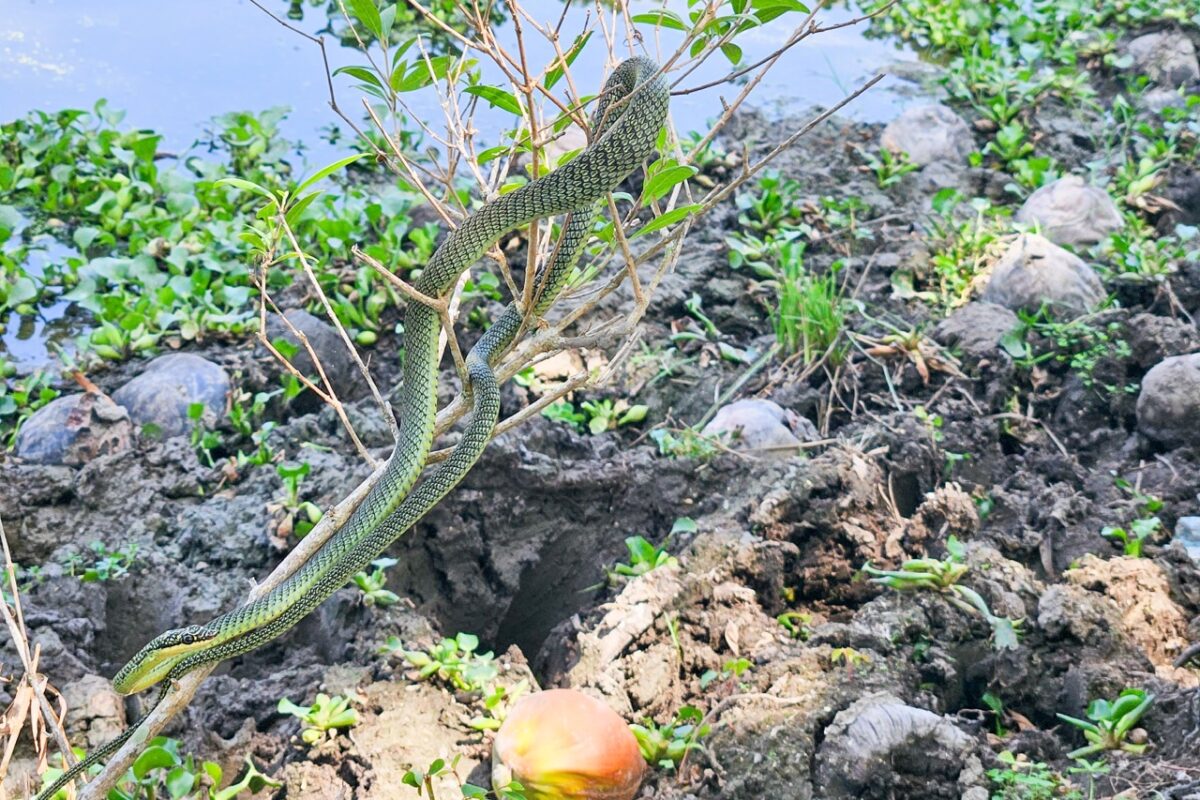
Overall, Pulau Tuba feels peaceful and welcoming, making it a safe destination for independent travelers.
Are There Hotels on Pulau Tuba?
While most visitors explore Pulau Tuba as a day trip from Langkawi, there are a few small accommodations if you want to stay overnight.
Options on the island include:
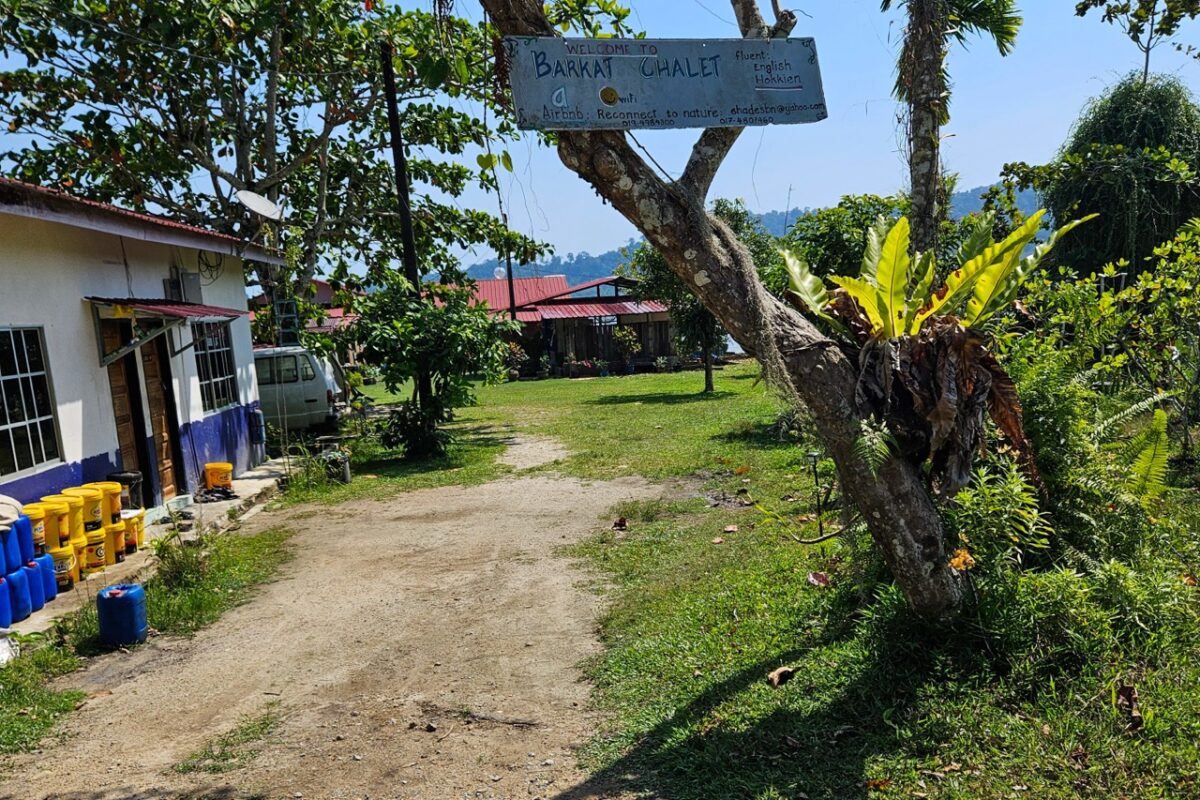
- Local homestays and guesthouses, like BESTUBA COTTAGE
- Small family-run chalets
- Capital O 91017 Tuba Beach Resort
Staying overnight allows you to experience the island when day visitors leave and enjoy the peaceful village atmosphere.
Wildlife to Spot on Pulau Tuba
Pulau Tuba is not only known for its geology but also for its quiet natural environment and wildlife.
While exploring the island, you may spot several animals that are part of the local ecosystem.
- Water buffalo – These large animals are often seen grazing in the rice fields and lagoons around Teluk Berembang.
- Tropical birds – The island is home to various bird species, including the Whistling Magpie.
- Snakes – We actually spotted one near the lagoon area, so always stay aware of your surroundings.
- Honey bees – Some of the cliffs near Gua Wang Buluh are inhabited by bees that locals harvest for honey.
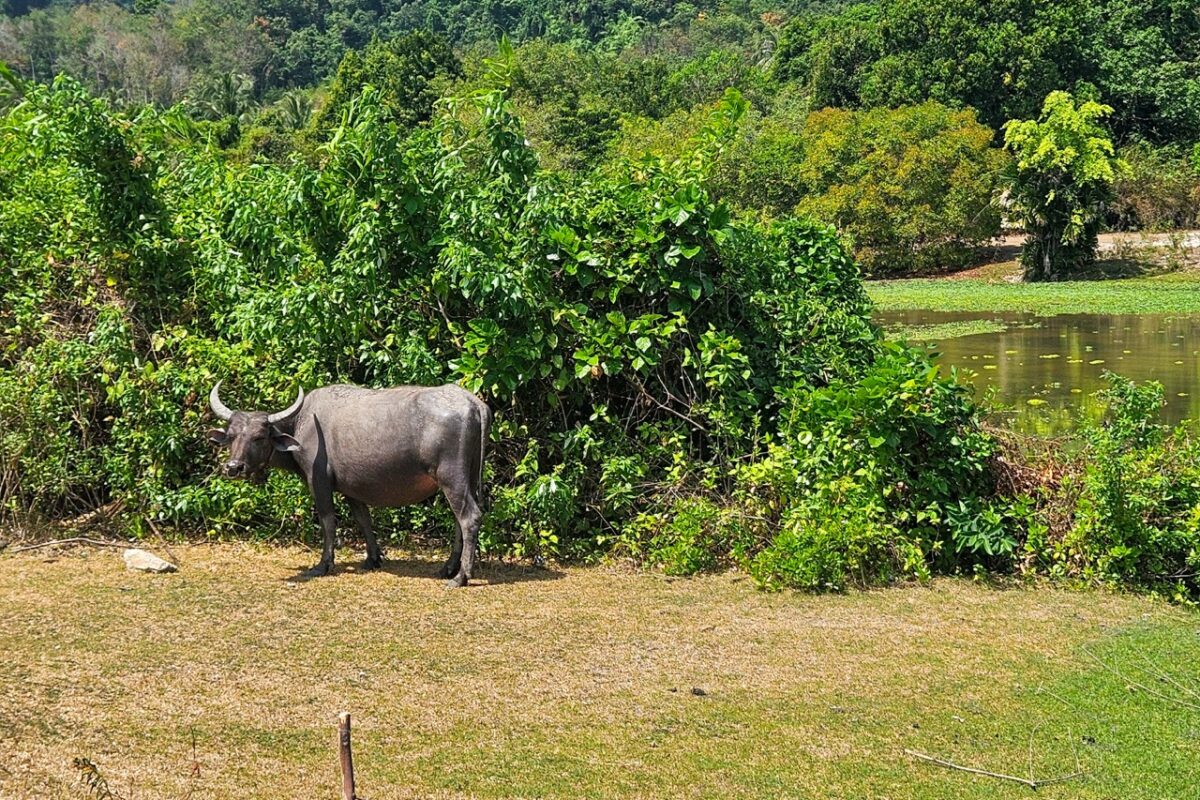
Although wildlife encounters are usually harmless, it’s best to observe animals from a distance and avoid disturbing them.
What to Pack for Pulau Tuba Island Day Trip
Since shops on Pulau Tuba mostly sell basic snacks and small essentials, it’s best to bring everything you might need for the day.
- Sturdy footwear – Sandals with straps or trail shoes are useful for caves and jungle paths.
- Dry bag – Helpful for protecting valuables during the boat ride.
- Cash – There are no ATMs on the island.
- Water bottle – Bring plenty of water and stay hydrated in the tropical heat.
- Sun and bug protection – High SPF sunscreen and mosquito repellent are highly recommended.
- Sun Hat
- Local SIM card or eSIM (I recommend Airalo) – Reliable mobile data helps when navigating remote areas like Pulau Tuba.
How to Visit Pulau Tuba from Langkawi
The easiest way to get to Pulau Tuba from Langkawi is by taking a small local boat from Pekan Rabu Jetty in Kuah.
The boat ride takes about 15–20 minutes and usually costs around RM5 ($1.20 USD). Boats run several times per day, but schedules can change, so it’s best to ask locals at the jetty for the next departure.
Visiting Pulau Tuba from Langkawi is easy once you understand how the local boats operate.
- Take a Grab to Pekan Rabu Jetty in Kuah.
- Ask locals where the Pulau Tuba boat is departing.
- Pay the captain directly (usually around RM5-10).
- The boat ride takes about 15–20 minutes.
Because schedules can sometimes change, it’s best to arrive early and ask locals about the next available boat.
Best Time to Visit Pulau Tuba Island
The weather on Pulau Tuba Langkawi is tropical year-round, but the dry season offers the calmest seas for the short boat ride from Kuah.
The best time to visit Pulau Tuba is during Langkawi’s high season between November and March, when the weather is sunny.
However, the island remains quiet throughout the year since very few organized tours visit this part of the archipelago.
Because Pulau Tuba is rarely included in organized tours, it remains quiet even during Langkawi’s peak travel season.
Even during high season, you may find yourself exploring villages, geosites, and beaches with almost no other tourists around.
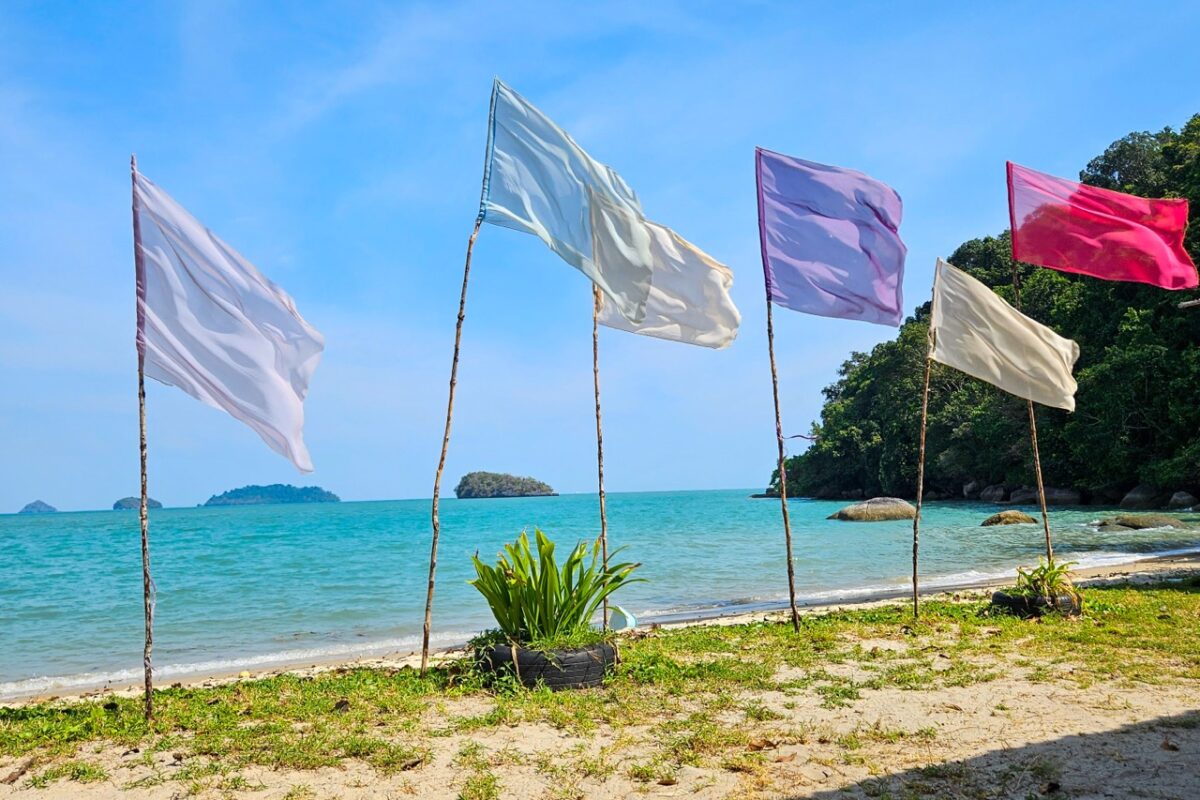
Discover the best of Langkawi with Booking.com. Choose from luxury beachfront resorts or cozy villas near Pantai Cenang.
Secure your spot for island hopping with GetYouGuide. Explore the Marble Geoforest, freshwater lakes, and eagle watching spots.
Travel with peace of mind. EKTA insurance covers your swimming, kayaking, and trekking adventures across the Geopark.
Final Thoughts: Is Pulau Tuba Worth Visiting?
Yes, Pulau Tuba is worth visiting if you want to explore a quieter and more authentic side of Langkawi with traditional villages, geological sites, and very few tourists.
Instead of resorts and beach clubs, you’ll find fishing villages, limestone caves, and quiet lagoons.
It’s one of the most unique day trips from Langkawi, offering untouched nature and fascinating geological formations.
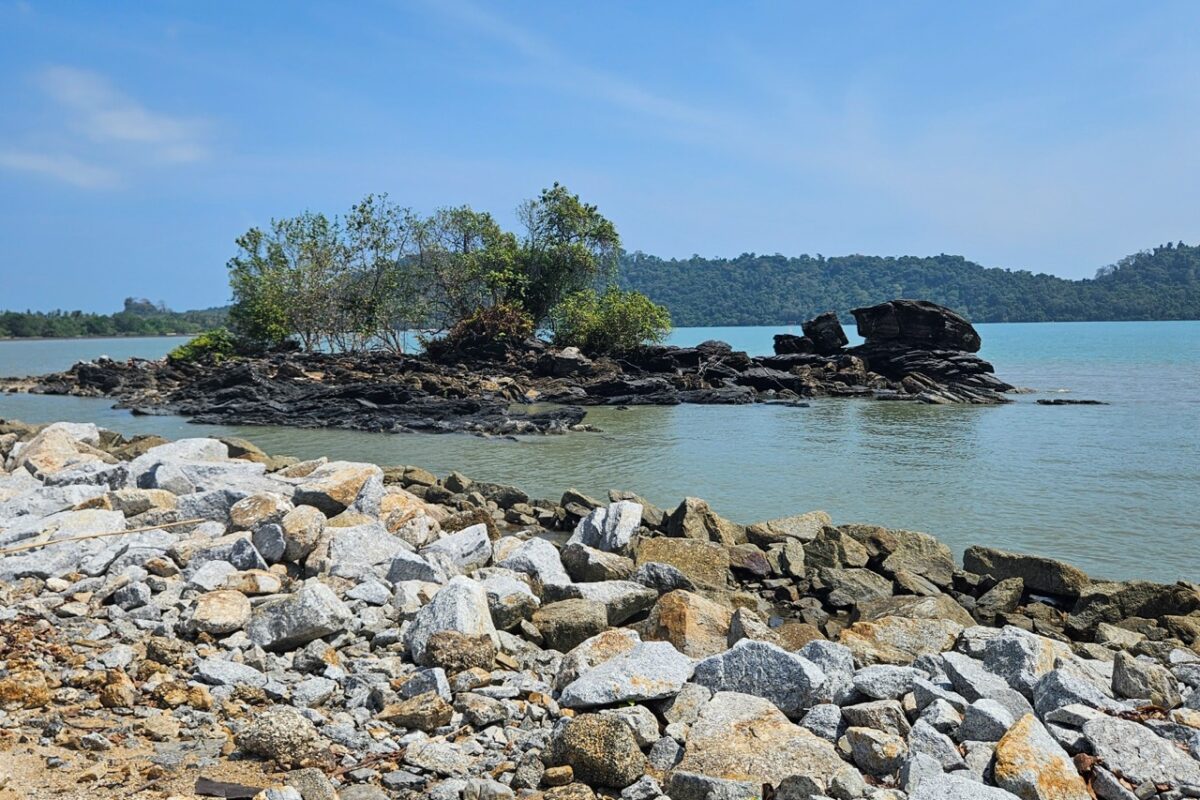
These geological formations are part of the protected Langkawi UNESCO Global Geopark on Pulau Tuba.
This guide covers everything you need to know to plan a self-guided visit to Pulau Tuba, from how to get there and where to eat to the best geosites and hidden spots on the island.
If you enjoy off-the-beaten-path destinations, renting a scooter and exploring Pulau Tuba for a day can easily become one of the most memorable experiences in Langkawi.
Despite being only 15 minutes from Kuah, Pulau Tuba still feels surprisingly untouched. But that may not last forever as more travelers begin discovering its quiet villages, geotrails, and caves.
FAQ: Visiting Pulau Tuba Island
Yes. Pulau Tuba is one of the most authentic islands in Langkawi and perfect for travelers who want to explore beyond the typical tourist spots.
Local boats depart from Pekan Rabu Jetty in Kuah and the journey takes about 15–20 minutes.
Most visitors spend about half a day exploring the island by scooter.
Yes. There are a few small homestays and guesthouses, although most travelers visit as a day trip from Langkawi.
Yes. The island is part of the Dayang Bunting Marble Geoforest Park, which belongs to the Langkawi UNESCO Global Geopark.
No. Most island-hopping tours from Langkawi visit Pulau Dayang Bunting but do not stop at Pulau Tuba. To visit Pulau Tuba, you need to take a local boat from Kuah.
Continue Exploring Langkawi
Langkawi Travel Guide →
Complete overview of beaches, hikes, and hidden islands.
Hiking Gunung Raya →
Guide to climbing Langkawi’s highest mountain.
Langkawi SkyBridge & 7 Wells waterfall →
What to know before visiting the famous bridge and waterfall
Kilim Geoforest Park →
Mangrove tour through Langkawi UNESCO Geopark.