
Banana Leaf Travel contains affiliate links. If you book through them, I may earn a small commission at no extra cost to you. I only recommend services I personally use and trust. See my Privacy Policy for more information.
Is Langkawi Mangrove Tour Worth It? Guide to Visiting Kilim Geoforest Park
Planning a trip to Langkawi and wondering if the Kilim Geoforest Park is actually worth your time?
If you are worried that it’s just another overcrowded tourist trap, you are only partially right.
While it’s one of the most popular attractions on the island with heavy boat traffic, it’s also a UNESCO Global Geopark with an ecosystem that is millions of years old.
You can’t explore it on your own; you have to get an organized boat tour.
Expect a mix of high-speed boat rides, mysterious caves, narrow mangrove canals and hidden beaches.
For me, some parts of the itinerary, like the eagle feeding, could be skipped, but otherwise, I learned a lot about both the local nature and the community.
Read more to see my detailed breakdown and what should you expect.
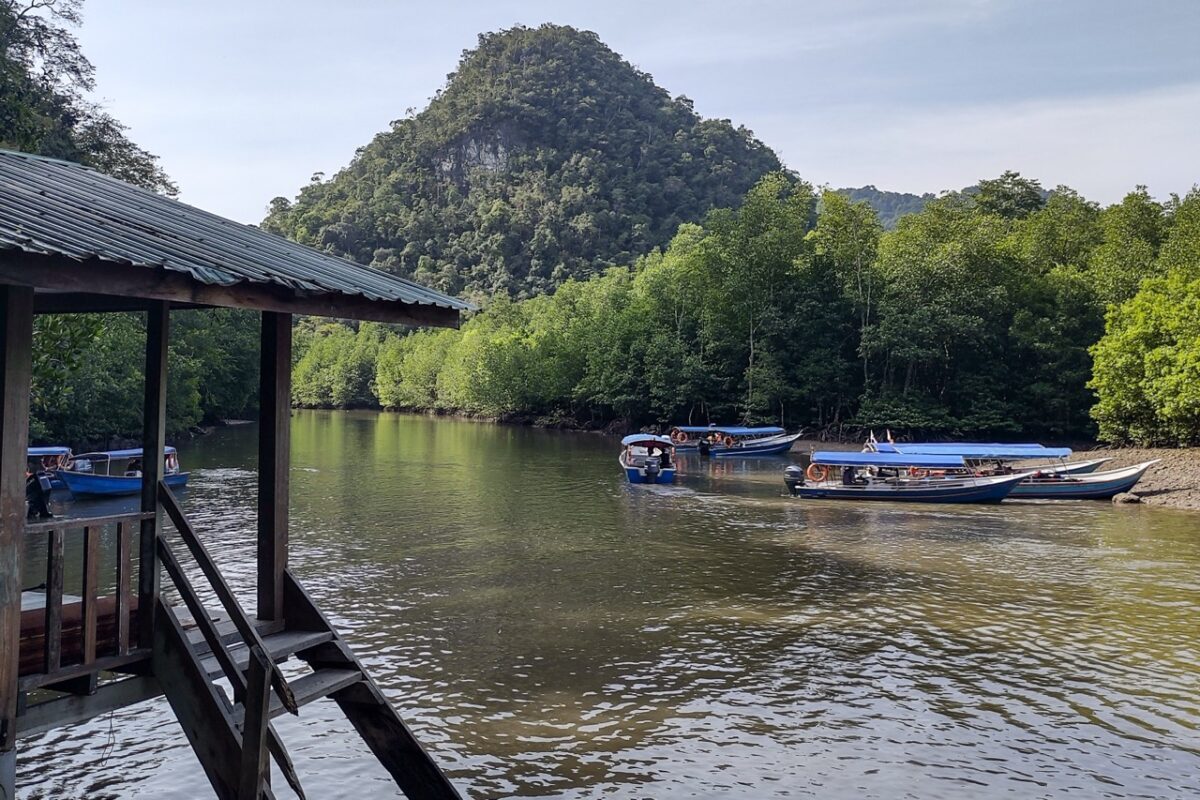
Kilim Mangrove Tour – Quick Summary
For more places to explore on the island, read the Langkawi travel guide covering viewpoints, beaches, and island adventures.
How to Book a Kilim Geoforest Park Tour
Langkawi is a well developed island and booking a trip is actually quite easy.
If you’d rather book ahead, I recommend checking GetYourGuide tour packages. They offer the widest variety and most include free cancellation if your plans change.
Choosing Your Package: Group vs. Private
You can either book a private tour or joined a boat shared with other travellers.
Usually, the maximum number of participants for a group tour is 8 people, but we ended up sharing our boat with only two other tourists.
Since there are so many boats, I guess filling them to capacity isn’t always a priority, so we still enjoyed a more private atmosphere.
Watch Out for “Rushed” Itineraries
If a tour lasts more than 4 hours, it usually means extra activities like fishing or island hopping are also included.
Alternative Adventures: Kayaking & Night Tours
If you want to experience something more unique, there are two other ways to see Kilim Geoforest Park:
- Night Adventure – it starts in the evening, so you can catch the sunset before spotting bioluminescent plankton and nocturnal mangrove wildlife after dark.
- Kayaking Trips – you will navigate narrow channels that motorboats can’t reach, having a much quieter and authentic encounter with the wildlife.
While Kilim Geoforest Park is the most famous part of the Langkawi UNESCO Global Geopark, another fascinating area is Pulau Tuba, located just south of Langkawi.
The Cost of The Boat Tour in Kilim Geoforest Park
Prices vary depending on how long you want to be out and how many attractions are included.
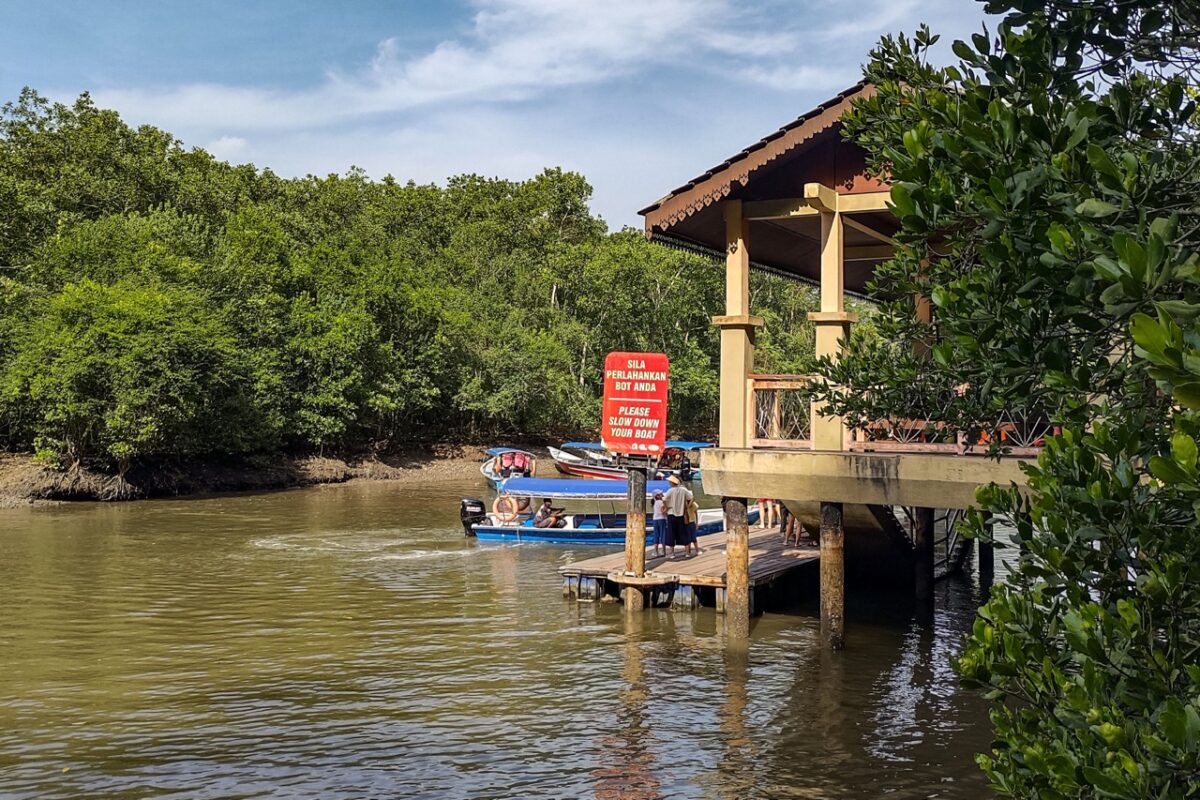
How to Get to Kilim Geoforest Park
Kilim Park is located on the north side of the main island, quite far from the two main tourist hubs.
It’s about 11km (20 minutes) from Kuah and roughly 25km (45 minutes) from Pantai Cenang.
Unless you stay right next to the park, you will need to plan your transport in advance. To reach this destination you will have 3 main options:
1. Get a Tour With a Hotel Pickup
If you aren’t keen on navigating yourself, some tours offer hotel pickups.
It’s a great way to skip the headache of the transport logistics, but it will add to the overall cost of your tour.
2. Rent a Moped or Car
For a couple or a group of friends, renting your own vehicle will be by far the most budget-friendly way to reach the Park.
We rented a scooter for a couple of days in Langkawi and enjoyed the freedom it gave us to see the island.
Plus, you can turn the long drive into a mini ”road trip”, just add few stops and you will be able to see an authentic side of Malaysia, that you’d miss from a taxi window.
3. Taxis and Apps
Your third option is using a taxi or an app like Grab or InDrive.
While it’s easy to get there, it can be a bit pricey since the Kilim mangrove forest is on the far end of the island.
Expect a return trip to cost you at least RM 50 ($12 USD) from places like
Make sure you stay connected while exploring -> get an eSIM before heading out.
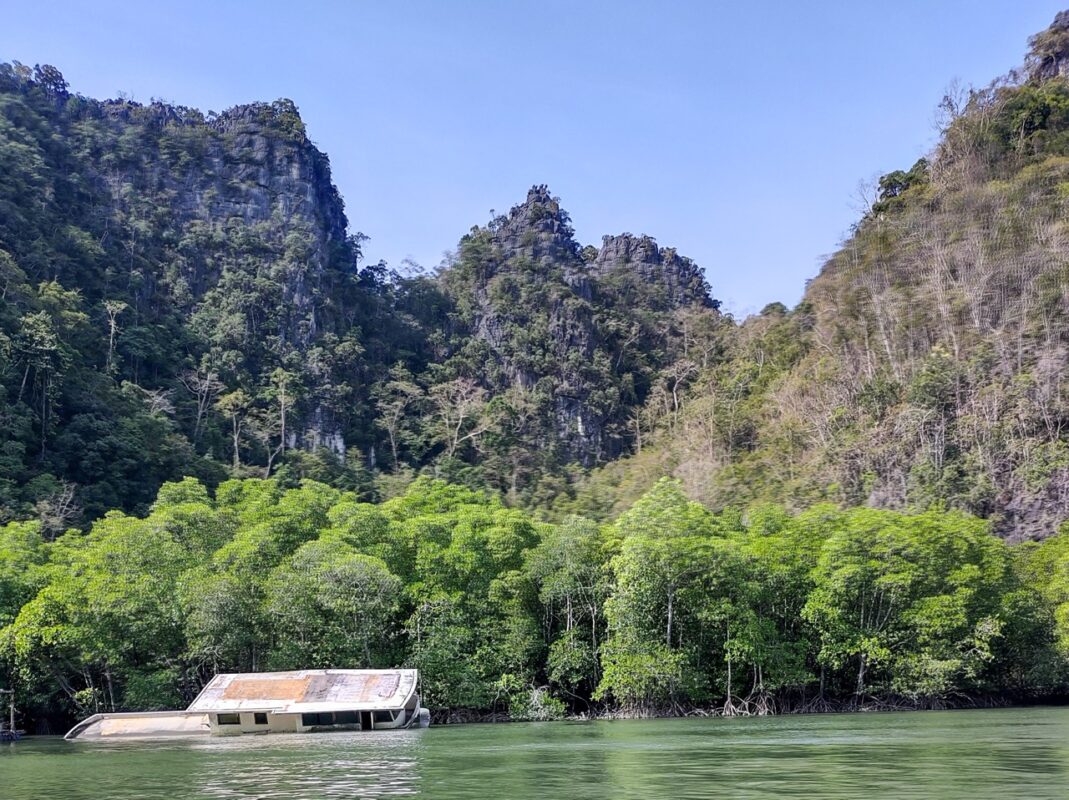
What to Expect: A Breakdown of the Kilim Mangrove Boat Trip Itinerary
Exploring the Bat Cave (Gua Kelawar)
The first stop on the itinerary is typically the Bat Cave (Gua Kelawar).
Geology and History
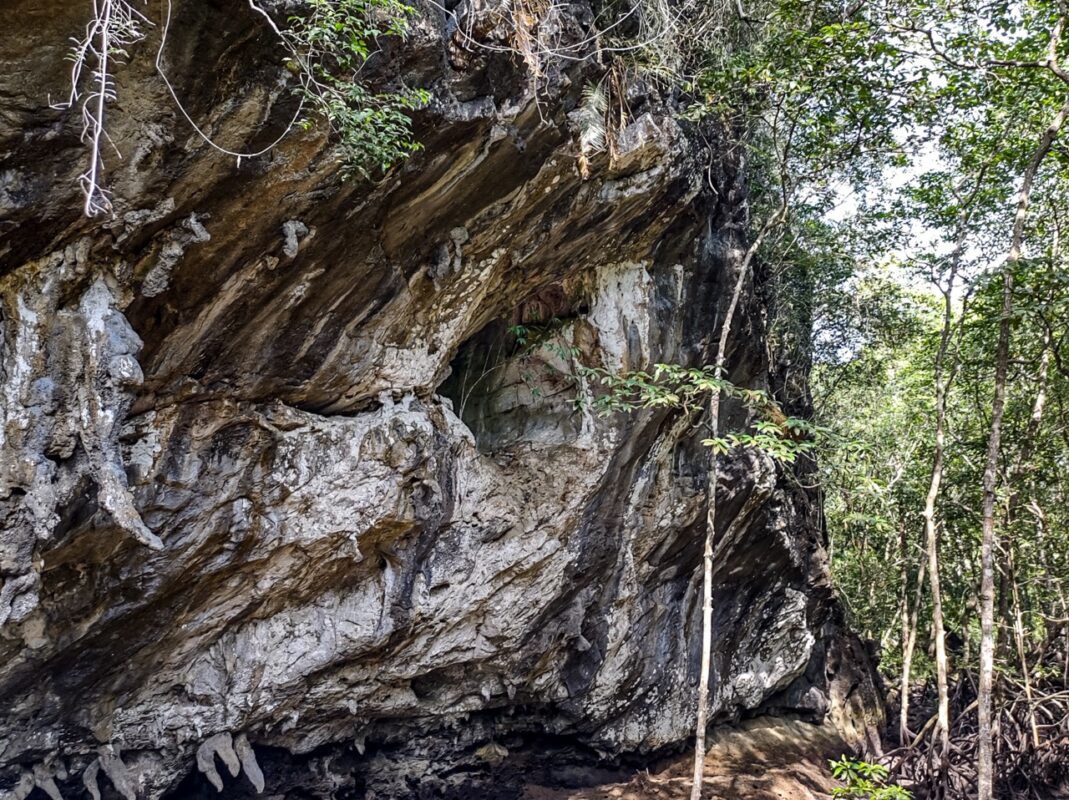
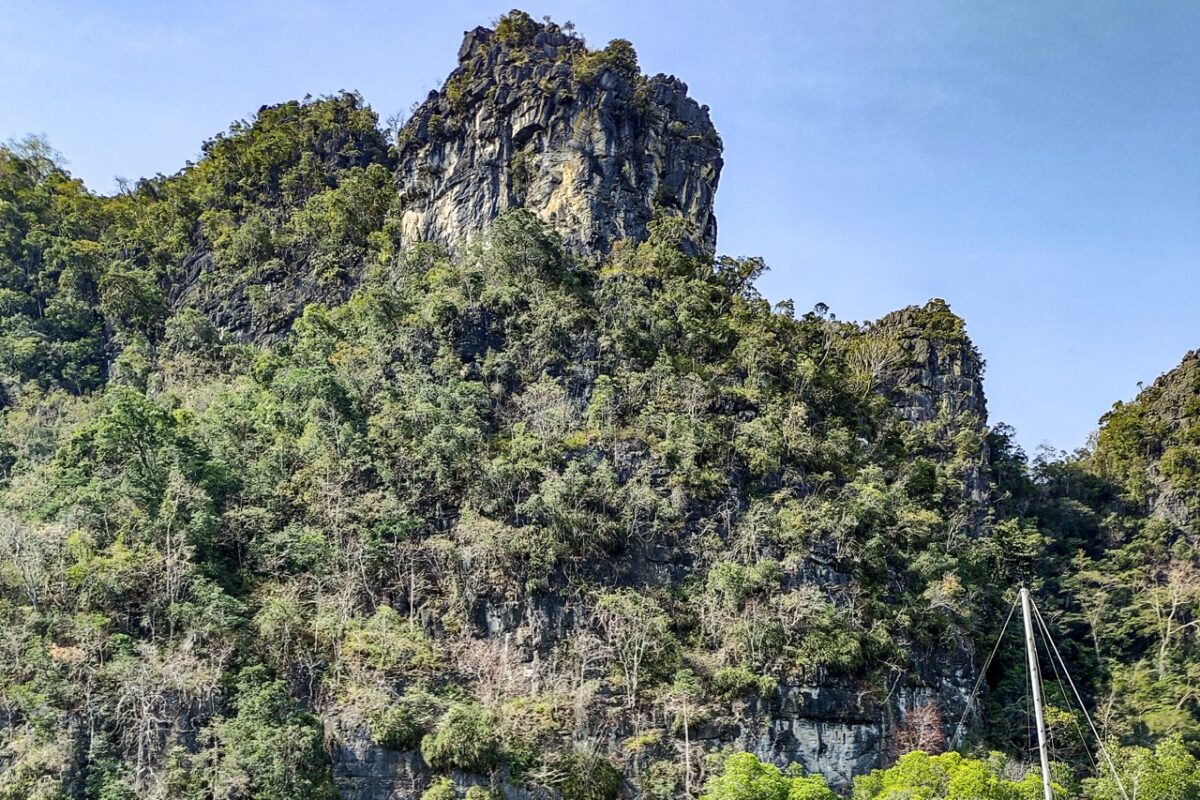
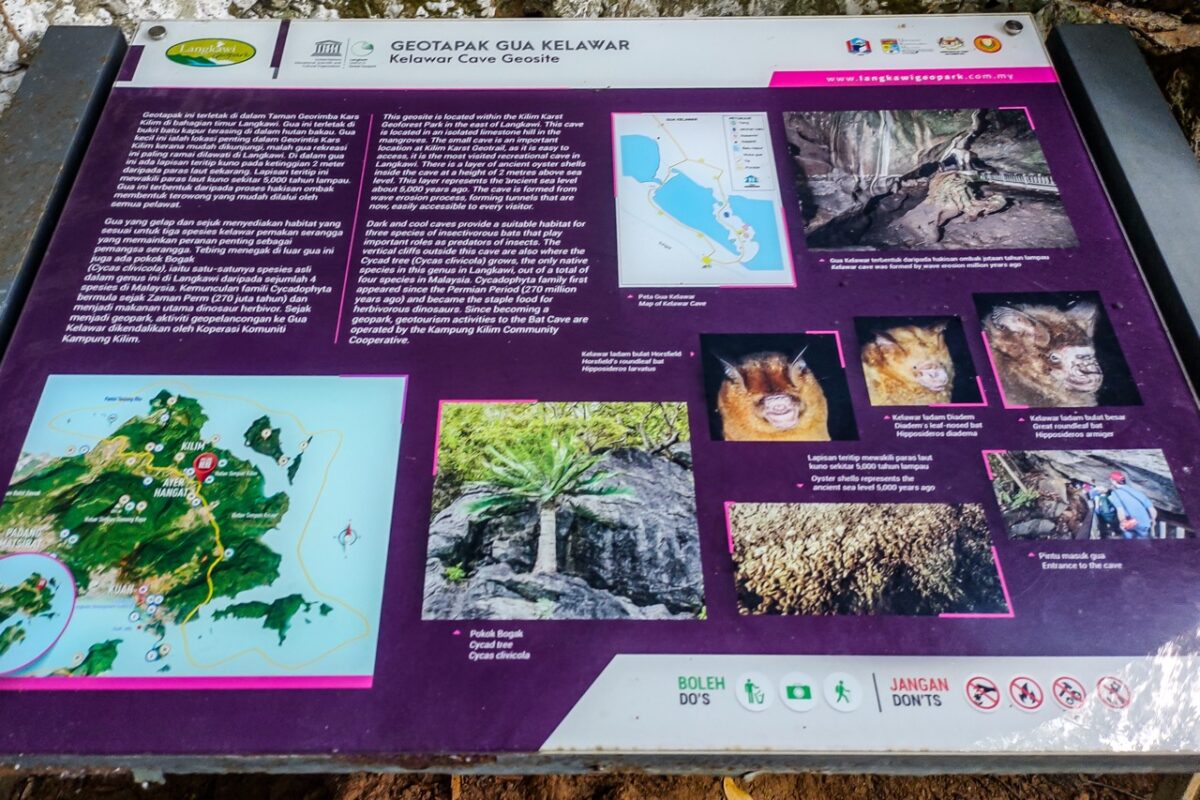
The cave is located in an isolated limestone hill surrounded by mangroves.
Keep an eye out for a layer of ancient oyster shells on the cave walls, about 2 meters above the current sea level.
These shells mark exactly where the ocean sat 5,000 years ago.
Wildlife and “Living Fossils”
Inside, you’ll enter a chamber that is home to three species of insect-eating bats. Watching them in their natural environment was a massive highlight for me.
Before heading back to the boat, look at the vertical cliffs outside for the Pokok Bogak (Cycad tree).
Tip: I suggest snapping a photo of the info board at the entrance, so you can appreciate the history of what you’re looking at as you walk through.
We had about 20 minutes in the cave without a dedicated guide.
Tour of the Floating Fish Farm
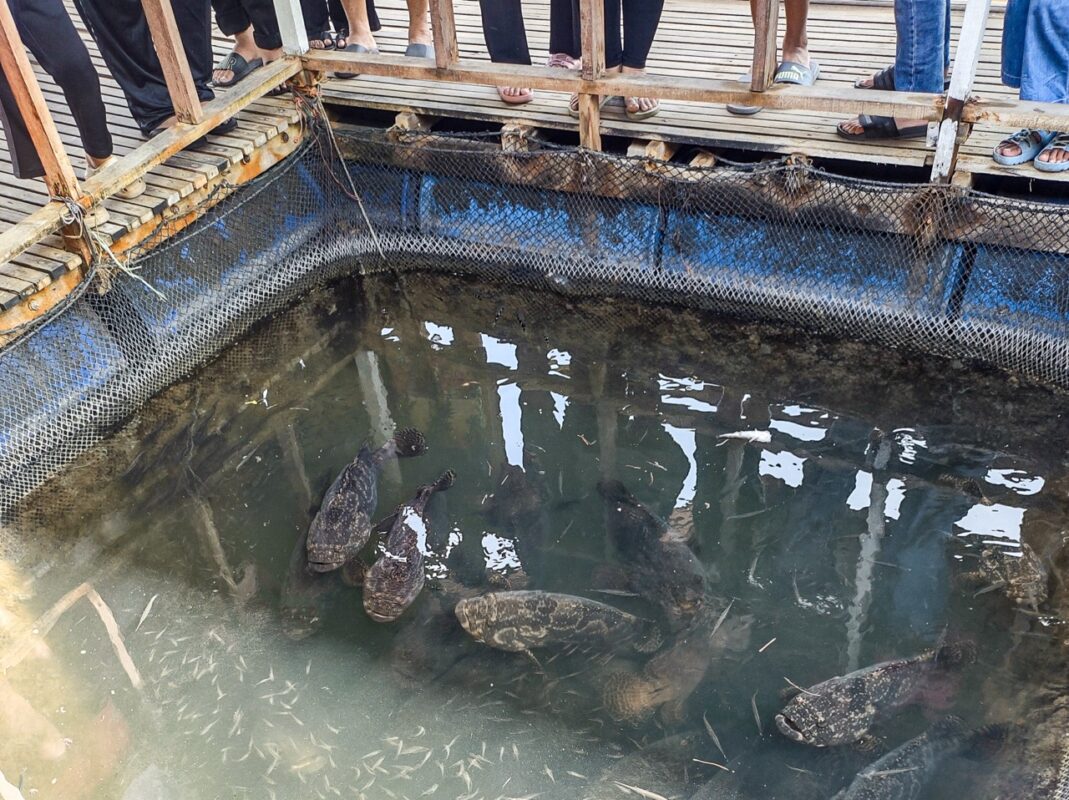
The second destination is a floating fish farm.
At the end of the walk, you can participate in feeding the stingrays.
While this is marketed as an interactive experience, you should consider the ethical impact too.
Since the farm also doubles as a restaurant where the boat returns for lunch, we pre-ordered fresh fish from local fishermen here at the start of our tour.
This meant our meal was ready for us as soon as we finished the boat trip.
Monkey Watching in the Mangroves
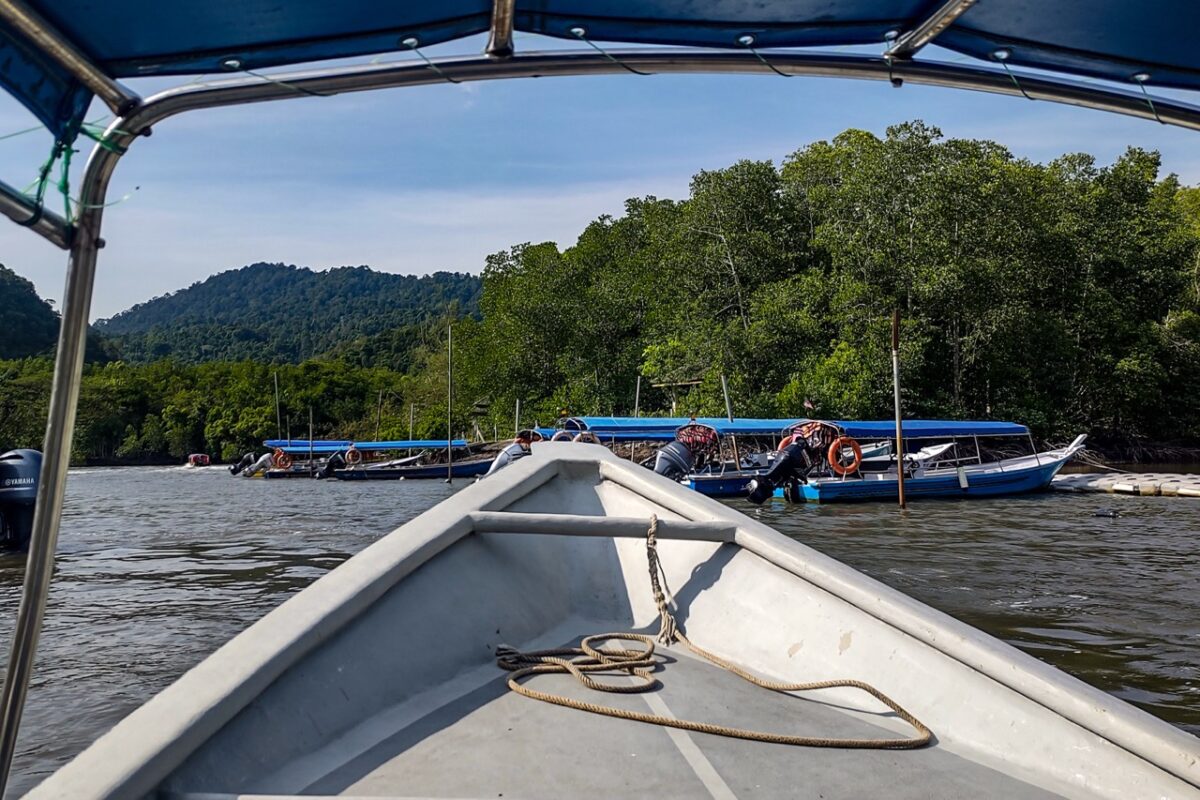
The third stop is an area known to be inhabited by Long-tailed Macaques.
For a more ethical experience, ask your boatman to keep a distance.
This allows you to see them foraging naturally for crabs among the roots rather than begging for snacks.
The Crocodile Cave (Gua Buaya)
Next, we headed to Crocodile Cave, as our captain assured us, there are no actual crocodiles here.
The cave earned its name because, from certain angles, the limestone exterior resembles a crocodile’s head.
Once inside, keep your eyes on the ceiling and walls, you can spot there:
- stalactites and stalagmites,
- small colonies of roosting bats,
- and even ancient shells embedded deep in the rock.
Eagle Feeding vs. Eagle Watching
The next stop is eagle watching, where your boat moves to a point where dozens of these majestic birds circle above.
You will primarily see two species:
During some tours, the eagles are fed chicken skin thrown from the boats.
While it looks spectacular to see them dive, there is a serious ethical downside: wildlife experts warn that feeding them chicken skin is harmful to their health.
It disrupts their natural hunting instincts and makes them dependent on tourists, which unbalances the local ecosystem.
For a better approach, look for operators who offer “Eagle Watching” rather than feeding.
I recommend asking your boatman to simply stop and watch the eagles without throwing food.

Andaman Sea Cruise and Beach Time
After the few main attractions, the motorboat gains momentum as you leave the narrow river channels.
This is the moment the tour transitions from the dense jungle to the open, blue expanse of the Andaman Sea.
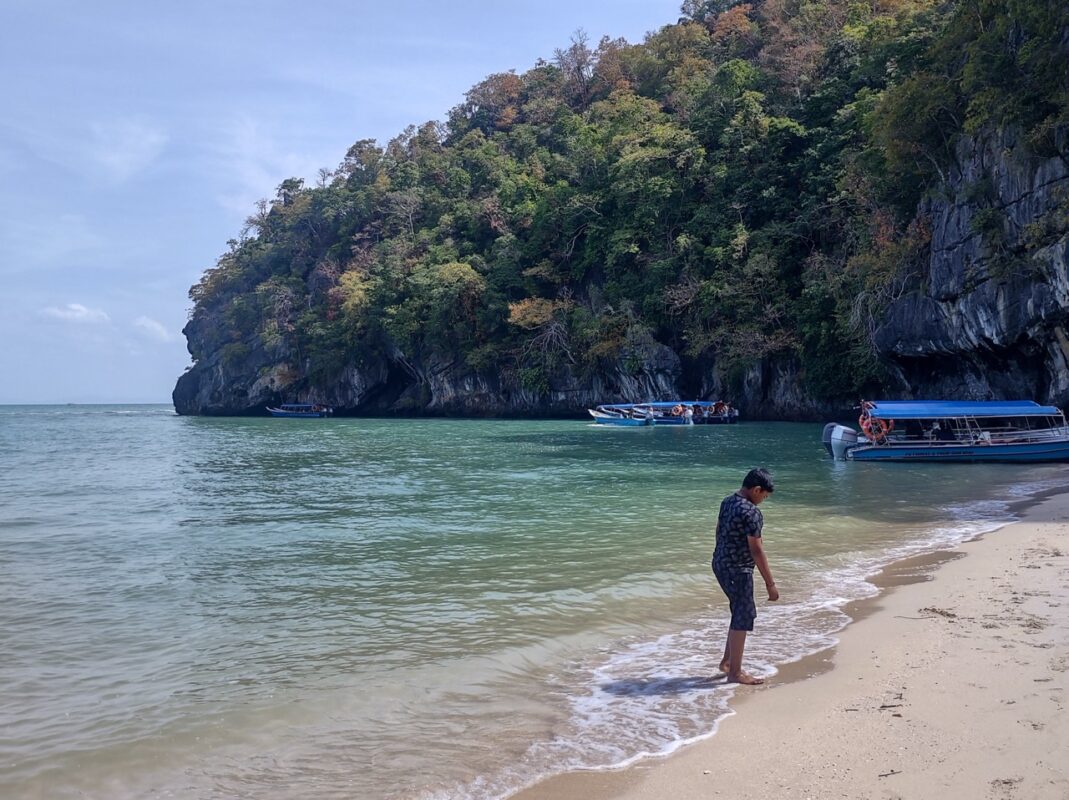
Beach Break
After a high-speed ride, we reached a secluded beach and have about an hour of free time there.
Lunch on a Floating Restaurant
The trip wraps up with lunch in a restaurant located back at the floating fish farm.
Eating right on the water is an interesting experience and a nice way to end the day.
If you haven’t pre-ordered fresh fish at the start of the tour, you’ll likely get the standard meal: Chicken and rice, or a vegetarian option – vegetables and fries.
Since the restaurant is a platform drifting in the middle of the Kilim River, you get one last great view of the mangroves while you eat, before heading back to the jetty.
Kilim Mangrove Tour: Cost Breakdown
For a standard 4-hour group tour, here is a realistic budget:
| Item | Estimated Cost (RM) | Estimated Cost (USD) |
| 4-Hour Group Tour | RM 100 – 120 | $23 – $28 |
| Bat Cave Entry Fee | RM 4 | $1 |
| Flashlight Rental | RM 1 | $0.25 |
| Scooter Rental (Per Day) | RM 30 – 45 | $7 – $10 |
| Grab/Taxi (Return) | RM 40 – 60 | $9 – $14 |
| Lunch (Standard Set) | Included in most tours | Included |
Essential Packing List
Don’t forget to pack essential items that will be handy during the boat tour:
- Dry Bag-> To protect your gear from salt spray and sudden tropical rain.
- Eco-Friendly Sunscreen-> Use reef-safe brands to help protect the fragile mangrove ecosystem.
- Insect Repellent-> A must-have for the mosquito-prone jungle and mangrove sections.
- Reusable Water Bottle-> Stay hydrated and help reduce plastic waste on the tour.
- Headlamp or Flashlight-> Much more effective than a phone light for exploring the Bat Cave.
- Quick-Dry Towel & Swimwear-> Essential for the swimming stop at the secluded beach.
- Sun Hat-> Critical protection during the open-water cruise under the intense sun.
- eSIM/local sim –> Signal is spotty in the forest; to easily order a ride back secure eSIM by Airalo Malaysia
Additionally, upgrading to fresh seafood at the floating restaurant can cost RM 50+ ($13), and a small tip of RM 10–20 ($2.50–$5) for your boat captain is always appreciated.
The Verdict: Is the Langkawi Mangrove Tour Worth It?
Overall, my experience was certainly positive, though not perfect.
Since the park is only accessible by water, you can’t visit it on your own; you have to go through a local boat organizer.
The biggest advantage is the ease of planning: as one of the island’s main attractions, it requires zero preparation and is incredibly easy to book last minute.
Because we chose a budget-friendly group trip without a dedicated guide, our information came solely from the boat captain and the staff at the fish farm.
If you want a deep dive into the nature and history of the area, I’d recommend reading up in advance or choosing a guided tour.
While there are information boards at spots like the Bat Cave, many other locations are “view-only” from the boat, so you won’t always have something to read on-site.
Final Verdict: If you haven’t explored mangroves in other countries like Thailand or Mexico, you should definitely go.
The tour is packed with stops and offers great value for the price.
For a full overview of the island, see my Langkawi travel guide covering the best activities, viewpoints, and travel tips.
FAQs About Visiting Kilim Geoforest Park
Yes, boats have roofs and the mangroves stay calm in light rain. Heavy storms may only cancel the open-sea portion of the trip.
Yes, the boat ride is smooth and the cave walks use flat, easy boardwalks. A private boat is recommended if you need a slower pace.
Wear lightweight clothes and sandals with swimwear underneath for the beach. A hat and sunglasses are essential for the open-water sections.
Basic restrooms are available at the Kilim Jetty and the floating fish farm. There are no facilities on the secluded beach or the boat itself.
Yes, you can bring snacks and water, especially if you have specific dietary needs. Just be sure to keep food sealed so you don’t attract monkeys.
Standard tours last 3 to 4 hours depending on your pace and the tide. If you add kayaking or fishing, expect to be out for at least 5 to 6 hours.
Read My Other Post About Close To Nature Activities
- 14 Top Adventurous Experiences in Southern Thailand and Where to Find Them
- Guide to Jungle Trekking in Southern Thailand
- 11 Best Hikes on Koh Phi Phi Don, Thailand – Detailed Guide
- How to Do Coastal Hike to Long Beach (Haad Yao) on Koh Phi Phi – Detailed Guide
- How to Do Jungle Hike to Loh Ba Kao Bay on Koh Phi Phi – Detailed Guide
