Banana Leaf Travel contains affiliate links. If you book through them, I may earn a small commission at no extra cost to you. I only recommend services I personally use and trust.See my Privacy Policy for more information.
12 Best Authentic Cultural Experiences You Can’t Miss in Southern Thailand
Climb 1,247 steps at Tiger Cave for incredible 360-degree views.
Old Towns
Phuket Old Town, Koh Lanta Old Town
Explore wooden stilt houses and Sino-Portuguese architecture.
Food
Chao Fah Pier, Naka Market
Stick to street stalls where you see locals queuing for the best flavors.
Community
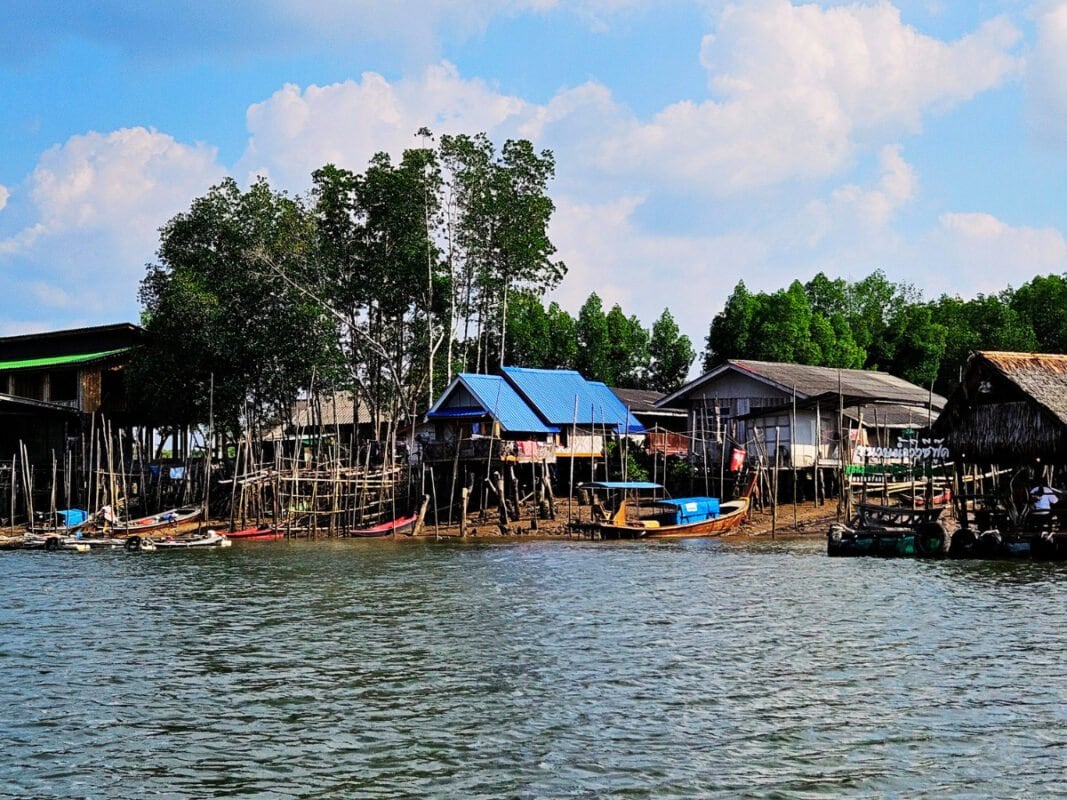
Urak Lawoi Villages, Koh Por Homestay
Connect with the “People of the Sea” or stay overnight with a local family.
Animal Care
Lanta Animal Welfare, Bodhi Dog Rescue
Take a tour to see how these centers rescue and care for island strays.
Festivals
Songkran (April), Loy Krathong (Nov)
Join the world’s biggest water fight or release a floating lantern.
Sports
Professional Muay Thai Matches
Witness the intensity and tradition of Thailand’s national sport.
Cooking
Traditional Thai Cooking Classes
Visit local markets to pick ingredients and learn to prep authentic curries.
Relaxation
Traditional Thai Massage
Experience ancient healing techniques right on the beach or in town.
Quirky
Unique Sculptures and Landmarks
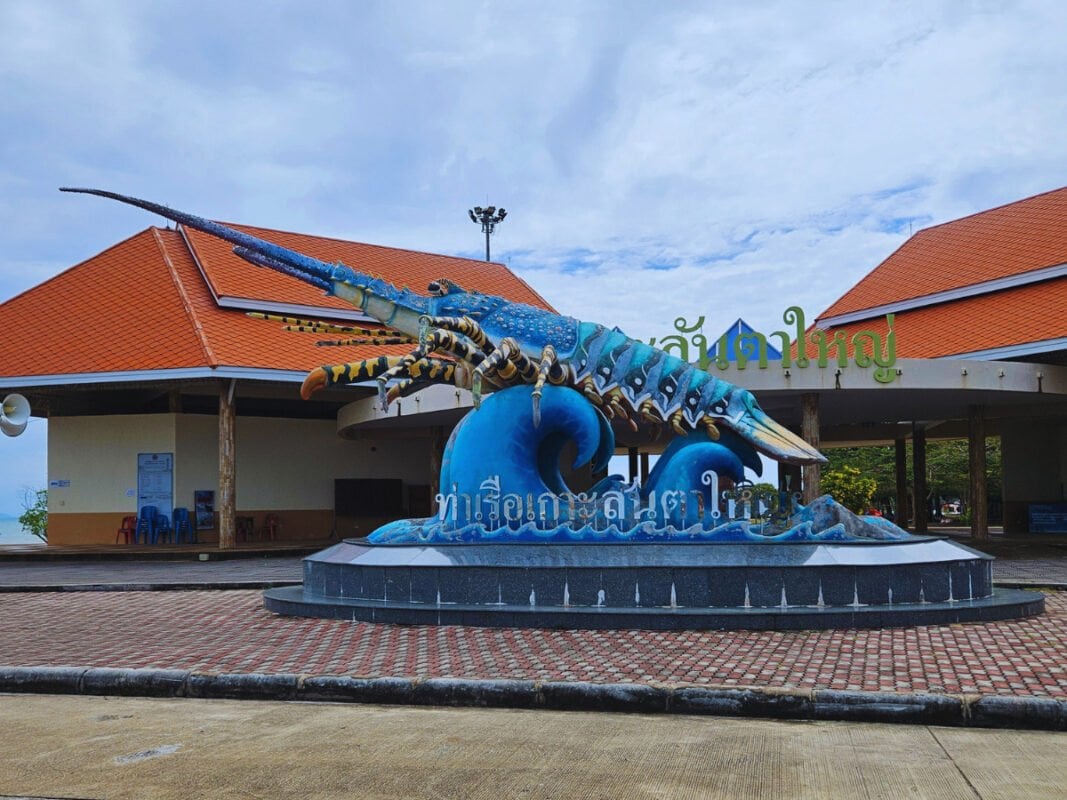
Spot the giant blue lobster and oversized fruit statues for unique photos.
Southern Thailand is known not only for beaches but also for unique cultural experiences. For a full overview of the region, see this Southern Thailand travel guide.
1. Visit Local Temples and Shrines for a Spiritual Experience
Southern Thailand is home to a variety of spiritual and religious sites, including Buddhist, Muslim, and Chinese places of worship.
These sacred locations reflect the region’s rich history, shaped by the influence of different cultures over the years.
Visiting these destinations offers a chance to admire traditional Thai architecture and learn about local customs.
Watching local people pray or make offerings provides a unique insight into their daily lives and beliefs.
Beyond their cultural and historical significance, temples are also peaceful sanctuaries where you can escape the busy streets of Southern Thailand.
While some temples are easily accessible in town centers or along major roads, others might require a bit of exploration.
If you’re riding a scooter through the countryside, keep an eye out for small shrines and cemeteries built in unexpected places.
One of the most iconic sights in Thailand is Buddhist monks dressed in bright orange robes.
If you meet them, feel free to make a small donation or politely ask about their traditions and philosophy. Monks are often happy to share their knowledge.
Here are some remarkable places of worship to visit in Southern Thailand:
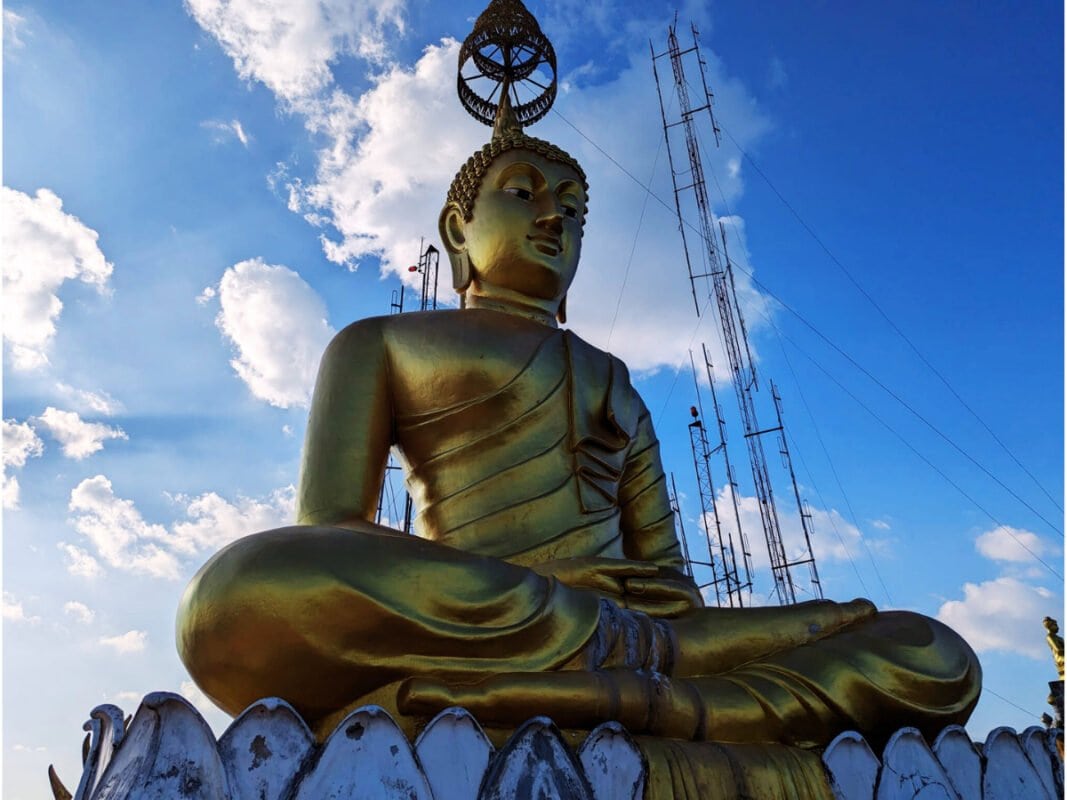
Wat Tham Sua (Tiger Cave Temple) in Krabi
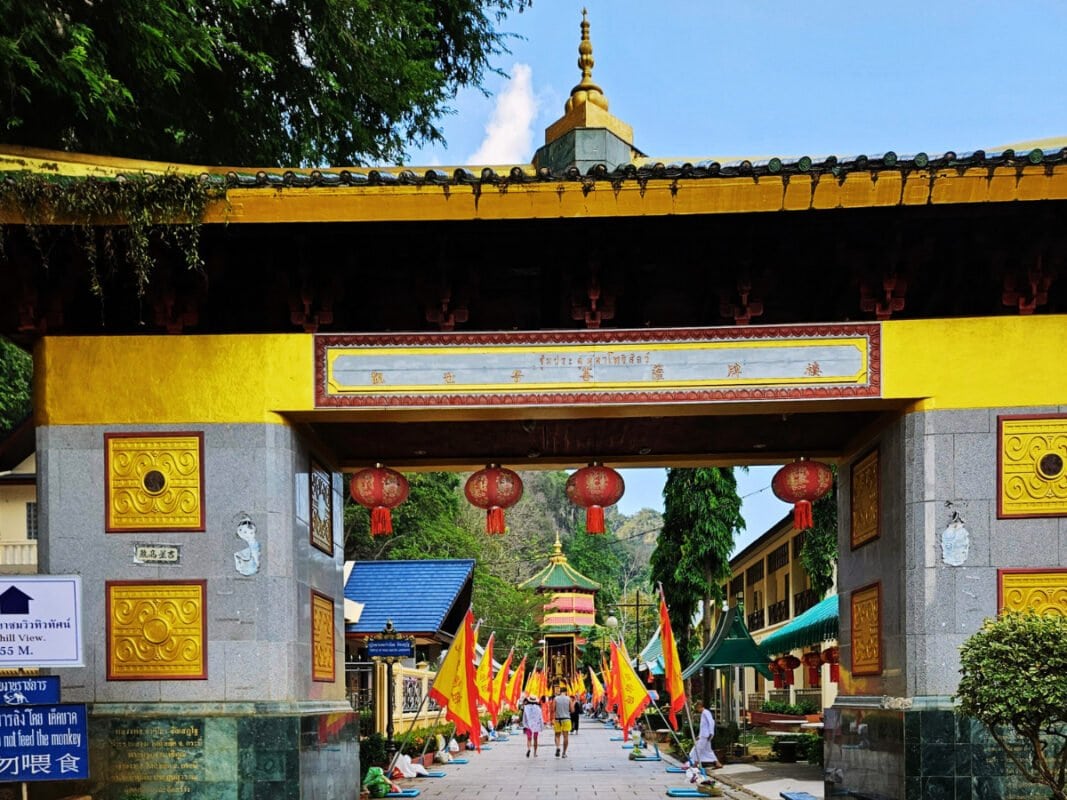
Wat Tham Sua, or the Tiger Cave Temple, is one of the most famous Buddhist temples in Southern Thailand.
It’s actually a large temple complex, named after tiger paw prints found in a cave.
This place is not only important for local worship but also a favorite spot for visitors.
There are two main areas to explore: the shrines on the ground level and the ones at the top of a mountain.
To reach the top, you’ll need to climb over 1,200 steps, but the amazing views from the top make it worth the effort.
You can see the beautiful green Krabi landscape stretching out in all directions.
If you plan to climb, avoid going in the middle of the day when it’s very hot, bring water with you, and take breaks when needed.
Also, watch out for monkeys—they live in the area and love stealing food or small items!
Besides the temples, you’ll find jungle trails and smaller shrines hidden inside the caves and near the monks huts.
It’s a peaceful and interesting destination to spend a few hours, combining nature, culture, and spirituality.
Wat Chalong in Phuket
Wat Chalong is one of the most well-known temples in Phuket.
It’s a large complex with many colorful shrines and golden Buddha statues.
The beautiful designs and detailed decorations make it a great example of traditional Thai architecture.
This temple was originally built to honor two respected monks from the 19th century, who were known for helping the local people.
It’s also home to a sacred Buddha relic and paintings that show the life of Buddha.
Wat Chalong is very popular with both locals and tourists.
Whether you’re interested in its history, want to admire its beauty, or simply enjoy a peaceful place, this temple is definitely worth a visit.
Wat Kaew Korawaram in Krabi Town
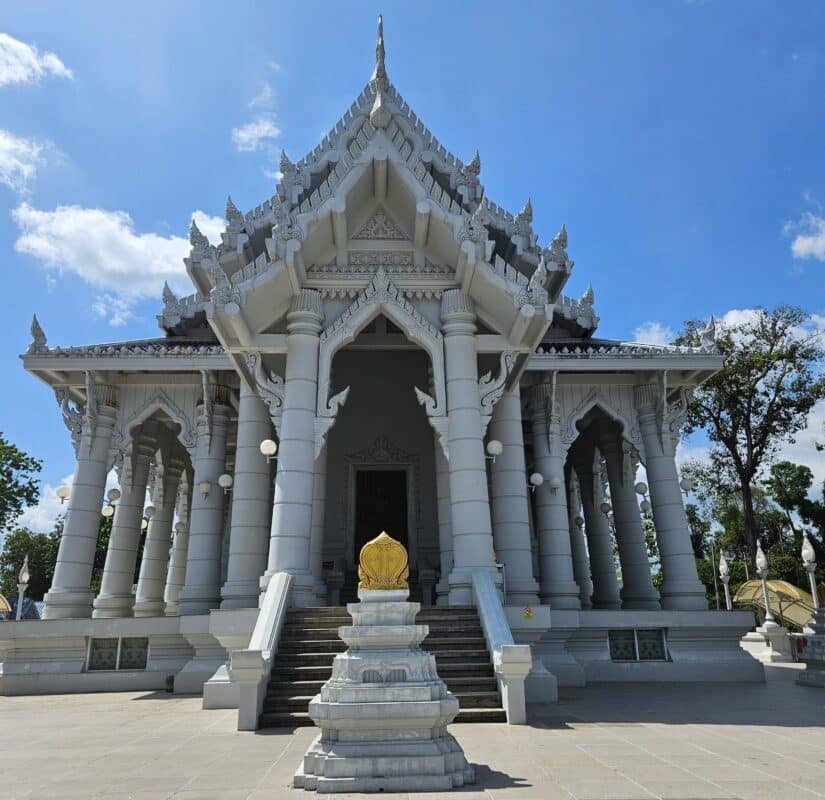
The White Temple, or Wat Kaew Korawaram, is a beautiful complex located near the center of Krabi Town.
It’s easy to find and stands out built on a hill and with white walls and detailed carvings.
There are a few buildings in the complex, and the inside of the main temple is decorated with red and gold artwork.
These colorful designs tell stories from Buddhist teachings.
The temple is peaceful and not hard to visit, so it’s a great spot if you’re exploring Krabi Town.
The White Temple – Wat Kaew in Krabi Town
Phra Nang (Princess Cave) in Railay Beach
Railay Beach, famous for its dramatic limestone cliffs and popular among climbers, is also home to a unique shrine called the Phra Nang Cave (Princess Cave).
This shrine is dedicated to fertility and holds spiritual significance for local community.
Expect to see colorful offerings, left by people seeking blessings.
While the cave is spiritual in nature, it’s also a tourist hotspot, so it can get quite crowded.
Chinese and Thai Buddhist Temples in Koh Lanta Old Town
Koh Lanta Old Town is a fascinating place where history and culture come together.
Once a bustling trading port, the area has been influenced by many cultures, including Chinese and Thai.
This blend is reflected in the shrines and temples scattered around the town.
Katyayana Shrine, although hidden between traditional wooden buildings, is hard to miss with its bright red walls and dragon sculptures guarding the entrance.
This shrine showcases the Chinese influence in the area and is a small but picturesque place to visit, as it’s built right by the seashore.
Uniquely positioned in the middle of a roundabout, you’ll also find the Kromluang Chumphon Khetudomsak Shrine, which showcases traditional Thai architecture.
Just a 10-minute walk from the Old Town, you’ll discover a quiet Thai Buddhist temple.
This temple is less known and located in a more secluded spot.
It’s also a home to monkeys, so be mindful of your belongings while enjoying the serene atmosphere.
On Koh Lipe, there is a peaceful forest cared for by Buddhist monks, where you’ll find small temples, statues, and paintings on rocks.
Surrounded by trees, it’s a quiet place to visit, and not very popular with tourists.
Mosques Across Southern Thailand
Southern Thailand has a large Muslim community, though many tourists may not know this.
On most islands along the Andaman Coast, you’ll notice small mosques.
They play an important role for the local people.
Seeing different types of religious buildings shows how different communities live together peacefully in Southern Thailand.
2. Explore the Charm of a Historic Old Towns
Southern Thailand has been evolving for centuries, with its old towns serving as trade hubs along the Strait of Malacca in the Andaman Sea.
Many of these places still have traces of their historical roots, including traditional buildings influenced by various cultures.
These charming destinations are definitely worth visiting for a glimpse into the region’s past.
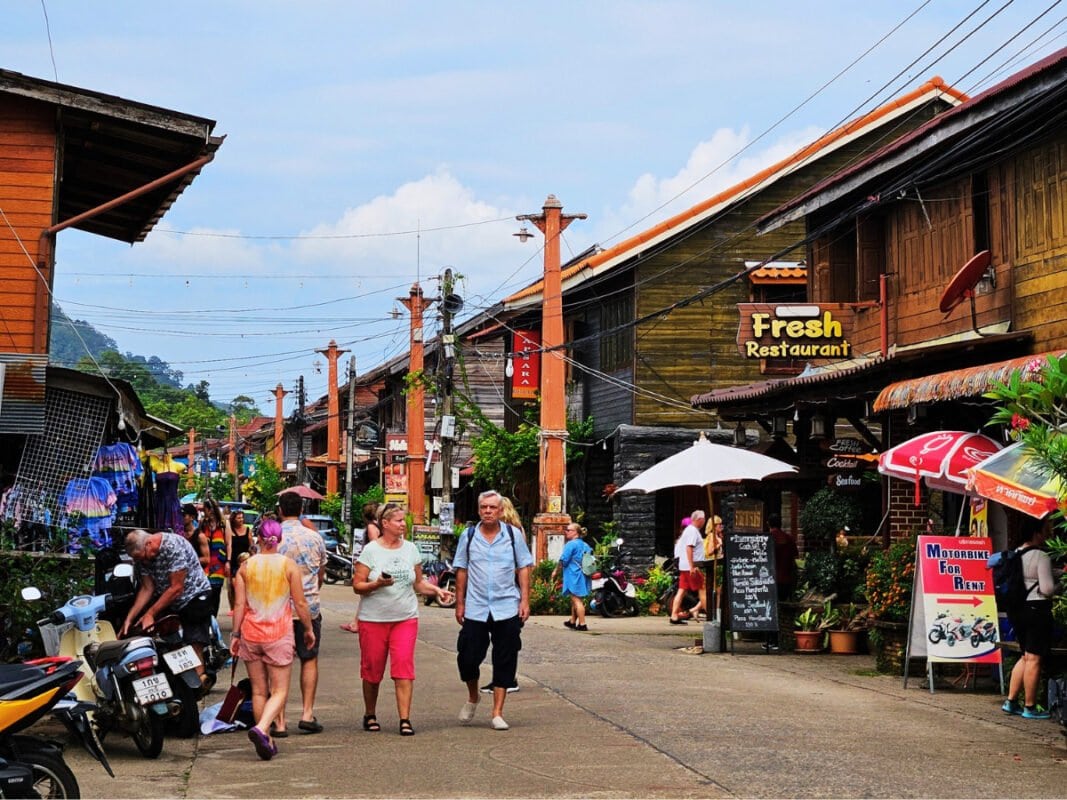
Koh Lanta Old Town
Located on the quieter east side of Koh Lanta, the Old Town is full of history and local culture.
It’s a peaceful place to explore, perfect for a walk along the pier and seashore.
As you wander, you’ll notice unique sights like giant lobster sculptures and colorful temples and shrines.
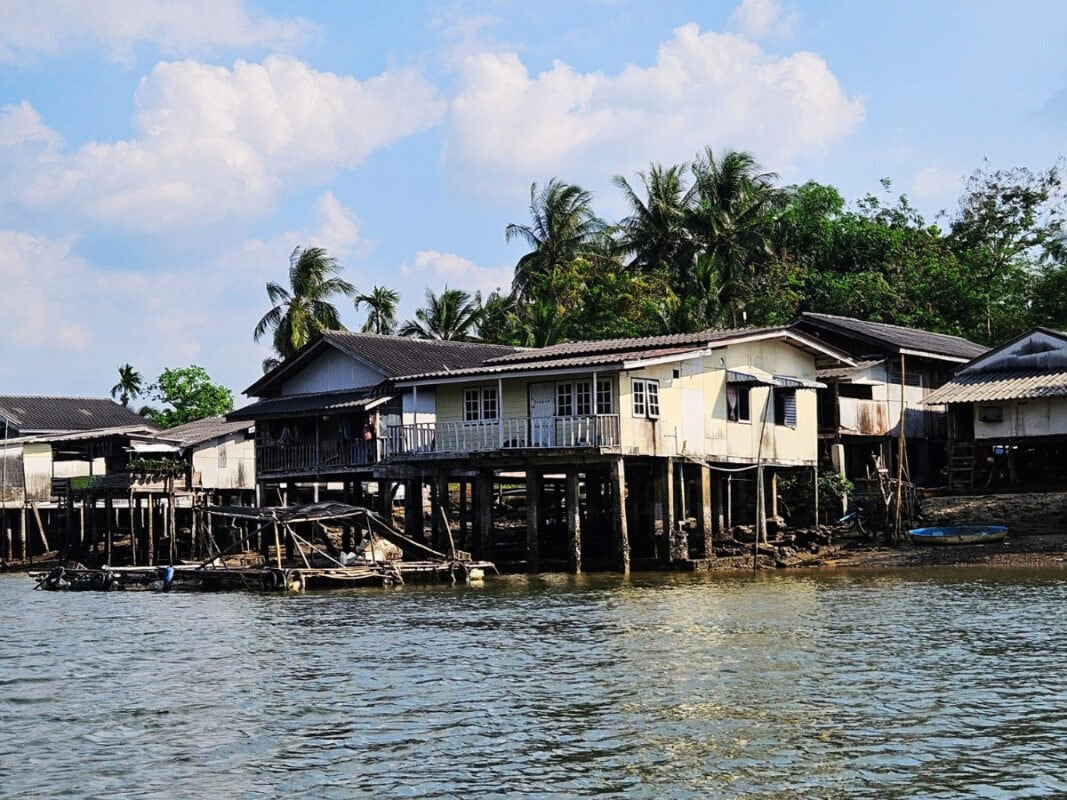
The standout charm of the town lies in its wooden stilt houses, located by the walking street where you will find many restaurants and local shops.
Despite being a popular spot for tourists, Koh Lanta Old Town still has an authentic, local vibe.
Phuket Old Town
Phuket Old Town is larger and more vibrant than Koh Lanta’s, with streets full of character and history.
The area is famous for its tall, colorful buildings designed in Sino-Portuguese style, reflecting the town’s rich heritage from its tin mining boom era.
The Old Town is filled with interesting spots, including museums, temples, shrines, and delightful coffee shops.
Some mansions have been restored to their former glory and are open to visitors.
If you’re exploring Phuket Old Town, don’t miss Dibuk Road, known for its textile and art shops, perfect for finding unique, local items.
Thalang Road, a wide and busy street that transforms into a lively market every Sunday.
Phang Nga Road and Soi Romanee, streets lined with small shops, old-style buildings, and cafés.
3. Taste Authentic Thai Cuisine
Thai food is famous around the world, and there’s no better way to experience its authentic flavors than by trying street food and eating at local restaurants.
Southern Thailand has its own unique cuisine that’s definitely worth exploring.
The food here is rich in flavors, with a variety of curries, fried rice dishes, and plenty of fresh seafood.
As someone who doesn’t eat meat, I particularly enjoyed the fresh seafood options, easily available almost everywhere in Southern Thailand.
Where to Find the Real Flavors
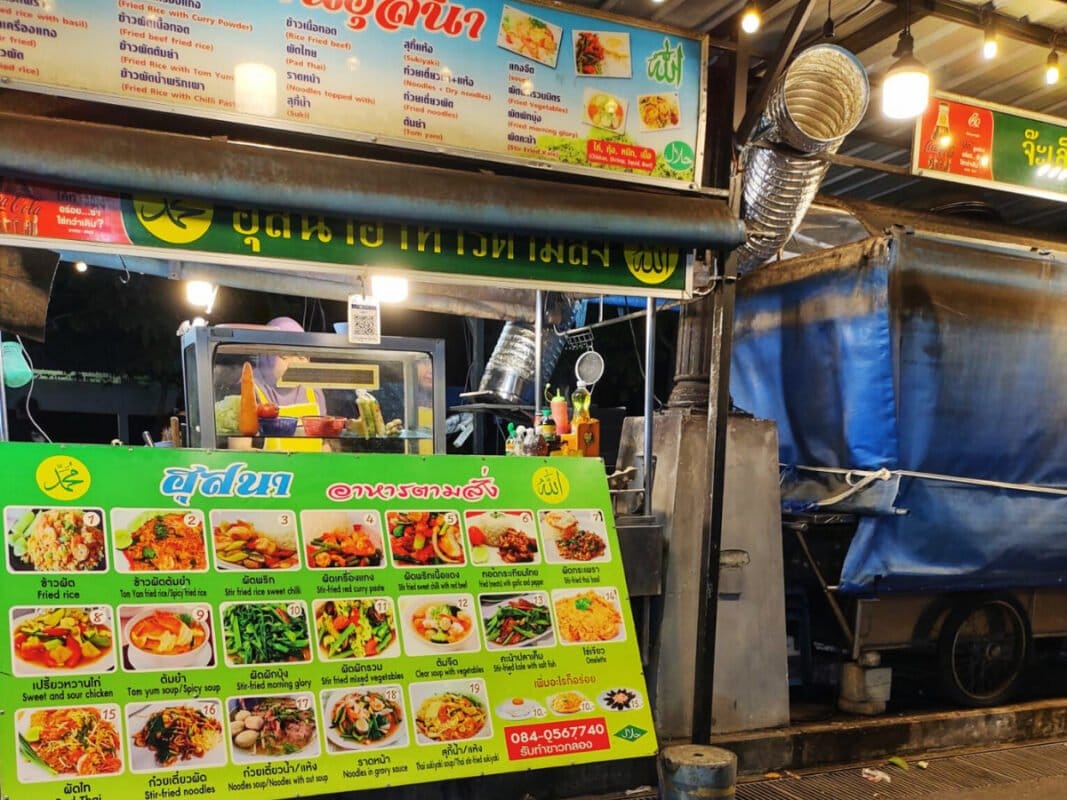
The best way to experience authentic Thai food is to look for hawker stalls and local spots.
In Southern Thailand, these gems are often tucked away in busy hubs like:
Instead, seek out rows of steaming pots, sizzling grills, and simple plastic chairs.
It might not look like a traditional restaurant, but this is where you’ll find the freshest meals for a fraction of the price of tourist spots.
Follow the locals.
If a stall is packed with Thai families, it’s a guaranteed winner. They know where to go for the tastiest dishes.
Navigating the Markets
While snacks like grilled skewers and Thai milk tea are everywhere, a night market is your best bet for a full culinary adventure.
Don’t worry if there isn’t an English menu.
Most vendors are used to travelers and speak enough basic English to help you out.
When in doubt, just point to what looks delicious or ask for a recommendation—you’re almost guaranteed to discover a new favorite dish.
Local Favorites to Try
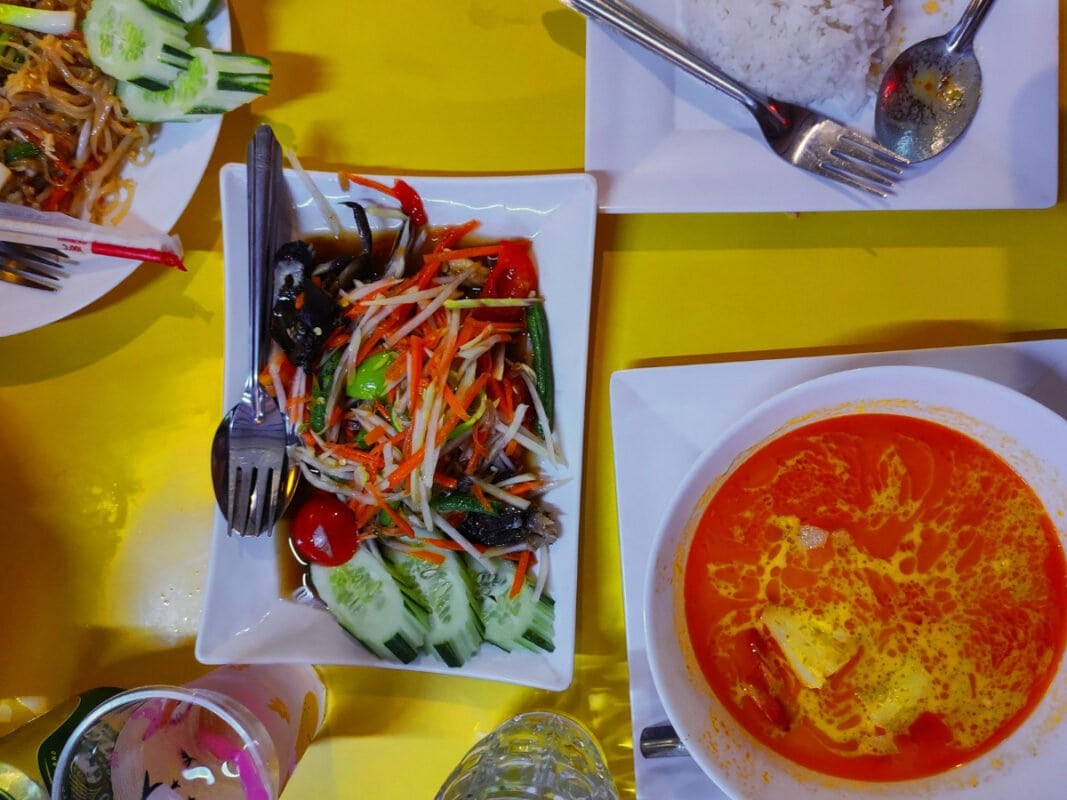
Som Tam (Papaya Salad) -> refreshing and quite spicy salad made with shredded green papaya, lime juice, chilies, and peanuts.
Moo Ping (Grilled Pork Skewers) -> juicy pork skewers marinated in a sweet and savory sauce, grilled to perfection.
Khanom Buang (Crispy Thai Crepes) -> thin, crispy crepes filled with coconut cream or shredded coconut, sometimes also with savory options like egg and minced pork.
Khanom Krok (Coconut Pancakes) -> bite-sized pancakes made with coconut milk, crispy on the outside and soft inside.
Panang Curry -> rich and creamy curry with a hint of sweetness, often made with meat, seafood, or tofu.
Other Must-Try Dishes
Mango Sticky Rice -> a classic Thai dessert made with ripe mango slices, sticky rice, and sweet coconut milk.
Pad Thai and Green Curry -> perfect for those who prefer less spicy dishes, these are Thai cuisine staples that are always satisfying.
Milk Tea -> available in a variety of flavors, this sweet, creamy drink is a favorite among locals and visitors alike.
Snacks from 7-Eleven -> Thailand’s convenience stores are full of unique snacks, from toasties to chips in quirky flavors you won’t find elsewhere.
Fresh Coconut -> hydrating and refreshing, fresh coconuts are sold everywhere, especially near the beach and make a perfect drink on a hot day.
Fresh fruit from local vendors ->mangosteen, pomelo, mango, durian, rambutan, longan, lychee, salak (snake fruit), rose apple, tamarind, guava, jackfruit, pineapple, papaya, passion fruit, custard apple (sugar apple), dragon fruit, starfruit, and watermelon.
4. Experience Vibrant Local Night Markets
A trip to a night market is a must when visiting Thailand!
These spots are more than just destinations to get street food snacks:
Night markets are full of energy and culture, offering food, shopping, and entertainment all in one spot.
You’ll find everything from clothes and shoes to handmade souvenirs and sometimes even flea market items.
It’s the perfect place to pick up any essentials you might have forgotten to pack.
Many of the bigger night markets will also have live performances, with singers, musicians, and other artists.
They’re a great way to experience authentic, lively, local atmosphere.
Tips for Visiting Night Markets
Arrive Early: Night markets get busier as the evening goes on, and the best food often sells out quickly.
Most markets wrap up by 10 PM, so plan to arrive early for the best experience (and most food options).
Bring Cash: Most vendors don’t accept cards, so make sure to have enough cash for your food and shopping.
Expect Crowds: Popular markets, especially on weekends, can get crowded, so be ready for a very busy environment.
Best Night Markets in Southern Thailand
Krabi’s Weekend Night Market
Held every Friday to Sunday in Krabi Town, this market starts in the late afternoon and is one of the busiest in Southern Thailand.
It’s packed with vendors selling street food, clothes, souvenirs, and handmade crafts.
In the heart of the market, there’s usually a scene with live music to enjoy while you browse around.
The mix of tasty food, unique shopping, and lively entertainment makes it a must-visit spot if you are planning a perfect Krabi itinerary.
Phuket’s Naka Weekend Market
The biggest and most lively market in Phuket, the Naka Weekend Market is a weekend favorite.
You’ll find endless stalls offering street food, souvenirs, crafts, and more.
Popular treats to try include grilled squid and roti pancakes, alongside other street food classics.
And if you need a break, you can even get a foot massage there.
Just keep in mind that this market is huge and can get very crowded, so be prepared to navigate through the crowds.
During the day, it’s lined with restaurants and shops, but in the evening, street food hawkers set up, creating a buzzing, delicious scene.
The Sunday Street Market (Phuket Old Town)
Phuket Old Town’s Sunday Street Market is a lively and colorful event that takes over Thalang Road every Sunday afternoon.
On other days, Thalang Road is a busy street, but on Sundays, it transforms into a huge street market full of food stalls, shopping, and live performances.
This market is a great place to see local artists showcasing their crafts, from handmade jewelry to unique souvenirs.
It’s also a perfect opportunity to experience Phuket Old Town at night, with its buildings lit up beautifully.
While the market is vibrant and exciting, it’s a popular spot for tourists and can get very crowded.
If you want to avoid the rush, consider arriving early to enjoy the atmosphere at a slower pace.
Koh Lanta Old Town Weekend Market and Walking Street
Market near the Ban Si Raya Pier (fishermen’s pier) in Koh Lanta Old Town isn’t a typical night market but is just as lively.
On weekends, the area comes alive with food and craft stalls. It’s also a central spot for local celebrations and community events.
If there’s something big happening on the island, this is the place to be.
For a more traditional vibe, head to the Koh Lanta Old Town Walking Street, during the high season.
The area comes alive at night with local street food stalls.
During the daytime is perfect for browsing the local shops housed in traditional wooden buildings.
5. Join a Traditional Thai Festival
Festivals and national holidays are a wonderful way to experience Thai culture.
Many travelers plan their trips to coincide with these unique celebrations.
If you happen to visit during a Thai holiday or festival, don’t miss the opportunity to join in and witness the rich traditions.
Visit places like the Koh Lanta Community Museum to learn more about their history, or stop by Plaew Hon Sai Cemetery on Koh Lanta, a historic site tied to their ancestors.
Booking a fishing trip with them is a great way to support their community and learn about their skills.
As tourism grows, the Urak Lawoi’s heritage is under threat. By visiting respectfully, you help keep their traditions alive while enjoying a unique cultural experience.
7. Take Thai Cooking Classes
Thai cuisine is loved worldwide, and learning to cook it can be a fun and rewarding experience.
In Southern Thailand, many cooking schools offer hands-on classes where you can make popular dishes like Pad Thai, Tom Yum Goong, and Green Curry.
These classes often start with a trip to a local market to pick fresh ingredients.
You’ll learn about Thai herbs and spices and how to use them in your cooking.
Some schools also provide recipe books so you can recreate the dishes at home.
And after cooking, you’ll obviously have a chance to enjoy the meal you’ve prepared!
To find cooking classes, consider visiting areas like Koh Lanta, Phuket, Krabi Town, and Ao Nang.
These destinations have well-established schools that cater to tourists.
8. Support Local Animal Shelters
Supporting animal shelters in Southern Thailand is a wonderful way to make a difference while exploring the region.
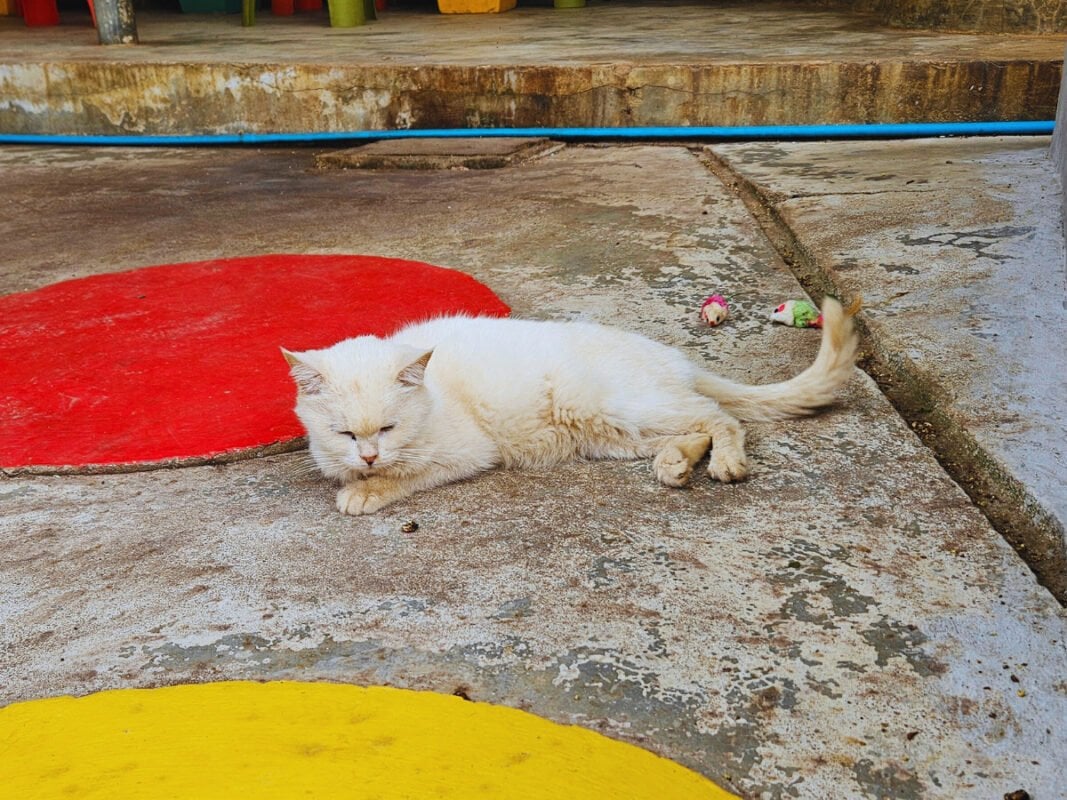
Shelters like Lanta Animal Welfare dedicate themselves to rescuing and caring for homeless and injured cats and dogs.
They operate not only on Koh Lanta but also on nearby islands.
The shelter functions as a rescue center, clinic, and adoption facility.
Visitors can join a tour to learn about their mission, see the daily work, and even spend time playing with the cats.
Beyond the tour, you can support their efforts by shopping at their store, making a donation, or considering adoption.
If you decide to adopt, the shelter will assist with all the formalities to bring your new furry friend home.
Volunteering is another impactful way to contribute and help animals directly.
Visiting a shelter can be heartwarming and educational, but it’s important to be prepared to see animals that have suffered greatly.
If you’re sensitive to such sights, consider supporting the shelter through donations or other means instead.
Your support not only helps animals in need, but also spreads awareness about preventing cruelty and ending animal suffering.
If you’re visiting Phuket, you can also support Bodhi Dog Rescue and Shelter, another organization helping animals in the region.
Every bit of help counts in making a difference for animals in need.
9. Watch a Professional Muay Thai Fight
Muay Thai, or Thai boxing, is Thailand’s national sport and a must-see cultural experience.
Watching a live Muay Thai match is thrilling, as you’ll witness the unmatched skill, strength, and discipline of the fighters.
The matches are not just about the sport; they are steeped in tradition.
They include ceremonial music and rituals, that make the event feel like a performance.
If you’re in Southern Thailand, many stadiums host professional fights regularly.
Popular venues in Southern Thailand include:
Bangla Boxing Stadium in Patong, Phuket;
Koh Lanta Stadium,
Ao Nang Stadium,
Krabi International Boxing Stadium.
If you will get inspired by the sport, many stadiums also offer training sessions for beginners.
In some places you will even find sport camps, giving you a chance to try learn this dynamic martial art.
10. Stay Overnight with a Local Family
A homestay is one of the most authentic ways to connect with Southern Thailand’s local communities.
By staying with a real family, you can join in their daily activities.
Learn to prepare traditional meals, help care for animals, or even learn how to grow local produce.
You might get the chance to go fishing and learn their unique techniques firsthand.
Many families are happy to share their knowledge.
It’s a great way to see how locals live, appreciate their traditions, and create meaningful connections during your trip.
Where to Go: Consider visiting Koh Por, a small island accessible from Koh Lanta.
11. Spot Unique Sculptures in Popular Locations
Southern Thailand is full of quirky sculptures that add character to its towns and islands.
Look out for the giant blue lobster, a huge crab statue, and oversized fruit sculptures in gardens.
These fun landmarks are usually found in popular tourist destinations.
You’re likely to come across them while visiting viewpoints or driving around the busy streets.
Keep an eye out—they’re great for unique photos!
12. Relax with a Traditional Thai Massage
No visit to Thailand is complete without experiencing a traditional Thai massage.
This ancient practice combines acupressure, yoga-like stretches, and gentle massage techniques.
The goal is to relax your muscles, improve circulation, and rejuvenate your body and mind.
On the beaches of Southern Thailand, it’s easy to find local therapists offering relaxing foot massages with the lovely sound of waves in the background.
For a more comprehensive experience (and a bit more painful), look for massage parlors located in towns and tourist areas.
These parlors typically offer a range of options, from full-body Thai massages to oil massages and aromatherapy.
Final Thoughts
Southern Thailand is more than just stunning beaches and turquoise waters—it’s a region rich in culture, history, and unique experiences.
From exploring beautiful temples, and trying vibrant street food, to supporting local communities and participating in traditional festivals.