
Banana Leaf Travel contains affiliate links. If you book through them, I may earn a small commission at no extra cost to you. I only recommend services I personally use and trust.
7 Days in Krabi: The Perfect Nature & Adventure Itinerary
If you’re wondering whether mainland Krabi deserves a full week of your Thailand itinerary, the short answer is yes.
The province has limestone peaks, mangrove forests, clear-water canals, island trips and local town life.
The challenge isn’t finding enough to do. It’s arranging those places without spending half your trip travelling back and forth.
I spent seven days there using Krabi Town as my base and loved its local atmosphere. The town worked well for the river, temples and inland attractions.
The coastal location of Ao Nang will be more convenient for sandy beaches, island tours and evenings when you want plenty of restaurants within walking distance.
This 7 days Krabi itinerary uses what I learned to create a practical route through the coast, town and inland areas. I’ve grouped nearby experiences together and left some flexibility for weather and tired legs.
The plan assumes you have seven full sightseeing days. If Day 1 or Day 7 is also a travel day, I’ll show you what to remove without losing the best parts of the itinerary.
KRABI QUICK GUIDE
My Favourite Places to Stay in Krabi:
Travel Essentials
If you’re planning your trip, see the Krabi travel guide for the best things to do, itinerary ideas, and travel tips.
The 7-Day Krabi Itinerary Plan
| Day | Plan | Best base |
|---|---|---|
| Day 1 | Railay, Phra Nang Beach and optional rock climbing | Ao Nang |
| Day 2 | Hong Islands or Four Islands boat tour | Ao Nang |
| Day 3 | Dragon Crest and Tubkaek or Klong Muang Beach | Ao Nang |
| Day 4 | Khlong Root kayaking and Nong Thale Lake | Ao Nang |
| Day 5 | Following Giants and a free afternoon | Ao Nang; optional move to Krabi Town |
| Day 6 | Tiger Cave Temple and Krabi Town | Krabi Town or Ao Nang |
| Day 7 | Emerald Pool and Hot Spring Waterfall | Krabi Town or Ao Nang |
Keep the order flexible. Choose the day with the best weather and calmest sea for your boat tour. Avoid Dragon Crest after heavy rain.
If you want to visit Krabi Weekend Night Market, plan your Krabi Town day for Friday, Saturday or Sunday.
Is Seven Days in Krabi Enough?
Yes. Seven days gives you enough time to see much more than beach town of Ao Nang without rushing through a different boat tour every day.
You can combine beaches and islands with Krabi’s best mainland experiences.
A week is also long enough to make a split stay worthwhile. It is not long enough to add proper stays on Koh Lanta and Koh Phi Phi without cutting several days from this route.
This plan is fairly active. Days 3 and 6 both include steep climbs. If you want a slower holiday, skip one of them and keep the rest of that day free.

Where to Stay During 7 Days in Krabi
Ao Nang is the easiest single base for the full week. You’ll have simple access to Railay beach, island tours, restaurants and tour pickups. The trade-off is more road travel on your inland days.
For more variety, spend your first five nights in Ao Nang and your final two nights in Krabi Town. This puts you closer to Tiger Cave Temple, the river and the road towards the Emerald Pool.
You can also stay in Krabi Town for all seven nights, as I did. It has better value, a more local atmosphere and a pleasant riverfront.
Just keep in mind that you’ll need to arrange more transport for the beach and island days.
My Krabi Where to Stay in Krabi Guide compares Ao Nang, Railay, Krabi Town and the quieter coastal areas in more detail.
Map of This 7-Day Krabi Itinerary
Krabi’s attractions are spread across the coast, islands, town and inland areas. I created this map to show every main stop in the itinerary and make it easier to see which places work well together.
The markers are colour-coded by day. Day 2 includes both the Hong Islands and Four Islands routes, but you only need to choose one.
Click any marker for practical notes, or open the map in a new tab for a larger view.
Open the 7-day Krabi itinerary map in a new tab
Day 1: Explore Railay and Phra Nang Beach
Start with a full day on the Railay peninsula. Railay is a location cut off from Krabi’s road network by limestone cliffs, so you’ll have to arrive by longtail boat.
From Ao Nang, buy a shared boat ticket near the beach. Boats usually leave once enough passengers have gathered.
Ask where to find the return boat and confirm the arrangements for late afternoon before you leave.
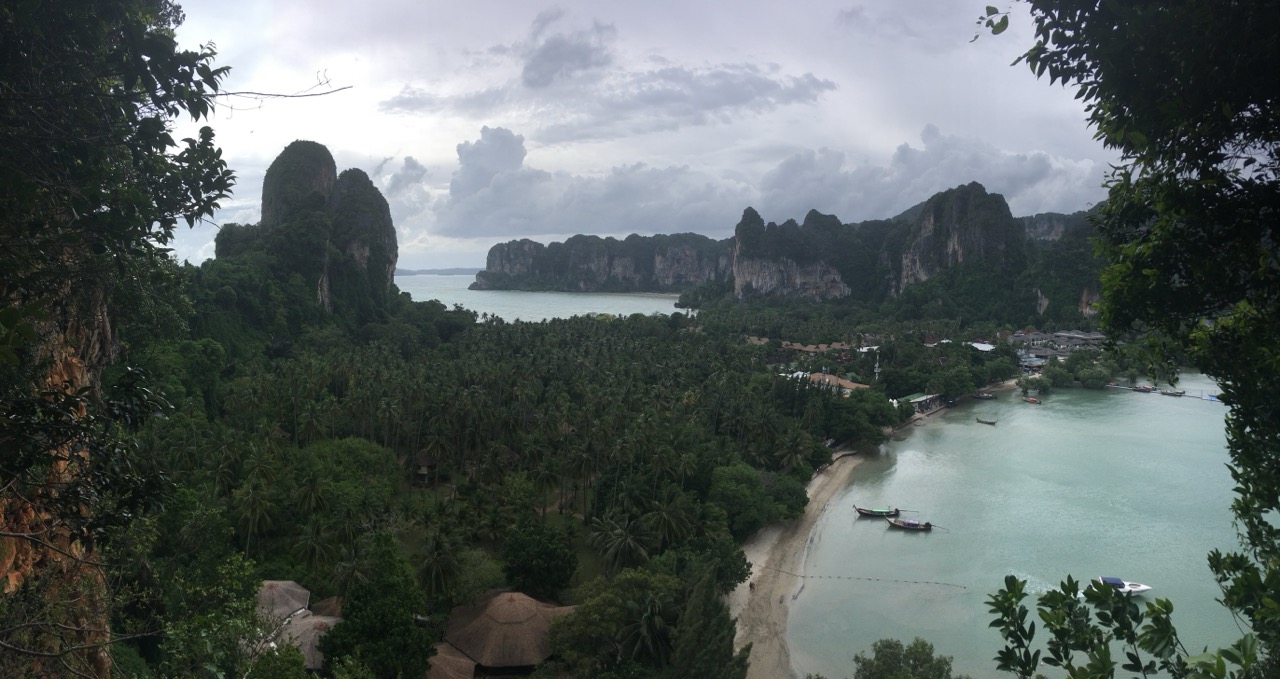
Morning: Railay West and the Peninsula Walk
Arrive early enough to enjoy Railay West before the busiest part of the day. You can then walk across the peninsula towards Railay East and Phra Nang Beach.
The distances are short, but allow time to explore the paths beneath the cliffs.
Stop at viewpoints along the coast and look for the macaques that sometimes move through the trees. Keep food out of sight and don’t try to touch or feed them.
The path to the Railay viewpoint and lagoon is a separate challenge. It is steep, muddy and slippery after rain.
Only attempt it in suitable shoes and conditions. You can also enjoy Railay without doing this climb.
Stay Connected Thailand. Skip SIM cards and get instant data access with an eSIM before you arrive.
Afternoon: Phra Nang Beach or Rock Climbing
Spend the afternoon swimming at Phra Nang Beach or exploring the cave area at the southern end.
Check the sea before getting in, especially during rough weather or when jellyfish have been reported.
Railay is also one of the easiest places in Krabi to try limestone rock climbing. A half-day lesson can replace the beach portion of this day.
Always book with a qualified operator that provides equipment and checks the weather and rock conditions.
Return to Ao Nang with daylight to spare. Shared boats may wait for enough passengers, while a later or quieter departure can require a private boat.
Ao Nang is also a great place to enjoy a sunset and you can easily find there a dinning spot too.
Find the best rock climbing experiences at Railay Beach
Day 2: Choose a Hong Islands or Four Islands Tour
Krabi’s Hong Islands and Four Islands tours are two different routes. The existing names can be confusing, and individual operators sometimes adjust their stops.Check the complete itinerary before booking.
| Route | Best for | Usually includes |
|---|---|---|
| Four Islands | Shorter boat journeys, beaches, snorkelling and the sandbar | Koh Poda, Chicken Island (Koh Gai), Koh Tup and Koh Daeng or Mor Island, and often Phra Nang |
| Hong Islands | The lagoon, viewpoint and dramatic island scenery | Hong Island and its lagoon, often with Lading or Pak Bia |
You can also climb the staircase to a viewpoint to enjoy panoramic views of this incredible lagoon.
The islands are also known for their impressive limestone cliffs and unique rock formations, making them great spots for photography.
Since Koh Poda is quite popular with tourists, it’s best to start there and visit the other islands later in the day to avoid crowds.
If your budget allows, consider hiring a private longtail boat for a more personalised experience and to support local boat drivers.
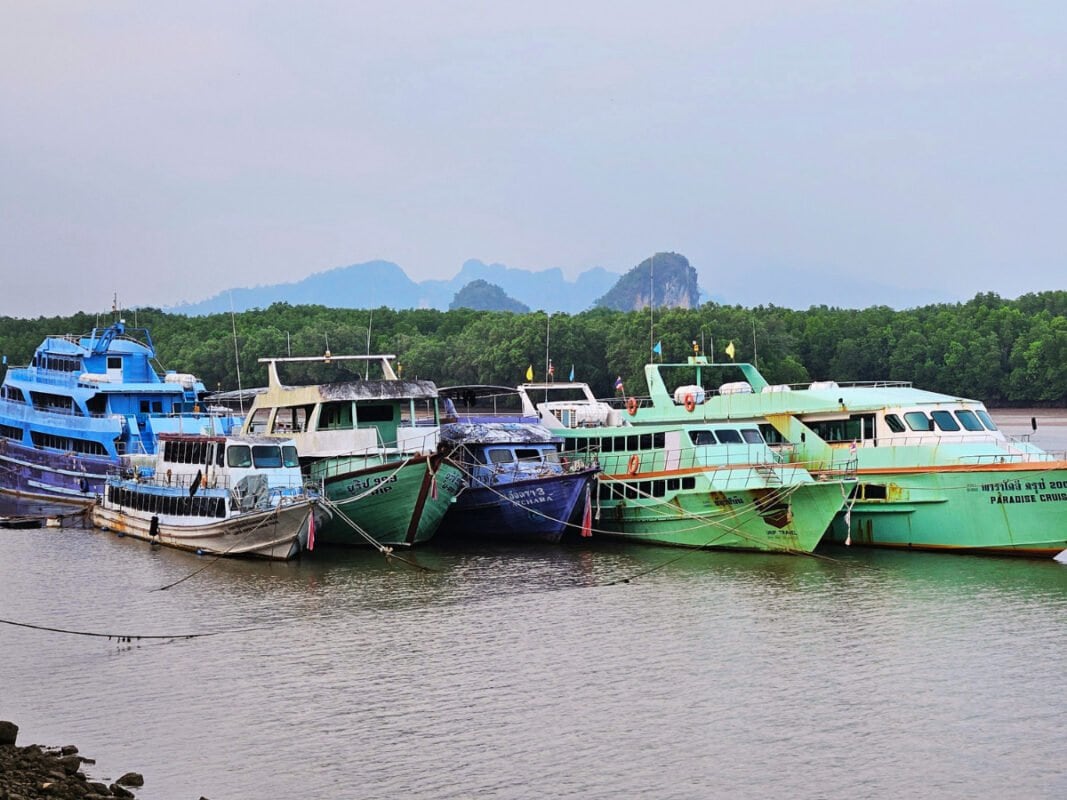
I’d choose the Four Islands route if this is your first boat trip from Ao Nang and you want several beach stops.
Hong Islands makes more sense if the lagoon and viewpoint matter more than fitting in as many islands as possible.
What to Check Before Booking
Look beyond the tour name. Check what’s actually included:
- the boat type
- group size
- hotel pickup area
- national park fee
- lunch options
- snorkelling equipment.
Speedboats are faster but can feel bumpy. Longtail boats are slower and have less protection from spray.
Bring sun protection, drinking water and a dry bag. My Southern Thailand island-hopping packing list covers the small items that are easy to forget.
Don’t try to combine Hong Island with every stop on the Four Islands route. A tour that promises too much may leave you with very little time at each place.
Compare Krabi island hopping tours (routes, prices & availability)
If you want to secure a spot (especially in high season), it’s worth checking availability in advance – some of the best tours sell out quickly.
You can also take a shared boat to Koh Poda (usually from Ao Nang) and simply spend the day relaxing on the island.
Day 3: Hike Dragon Crest and Relax on the Quiet Coast
Dragon Crest, also called Khao Ngon Nak or the Ngon Nak Nature Trail, is the most demanding hike in this main itinerary.
The trail climbs through humid forest to wide views over the Andaman coast.
The route is roughly 3.7 km each way. Plan about four to five hours for the return hike, including breaks and time at the viewpoints.
The heat makes it harder than the distance suggests.
Located about 30 minutes from Krabi Town, the hike takes you through a mix of stairs and natural jungle trails, leading you to the summit after 2 h hike.
Start in the Morning
Arrive when the trail opens and register at the ranger point. There is normally a cut-off for starting the hike, so don’t plan this as a late-afternoon or sunset climb.
The entrance fee for the Ngon Nak trail is currently 200 THB (around $6 USD) per foreign adult. Bring cash, as prices may change.
Allow around 4–5 hours for the return hike, including breaks and time at the viewpoints.
The trail may close temporarily after heavy rain or during unsafe weather. Check that it is open before travelling to the trailhead.
Wear shoes with reliable grip. Carry more water than you think you’ll need, plus a snack and sun protection.
Parts of the path can become slippery after rain, and the exposed viewpoints are not the place to take risks for a photograph.
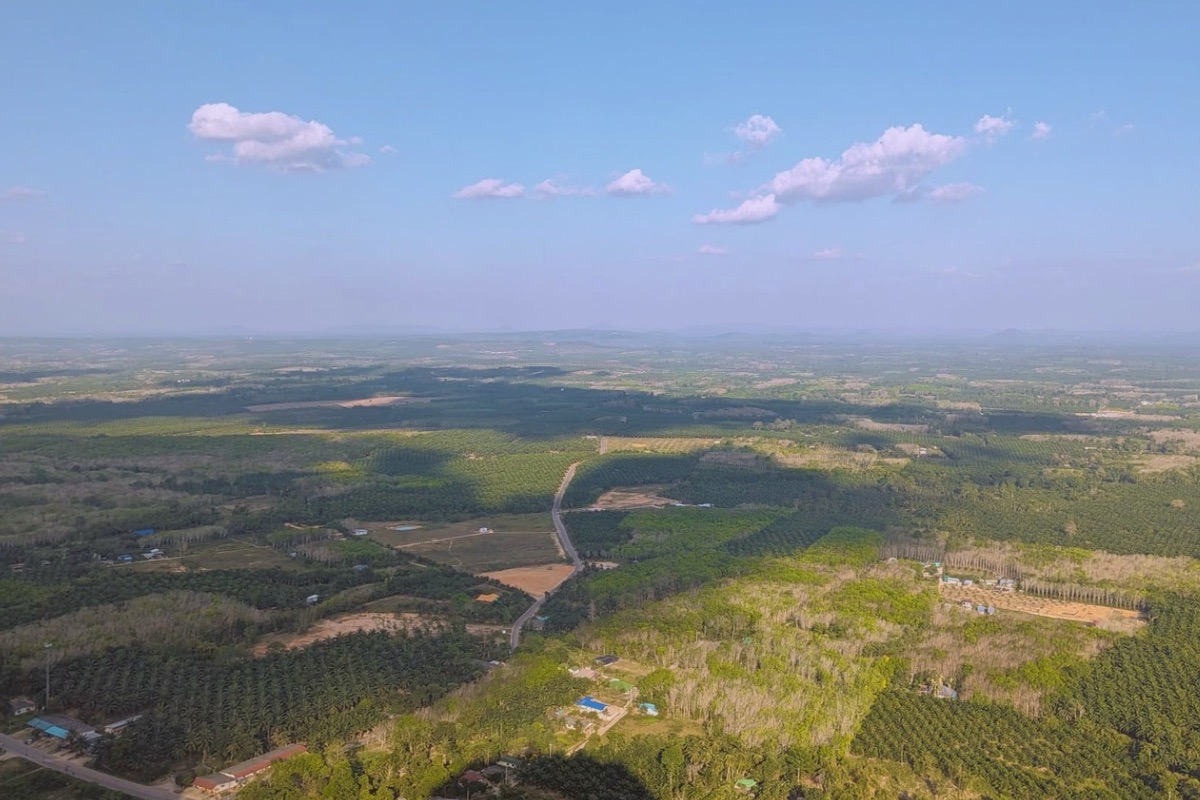
Dragon Crest is near Tubkaek rather than Krabi Town. It is easiest to reach with your own transport, a pre-arranged driver or a tour.
If you use a taxi, arrange the return journey in advance instead of assuming a car will be waiting at the trailhead.
Planning to Hike or Explore?
Whether you’re hiking jungle trails or exploring remote beaches, I always recommend travelling with insurance. It’s something you hope never to use, but you’ll be glad to have if something goes wrong.
Spend the Afternoon at Tubkaek or Klong Muang
After lunch, keep the rest of the day simple. Tubkaek Beach is closest to the trail.
Klong Muang has a wider choice of places to eat and is still much quieter than central Ao Nang.
→ Related guide: Jungle Trekking in Southern Thailand
Day 4: Kayak at Khlong Root and Visit Nong Thale Lake
Khlong Root, also called Klong Root, Khlong Nam Sai or the Clear Water Canal, is one of Krabi’s best easy nature activities.
You’ll paddle through a flooded forest towards clear spring water where swimming may be possible.
Go in the morning, before the day becomes too hot. You can hire a kayak at the starting area or book an organized tour.
The water is not equally clear every day. Recent rain and disturbed sediment can change visibility.
The main route is calm, but you still need to protect yourself from the sun. Take water and secure your phone in a dry bag.
Avoid standing on plants or disturbing the shallow spring area.
Compare Khlong Root Kayaking Tours
A tour is a convenient option if you don’t have your own transport. Compare prices, reviews and hotel pickup options below.
Leave Space Before Sunset
Have lunch around Nong Thale and keep the middle of the afternoon free. This is useful recovery time after Dragon Crest, and it gives you some margin if kayaking takes longer than expected.
Later, stop at Nong Thale Lake. The limestone hills are reflected in the water when conditions are still.
Sunrise is usually better for calm light, but sunset fits this route more easily.
Khlong Root and the lake are not convenient by public transport. Use a tour, arrange a driver or rent a scooter to get there.
Day 5: Visit Following Giants Ethical Elephant Sanctuary and Slow Down
Following Giants is the elephant experience I would consider in Krabi because it has an observation-only policy.
There is no riding, bathing, feeding or touching. You watch the elephants move through their environment and learn about their care.
The official Krabi programme currently includes 90-minute, half-day and full-day options.
The half-day tour starts at either 7:30 a.m. or 1:30 p.m and is best for this itinerary. It includes transfers from several Krabi areas.
If you want to travel ethically, it’s crucial to avoid places that offer elephant bathing, feeding, or touching.
These activities usually involve stressful training for the elephants, which is harmful to their well-being.
Monkey Trail and Pai Plong Beach
If you visit Following Giants in the morning, the Monkey Trail is a good option for the afternoon.
Return to Ao Nang for lunch, then walk to the southern end of Ao Nang Beach to find the trailhead. You will not need a scooter if you are staying in central Ao Nang.
The walk to Pai Plong Beach takes around 15–20 minutes each way. It is short, but there are steep wooden steps and uneven sections. Take extra care after rain and avoid walking the trail after dark.
You will probably see a lot of monkeys during this short trek. Keep food and loose belongings inside your bag, and never feed or touch the monkeys.
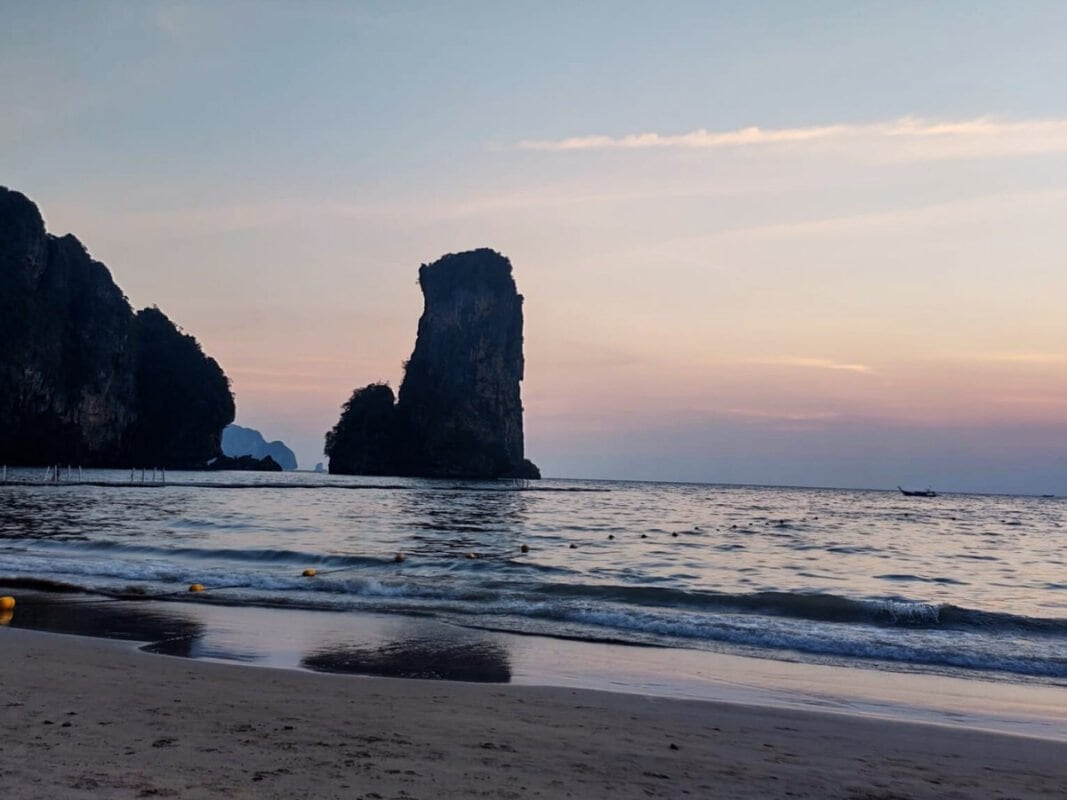
Pai Plong is smaller and more sheltered than Ao Nang Beach, with limestone cliffs surrounding the bay.
It is generally more peaceful, although it can still become busy. It is a great place for a swim or a break on the beach before walking back to Ao Nang.
Keep the Rest of the Day Light
If you don’t want an elephant sanctuary visit, use this as a rest day. You could also replace it with a Thai cooking class or a guided kayak trip through Ao Thalane’s mangroves.
This is also the easiest evening for a Muay Thai match in Ao Nang. Check the current venue schedule before adding it, as fights do not run at the same time every night.
Day 6: Climb Tiger Cave Temple and Explore Krabi Town
Visit Tiger Cave Temple early, then spend the cooler end of the day beside the Krabi River.
This order is much safer and more comfortable than beginning the summit climb shortly before sunset.
Early Morning: Tiger Cave Temple
The summit staircase has about 1,260 steep steps. Set aside at least two to three hours for the climb, time at the top and a careful descent.
Start early to reduce your exposure to the midday heat. Carry enough water and wear modest, breathable clothes because this is an active place of worship.
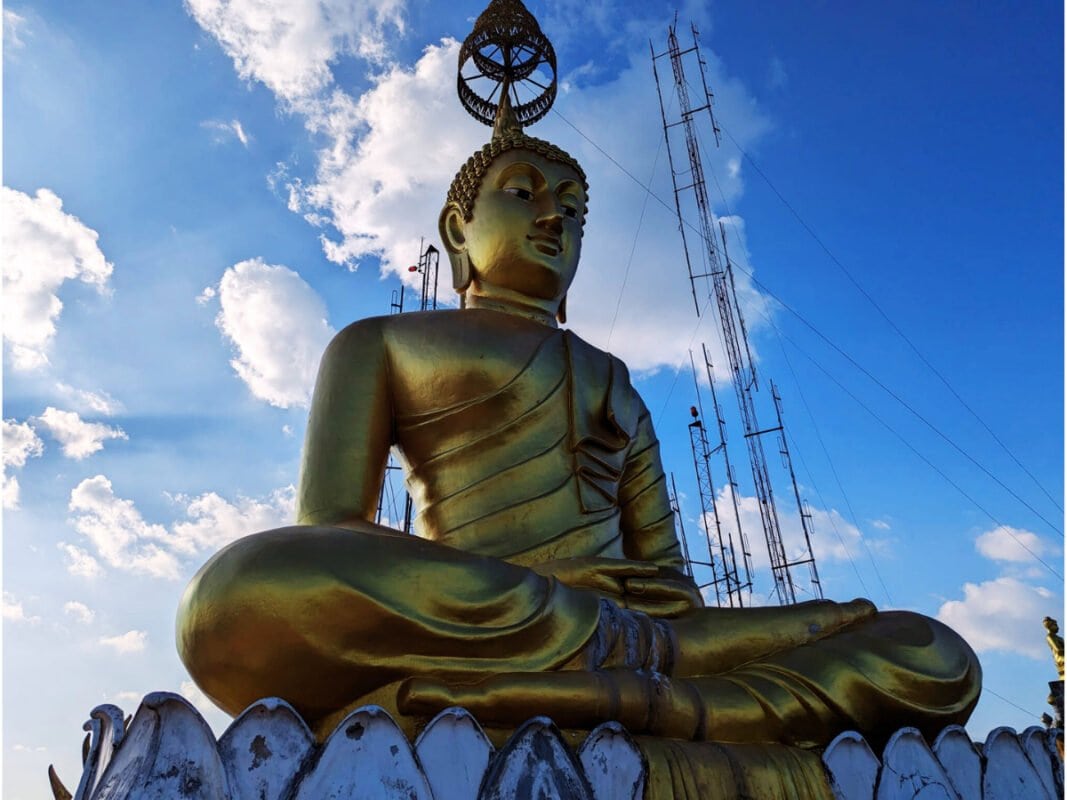
Proper shoes help on the narrow steps, especially on the way down.
You will see many macaques that live around the complex. Keep food packed away, hold on to loose items and don’t feed them.
The summit is only one part of Tiger Cave Temple, so make time for the lower complex as well.
After descending, take a proper break, refill your water and visit the cave temple, shrines and other Buddhist spaces around the base.
A separate staircase of around 184 steps leads into the forested Kiriwong Valley. The path passes beneath limestone cliffs and through dense jungle, with caves, monks’ dwellings and enormous old trees along the way.
It is quieter and more shaded than the summit route, and it shows a completely different side of the temple.
Allow at least another hour for the lower complex and forest walk. Dress respectfully and keep your voice down around the caves and areas used by monks.
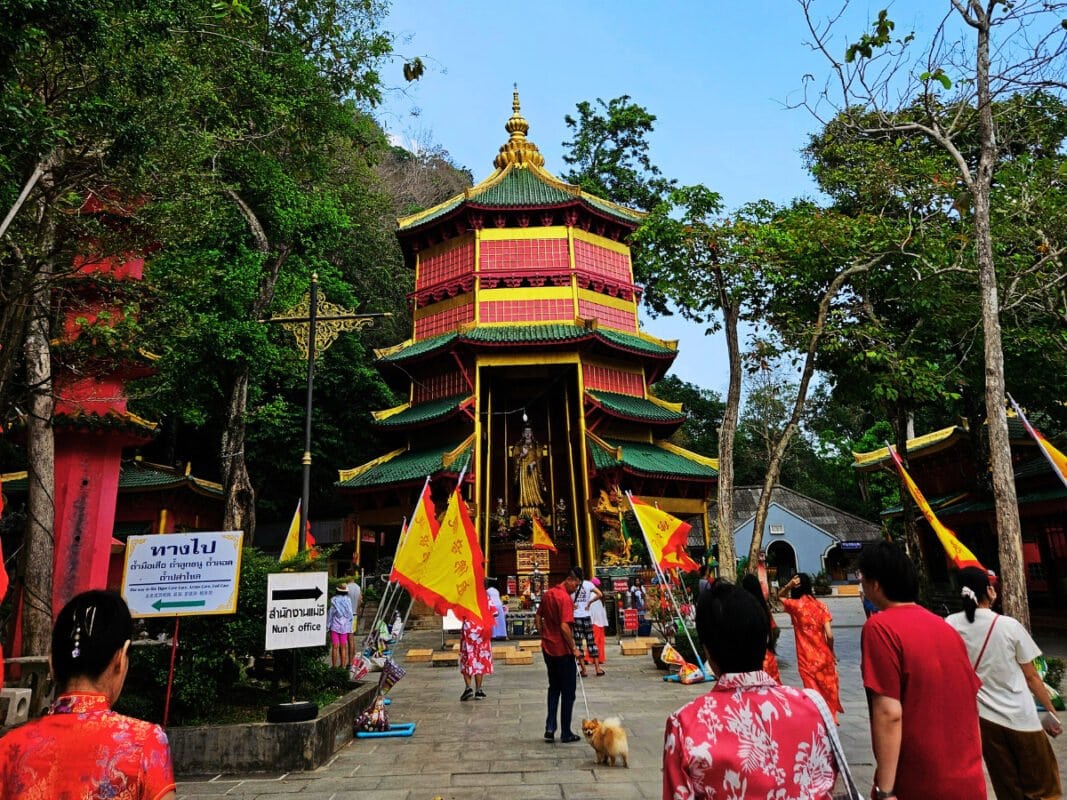
Entry to Tiger Cave Temple currently costs 50 THB (around $1.50 USD) per person. Bring cash, as entrance fees can change.
You will also find optional donation boxes around the temple complex.
I reached Tiger Cave Temple by scooter from Krabi Town. Grab or a taxi is a better choice if you don’t already ride confidently.
→ Related guide: Best Authentic Cultural Experiences in Southern Thailand
Early Afternoon: Khao Khanab Nam and the Krabi River
After visiting Tiger Cave Temple, return to Krabi Town for lunch and a short break.
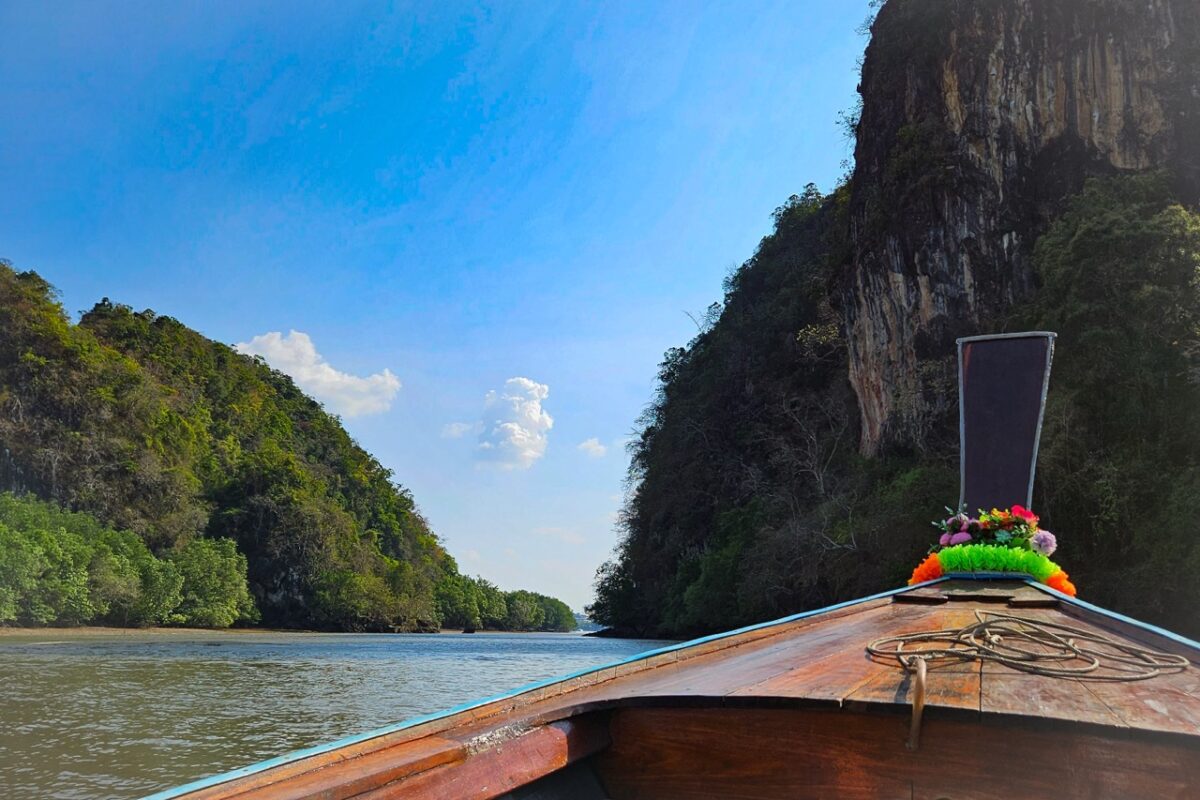
Then head to the riverfront near Chao Fah Park, where local longtail boat drivers offer private trips along the Krabi River.
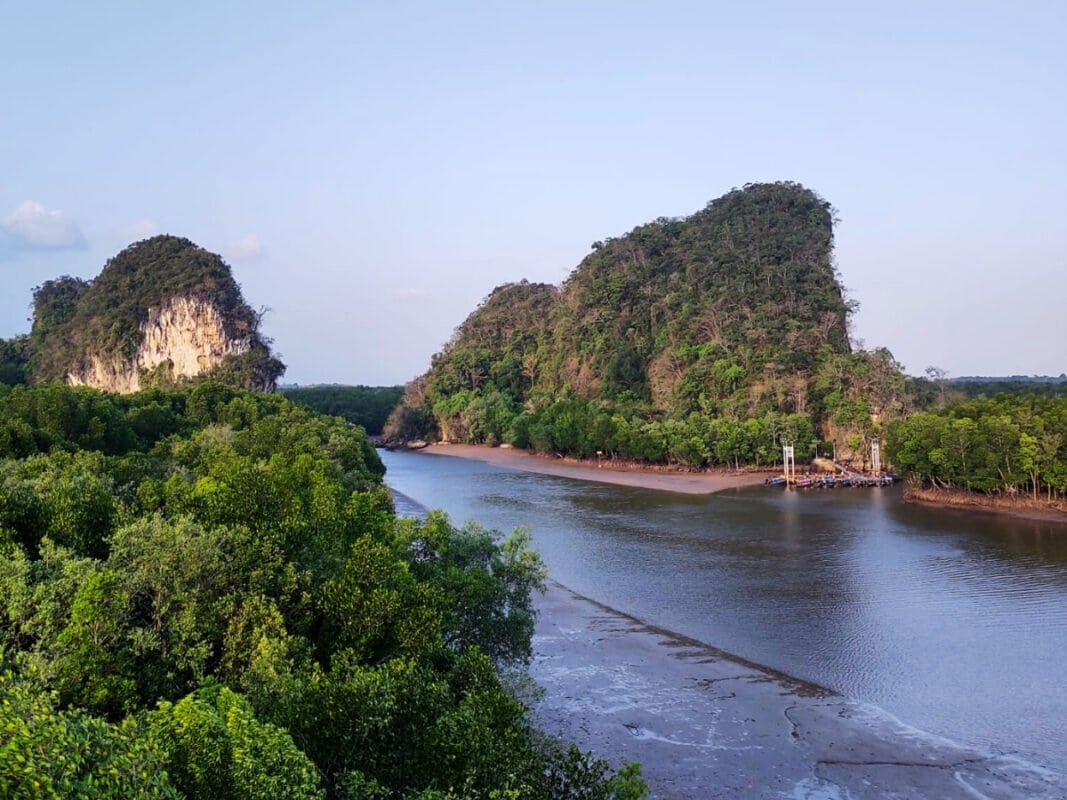
The journey passes through mangrove waterways before reaching Khao Khanab Nam, the two limestone hills that stand on either side of the river.
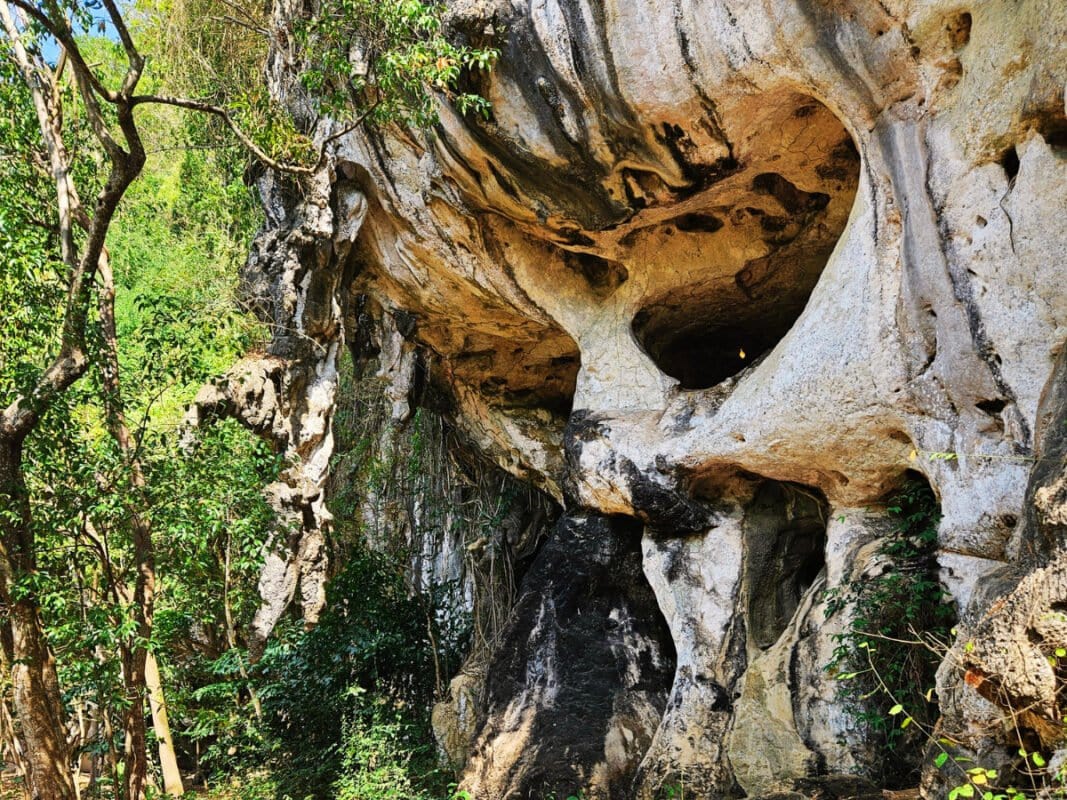
Steps lead from the riverbank to Khao Khanab Nam Cave. Inside, wooden walkways take you past limestone formations and openings that allow natural light into the cave.
You will also spot the huge human and snake skeletons, that are actually Giant Ruins, an artwork by Taiwanese artist Tu Wei-cheng for the 2018 Thailand Biennale.
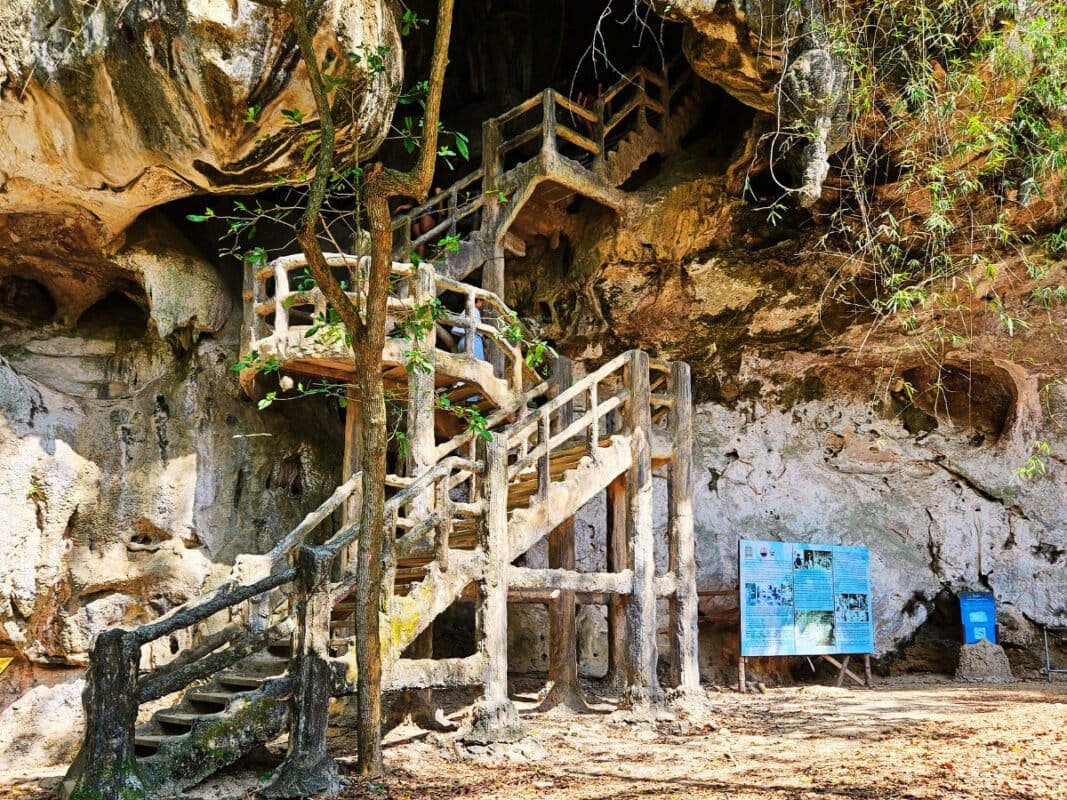
Some boat drivers can also include an extended drive through the mangrove canals and a fishing village on Koh Klang, the island just opposite Krabi Town.
You will pass stilted homes, traditional fish farms and quiet village lanes beside the waterways.
There is no standard route, and the Koh Klang is not included in every cave trip. Agree on the price, total duration and stops before getting into the boat.
Late Afternoon: Wat Kaew Korawaram and Krabi Urban Forest
After the boat trip, walk uphill from the town centre to Wat Kaew Korawaram.
Set on a small hill, it is one of Krabi’s largest Buddhist temples and is easy to recognise by its white exterior and naga-lined staircase.
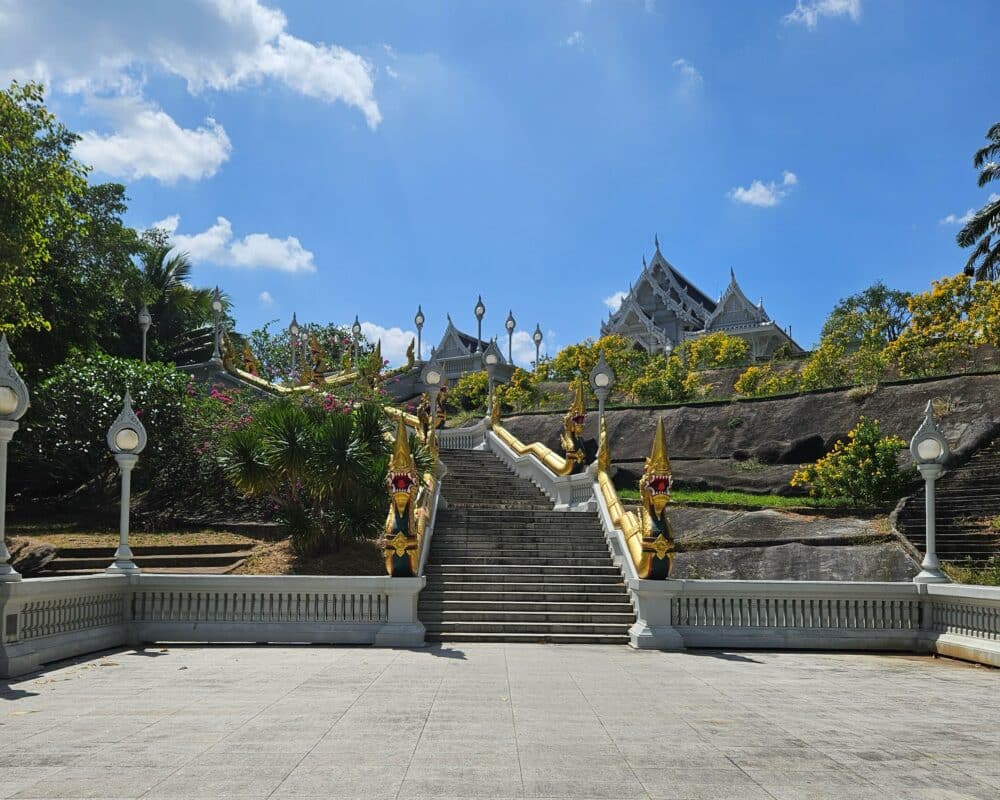
The temple is free to explore, but cover your shoulders and knees and remain quiet around people who are there to worship.
Finish the day at Krabi Urban Forest. Follow the wooden boardwalk through the mangroves towards the observation tower.
I saw a lot of fish below the boardwalk and also local people fishing among the mangroves.
At the end of the broad walk climb the tower for the stunning sunset views. Here you can look across the river towards Khao Khanab Nam and see the whole Krabi Town area.
This part will be extremely hot during the day, so I recommend visiting in the late afternoon.
Evening: Riverfront or Weekend Night Market
Finish beside the river or in Thara Park. I stayed nearby and returned most evenings for a sunset walk.
The riverfront felt livelier once the heat dropped and local families came outside.
Krabi Walking Street night market runs on Friday, Saturday and Sunday evenings. Move this day if the market is important to you. On other nights, you can usually find food stalls around the riverfront.
→ Related guides: Is Krabi Town Worth Visiting? Honest Review
Day 7: Visit the Emerald Pool and Hot Spring Waterfall
Use your final day for Krabi’s Khlong Thom area.
The Emerald Pool and Hot Spring Waterfall are separate attractions, but they are close enough to combine without crossing the province again.
Start at the Emerald Pool
Leave early and visit the Emerald Pool near opening time. The walk through the forest is part of the experience, and early arrival gives you a better chance of seeing the pool before large tour groups gather.
Only swim where it is permitted. The rocks near the water can be slippery, so move carefully and follow current signs.
Opening hours, access to secondary pools and entrance fees can change seasonally, so keep that in mind, especially when visiting Krabi in the monsoon season.
Compare Krabi Emerald Pool and Hot Springs Tours
Many tours combine several attractions in one day. Compare prices, reviews and itineraries below.
Continue to the Hot Spring Waterfall
Visit the Hot Spring Waterfall afterwards. Warm mineral water runs over smooth rock terraces, but the pools are small and can feel crowded.
Keep your expectations realistic and avoid the busiest part of the day when possible.
The two attractions usually charge separate admission fees. Bring cash, swimwear, a towel, water and dry clothes.
You can reach the area with a tour, private driver or rental vehicle. A tour is simplest without your own transport.
I wouldn’t recommend learning to ride a scooter on this long inland journey.
After seven active days, keep your final evening free. It also gives you some margin if a boat or hiking day had to be moved because of the weather.
Adventurous Alternative: A Two-Day Khao Phanom Bencha Trek
The Khao Phanom Bencha summit trek should not be presented as a normal walk that anyone can add to a Krabi itinerary.
It is a demanding, seasonal overnight route with long hours in the jungle.
If this is the main reason for your trip, replace Days 4 and 5 with the trek. Don’t add it on top of the seven-day plan.
Arrange it in advance with the park and an experienced local guide. Access depends on trail conditions and the season, and hikers are not normally allowed to attempt the summit route alone.
Confirm what camping equipment, food, water and ranger support are included.
For an easier visit, go to Khao Phanom Bencha National Park’s main visitor area and walk towards Huay To Waterfall instead. This is a separate experience from the summit ascent.
How to Adapt This Itinerary
If You Have Seven Nights Rather Than Seven Full Days
Use Day 1 as your arrival and Ao Nang orientation day. Then remove either Following Giants or Khlong Root, depending on which experience matters less to you.
Don’t squeeze a full island tour onto a departure day. Boat returns can be delayed by sea conditions, and you need enough time to collect your luggage and reach the airport.
For a shorter visit, follow my three-day Krabi itinerary, which combines the coast, one island tour and a mainland day
If You Don’t Want to Rent a Scooter Or Car
You can follow this itinerary without one. Stay in Ao Nang, use hotel pickup for organised days and pre-arrange a driver for Dragon Crest, Khlong Root and the Khlong Thom attractions.
Grab app is useful around Krabi Town and Ao Nang, but it is less reliable for collection from remote trailheads. The best practice will be confirming the return journey before a driver leaves.
If Rain Changes Your Plans
Move the island tour and Dragon Crest to the best available weather windows. Krabi Town, a cooking class or a relaxed spa day are easier substitutes when conditions are poor.
Rain can also affect water clarity at Khlong Root. A shower does not ruin every activity, but rough seas, thunderstorms and trail closures should be taken seriously.
→ Related guides: Best Time to Visit Krabi: Weather & Crowds by Month
Practical Tips for Planning a Week in Krabi
- Choose your base before booking tours. Pickup zones vary, and Railay accommodation always adds a boat transfer.
- Plan around fixed schedules. Put the Weekend Night Market on a suitable evening and check any Muay Thai event before building it into the route.
- Leave one flexible weather slot. Don’t lock every outdoor activity to a non-refundable booking months ahead.
- Carry cash. Small boats, park fees and local food stalls may not accept cards.
- Check what tour prices include. National park fees, transfers and equipment are not always part of the advertised price.
- Don’t learn to ride on this trip. Krabi’s distances, traffic and wet roads make a scooter a poor option for an inexperienced rider.
Frequently Asked Questions
Is seven days too long in Krabi?
No. A week gives you time for Railay, an island tour, hiking, kayaking, mainland attractions and Krabi Town without rushing.
Is Ao Nang or Krabi Town better for this itinerary?
Ao Nang is more convenient for Railay, island tours and restaurants. Krabi Town is quieter and better for the river and Tiger Cave Temple.
A five-night and two-night split works well, but it is optional.
Do I need a scooter in Krabi?
No. Tours, boats, taxis, Grab and private drivers can cover this itinerary.
Arrange return transport in advance for remote attractions, and rent a scooter only if you are licensed, insured and experienced.
Should I choose Hong Islands or the Four Islands tour?
Choose Four Islands for shorter boat journeys, several beaches, snorkelling and the sandbar.
Choose Hong Islands for its lagoon, viewpoint and more dramatic scenery.
Can I add Koh Phi Phi or Koh Lanta to this week?
Yes, but choose one. Phi Phi can replace your island-tour day, while an overnight stay on Phi Phi or Koh Lanta will require removing two or three mainland days.

Whichever island you choose, you can organise accommodation, ferries and activities using the travel tools I use or recommend.
My Trip Essentials – Everything You Need Before You Go:
To avoid crowds and get the best experience on the island, it’s worth booking a few key things in advance:
Continue Planning Your Trip
For more places to visit in the region, read the complete Krabi travel guide and Southern Thailand Travel Guide.
Island Comparisons
If you haven’t chosen your next island, start with the four-island comparison. The more detailed guides are useful once you have narrowed your choice to two.
Island Itineraries
Already know where you’re going? These itineraries will help you choose a realistic stay length and organise your days.
